Côte d’Ivoire sets 2026-27 cocoa farmgate price at 1,200 CFA francs amid producer dispute
Côte d’Ivoire has set its 2026-27 farmgate prices at 1,200 CFA francs per kilogram for cocoa and 1,300 CFA francs for coffee. The cocoa price has divided producer representatives as the government responds to weaker world prices and advances traceability and local processing plans.
Cocoa price returns to 1,200 CFA francs
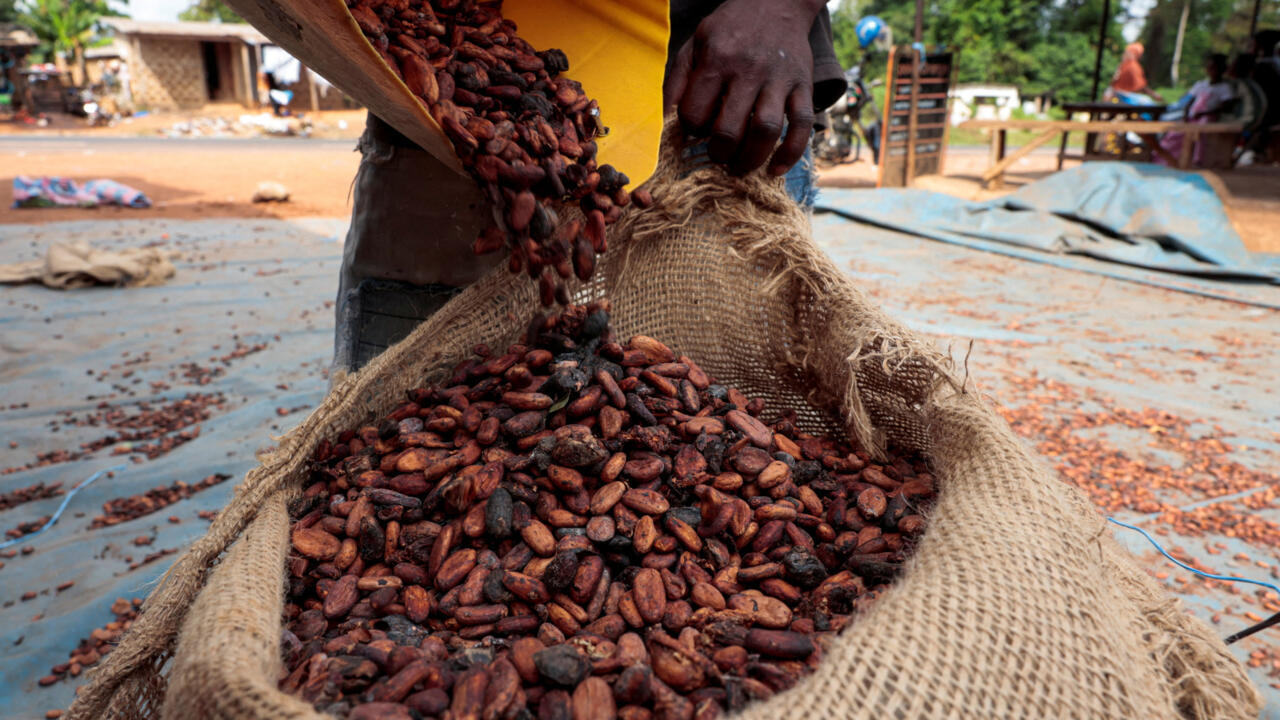
Côte d’Ivoire set the farmgate price for cocoa at 1,200 CFA francs, about €1.8, per kilogram on September 1, 2026, at the opening of the 2026-27 main crop season. Coffee was priced at 1,300 CFA francs per kilogram, according to AllAfrica. Agriculture Minister Bruno Koné Nabagné announced the rates during the 10th National Cocoa and Chocolate Days in Port-Bouët, held from September 1 to 3.
The cocoa price is below the opening level of the previous two seasons, RFI reported. In 2025, when international quotations were high, the government opened the season at 2,800 CFA francs per kilogram. The price then fell to 1,200 CFA francs during the March mid-crop season, a decline of nearly 60%. The new main-crop rate therefore extends the lower price level into 2026-27 rather than restoring the earlier premium.
Producer groups split over the decision
The announcement prompted sharply different reactions among producer representatives. Moussa Koné, president of the National Agricultural Union for Progress in Côte d’Ivoire, Synap-CI, called the price unacceptable and urged farmers not to rush to sell beans held in their possession. He said the union was prepared for a confrontation with the Coffee-Cocoa Council, the state regulator that administers the sector.
The Coffee-Cocoa Agricultural Interprofessional Organisation took a more cautious position. Its director-general, Mé Kouakou, told RFI that the organisation had hoped for a higher price but considered 1,200 CFA francs reasonable in light of international market conditions. He noted that the state price-setting mechanism reflects global prices and expressed hope that the rate could be revised if the international market rises.
The dispute matters beyond farm incomes. Côte d’Ivoire supplies 40% of global cocoa production, while the crop accounts for 17% of national GDP and supports about 5 million people, according to RFI. AllAfrica reported that more than 1.2 million cocoa farmers work in the country. Because the state fixes the purchase price and part of the crop is sold forward, changes in world quotations feed into the domestic system differently than in fully liberalised markets.
Traceability and processing plans advance
Koné attributed the previous season’s marketing difficulties mainly to a sharp collapse and high volatility in global cocoa prices. He said the disruption affected farmers, processors, cooperatives, financial institutions and the Coffee-Cocoa Council. The government and the regulator introduced measures to help move stocks and limit producer losses, although the source material did not specify their scale or cost.
The new season also brings the effective introduction of the National Traceability System. Producer cards are now mandatory for cocoa marketing transactions, with the stated aim of ensuring that proceeds from the official price reach farmers directly and of improving sector transparency. The change also responds to international requirements covering quality, sustainability and traceability.
The government is simultaneously seeking to modernise farms, improve yields, strengthen land security and raise producer income under the 2026-2030 National Development Plan. It wants more cocoa processed domestically into butter, powder, cocoa mass and chocolate for international markets. Those plans face persistent constraints including climate change, ageing plantations, swollen shoot disease, soil degradation, illegal gold mining, limited mechanisation and restricted access to finance, particularly for younger farmers. With the farmgate price back at 1,200 CFA francs, the immediate test will be whether the regulated system can maintain farmer participation while pursuing investment and higher local value addition.