Coconut overtakes mango and dragon fruit as Vietnam's top produce export to the US
Coconut has become the largest fruit and vegetable export from Vietnam to the United States, with shipments worth more than $105 million in the first seven months of the year. The product now ranks ahead of mango and dragon fruit, the two items that long defined Vietnam's presence in the US produce trade. Sustaining the position depends on compliance infrastructure and processing capacity rather than on demand.
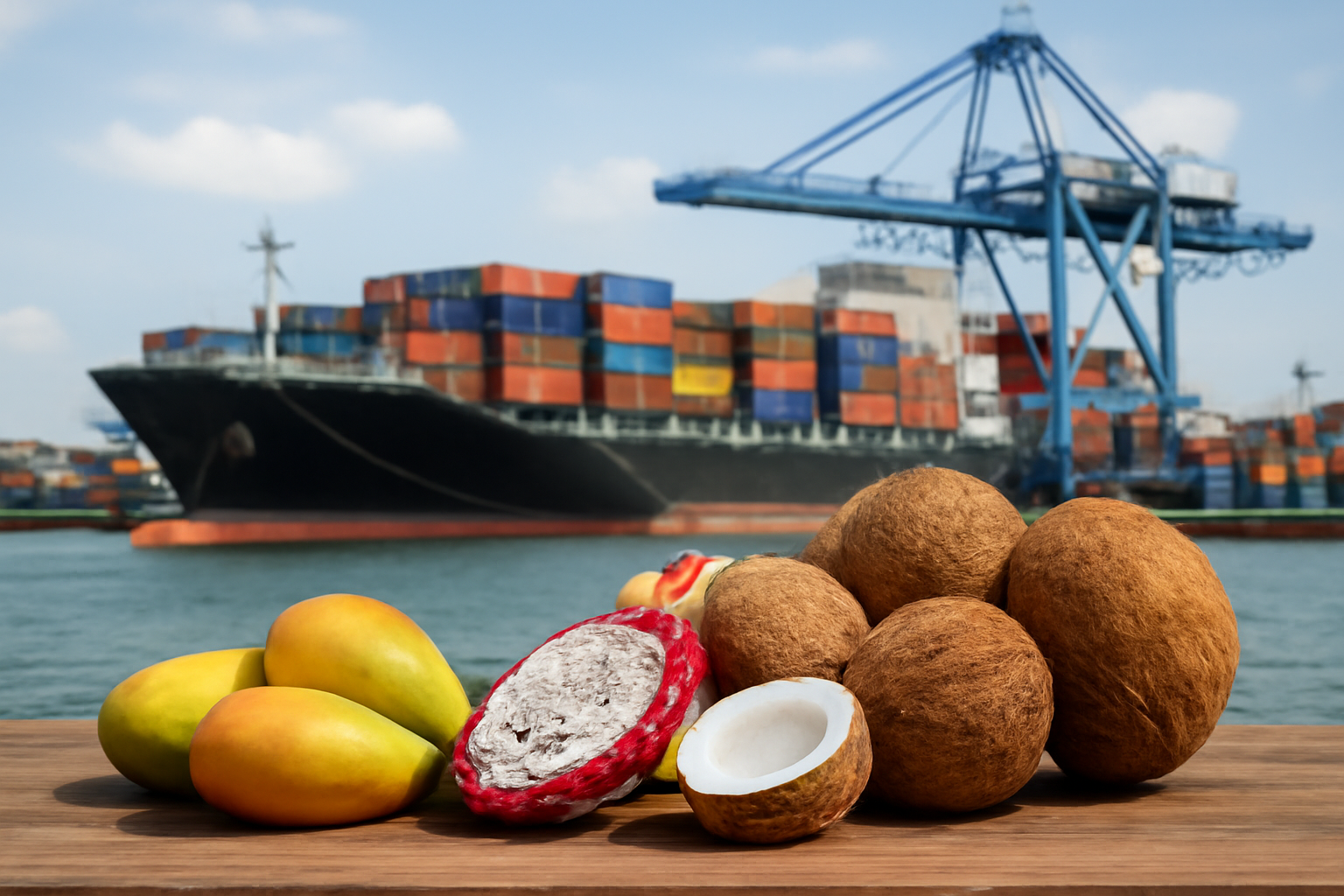
Coconut overtakes mango and dragon fruit
Coconut has moved to the top of Vietnam's fruit and vegetable exports to the United States, with shipments worth more than $105 million in the first seven months of the year, according to Vietnamese media reports. The product now ranks ahead of mango and dragon fruit, two items that for years defined Vietnam's presence in the American produce trade.
The change is notable because coconut was until recently a low-value domestic commodity in Vietnam, sold chilled at roadside stalls rather than managed as an export line. Its move into first place places a crop with a long agricultural footprint in the Mekong Delta at the centre of a trade that had been built around higher-profile tropical fruit.
Why coconut travels better than dragon fruit
Part of the explanation is physical. Fresh fruit shipped to the United States by sea has to survive a long transit and an inspection regime on arrival, and the products differ sharply in how much of that they tolerate:
- A husked or trimmed coconut is protected by its own shell and holds condition across multi-week ocean transit, while dragon fruit and mango are thin-skinned and bruise-sensitive, pushing them toward costlier air freight or aggressive post-harvest treatment.
- Coconut supply runs close to year-round, whereas mango and dragon fruit arrive in defined harvest windows that leave buyers without continuity of supply.
- Coconut is not only a fresh item. Water, milk, cream, desiccated flakes and oil all draw on the same raw nut, so one crop feeds several tariff lines and several categories of buyer.
- US demand for coconut water and dairy-alternative products behaves like packaged consumer-goods demand, less exposed to the seasonality and promotional pricing that govern fresh exotic fruit.
That mix means coconut revenue does not rest on a single fresh-market channel. A shipment rejected or a season missed in fresh nuts can be partly absorbed by processed forms, an option mango and dragon fruit exporters have in far narrower measure.
What sustaining the growth requires
Growth beyond the current level depends on conditions that sit outside the orchard. Access for fresh fruit rests on registered growing areas and approved packing facilities, on pest and residue compliance, and on documentation that traces a consignment back to the plot it came from. Those systems are administrative rather than agronomic, and they are the usual point of failure for fast-growing tropical categories. A single interception at a US port can disrupt an entire shipping programme and the commercial relationships behind it.
Processing capacity is the second constraint. The higher-value forms of the crop, including packaged coconut water, coconut milk and chilled products, require plants operating to US food-safety standards, a reliable cold chain and steady raw material contracts. Where processors and fresh exporters bid for the same nuts, farmgate prices rise and margin shifts toward whoever secured volume in advance. Expansion of planted area responds slowly by comparison, since coconut palms take years to reach commercial yield.
Competition and price risk
Vietnam is not entering an empty market. The United States already sources coconut and coconut products from established origins including Thailand, the Philippines, Indonesia and Mexico, each with its own processing base and freight advantages. Competition in this category is decided on consistency of supply, certification and landed cost rather than on novelty.
For Vietnamese exporters, the practical question is whether more than $105 million in seven months reflects a durable position or a phase of rapid substitution that levels off once buyers have rebuilt their supplier lists. The answer will show in whether growers and processors invest in compliance systems and plant capacity at the same pace that shipment volumes have grown, and in whether raw nut prices at home stay within a range that leaves exporters competitive against other origins.