Coconut-shell price surge threatens Indian activated-carbon exports
Rising coconut-shell costs are weakening Indian activated-carbon producers against Chinese suppliers in Africa and Europe. The industry is introducing monthly indicative feedstock prices while seeking tax changes to improve market transparency.
Feedstock costs erode India’s position
Sharp increases in coconut-shell prices are putting India’s activated-carbon manufacturers at a growing disadvantage against Chinese suppliers. The Activated Carbon Manufacturers Association of India, or ACMAOI, raised the issue at its annual general body meeting, warning that uncontrolled raw-material inflation is undermining the industry’s competitiveness in export markets.
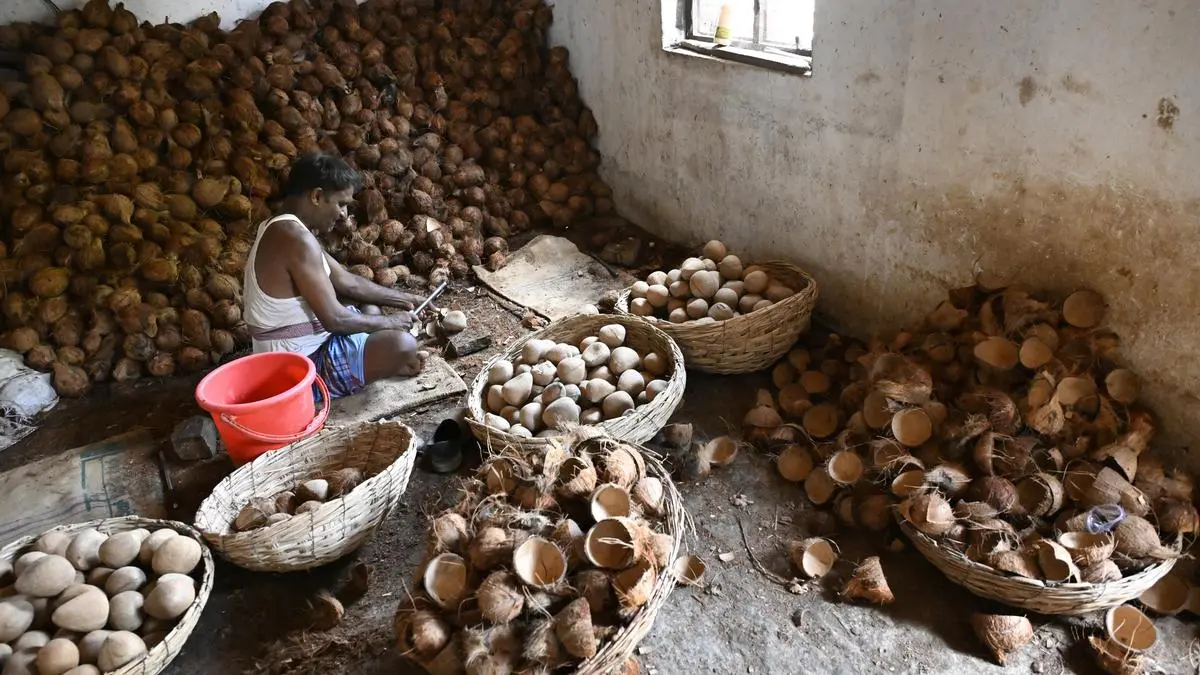
According to The Hindu BusinessLine, coconut-shell prices have risen sharply across India’s southern states without an effective mechanism to regulate the market. The increase directly affects activated-carbon producers because shells are a key feedstock. With input costs climbing, Indian manufacturers face pressure either to absorb the increase through lower margins or pass it to customers and risk losing orders.
Chinese suppliers advance in Africa and Europe
ACMAOI said Chinese producers are buying whole coconuts from Indonesia and the Philippines and using them to manufacture activated carbon. The resulting product is being offered in African and European markets at prices below those of Indian suppliers. NewsBytes reported that Chinese competition is gaining ground in markets previously served by Indian manufacturers.
The pressure is significant for an Indian export industry valued at about ₹4,700 crore. Activated carbon is used for filtration and purification, making consistent pricing and reliable supply important to industrial customers. A sustained feedstock-cost gap could redirect orders toward Chinese producers, particularly where buyers can switch suppliers without changing the product’s end use.
Industry proposes monthly prices and GST coverage
ACMAOI has decided to publish monthly indicative prices for coconut shells in an effort to introduce greater stability. It fixed a range of ₹105–₹107 per kilogram for September and ₹98–₹100 per kilogram for October. The lower October range signals the association’s intended benchmark, but its effectiveness will depend on whether sellers and buyers use it in transactions.
The association also plans to ask India’s GST authorities to bring coconut shells and charcoal within the goods and services tax framework. Both currently carry nil tax and sit outside the regime, according to ACMAOI. The group argues that their inclusion could improve transaction transparency and provide more control over a feedstock market whose price formation now presents difficulties for manufacturers.
Tariffs, sanctions and freight add pressure
Raw-material inflation is only one part of the export challenge. The Hindu BusinessLine cited tariff-related difficulties in the United States and sanctions affecting Russia and Sudan, where Indian producers have established markets. The crisis in West Asia has also increased ocean-freight costs and reduced the availability of export containers and vessels, according to the association.
Together, these factors squeeze Indian suppliers from both sides: coconut shells raise production costs, while freight constraints increase the cost and uncertainty of delivering finished material. Tariff and sanctions-related barriers further limit access to established destinations. ACMAOI is therefore seeking action on feedstock volatility and supply-chain constraints as Chinese producers compete more aggressively for African and European business.