Cocoa prices fall 20% as Europe’s chocolate market enters a new phase
Cocoa costs 20% less this year, according to Euronews, easing some pressure on Europe’s chocolate supply chain. The decline could support processors’ margins, but it does not guarantee an equivalent reduction in retail chocolate prices.
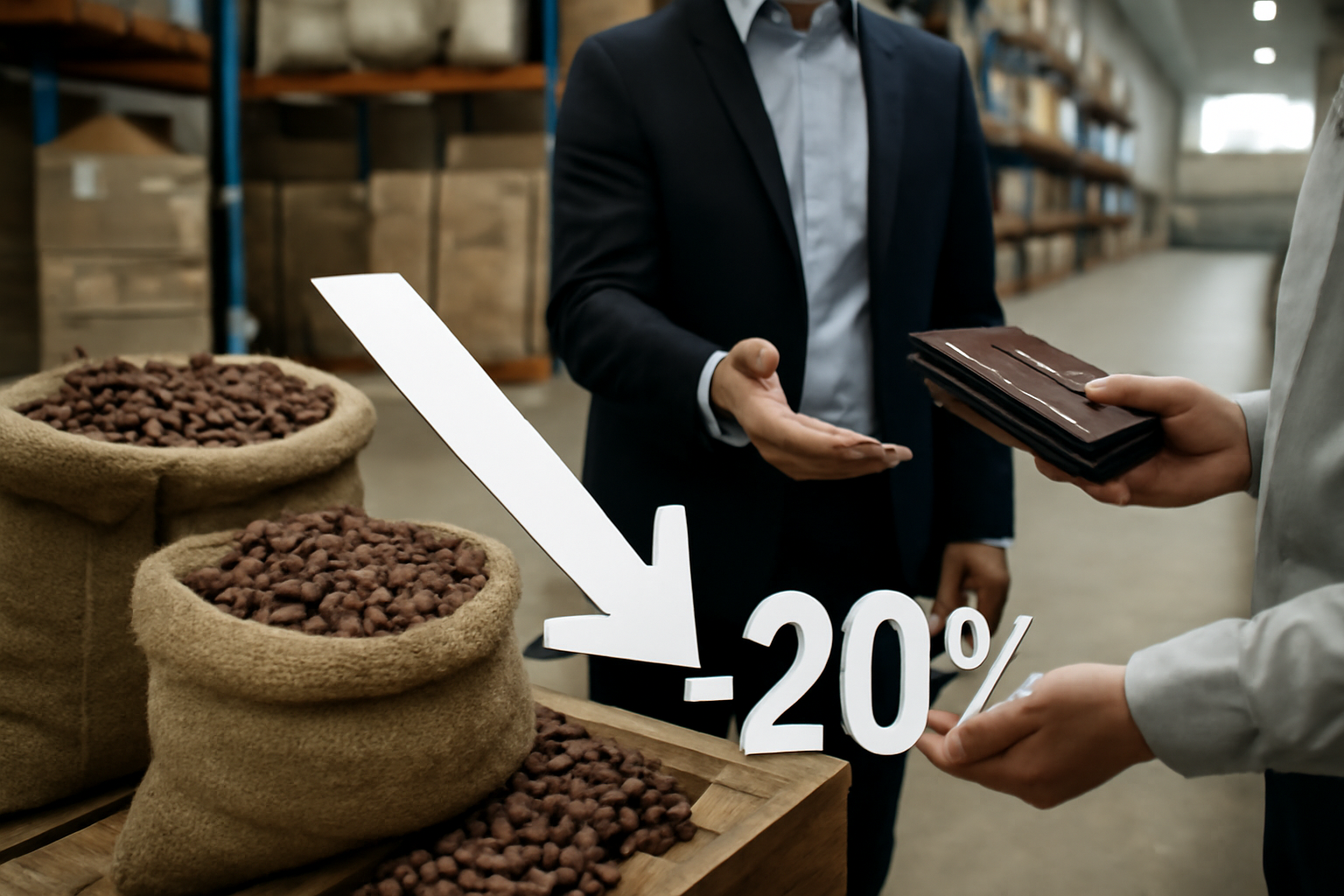
Cocoa retreats from elevated levels
Cocoa costs 20% less this year, according to Euronews, giving chocolate manufacturers and processors some relief after a period of intense pressure on their principal raw material. The change is particularly relevant to the European Union, which the publication identifies as the world’s leading chocolate market. Europe combines substantial consumer demand with a large processing and manufacturing base, making movements in cocoa costs important for companies across the value chain.
The reported decline changes the immediate cost environment, but it should not be read as a direct forecast for chocolate prices in shops. Cocoa is only one component of the final price. Manufacturers must also cover processing, energy, labour, packaging, transport and retail distribution. Companies may therefore use cheaper cocoa to rebuild margins, limit further price increases or compete more aggressively, rather than pass the entire reduction on to consumers.
Different implications across the value chain
For chocolate producers, a 20% decline in cocoa prices can reduce the cost of future raw-material purchases. The effect on individual companies will depend on when they contracted supplies and how much inventory they already hold. Businesses that secured cocoa earlier may continue working through material bought at higher prices, while companies purchasing more frequently could see the change sooner.
Processors and traders face a different calculation. Lower prices can encourage buyers to return to the market, but they also reduce the value of inventories purchased at more expensive levels. Contract timing, stock management and purchasing discipline consequently remain central to profitability. The headline decline is significant, yet it does not remove price risk from a commodity-dependent industry.
The implications for cocoa-producing countries are also mixed. Lower input costs benefit European manufacturers and potentially consumers, but reduced cocoa prices can weaken revenue prospects for growers and exporters. That tension connects purchasing conditions in Europe with returns in producing markets, even when changes at the farm, wholesale and retail levels occur at different speeds.
Consumption remains central to Europe’s market position
Euronews framed the development around International Chocolate Day on 13 September, an observance that originated in France, and around differences in chocolate consumption among EU countries. The supplied report identifies the EU as the leading market but does not provide the underlying country ranking or per-capita consumption figures. It therefore supports a broad conclusion about Europe’s importance, rather than a numerical comparison between individual member states.
For the industry, the combination of a large consumer market and cheaper cocoa creates room for several commercial responses. Mass-market producers may focus on volumes and promotional pricing. Premium manufacturers may protect price points while investing the cost relief in margins or product quality. Importers and processors will watch whether the 20% decline persists long enough to affect contract renewals and production planning.
The next visible change may appear first in company margins and procurement decisions rather than on supermarket shelves. Retail prices typically reflect several accumulated costs and commercial agreements, while raw cocoa can move more quickly. Europe’s scale means that purchasing decisions by its processors and manufacturers will remain influential for cocoa traders and producing countries. The current decline offers relief, but its final distribution between growers, processors, brands, retailers and consumers is still an open commercial question.