Chinese honey sold as European in Spain as imports reach record levels
Chinese honey is being passed off as European-origin product in Spain during a record surge in honey imports. Spanish beekeepers say low import prices and honey-like labeling for syrups are putting domestic producers under pressure.
Origin claims come under scrutiny
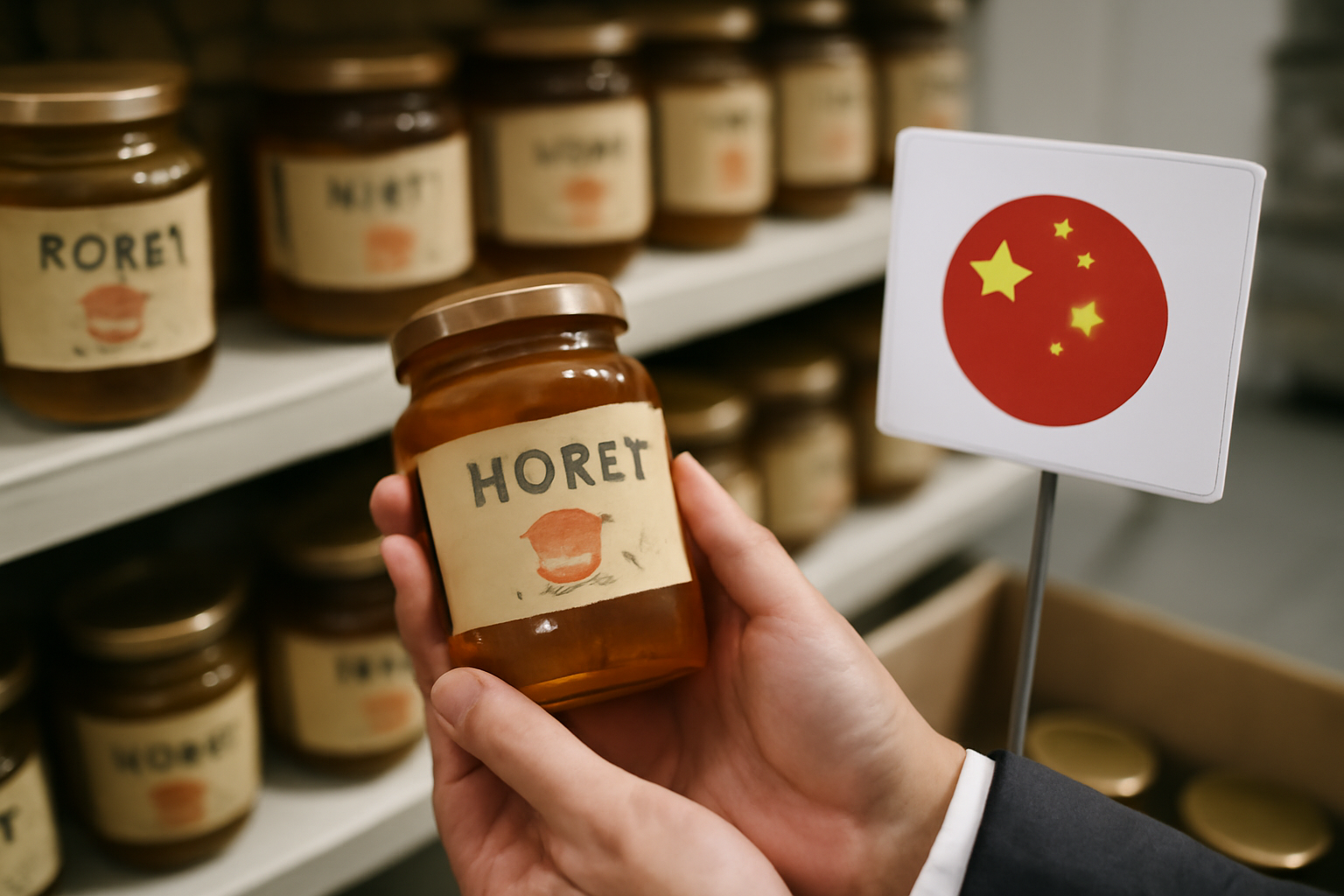
Chinese honey is being sold in Spain as a product of European origin as the country experiences record honey imports. The practice places the origin of imported honey at the center of a dispute involving traders, retailers and Spanish beekeepers. Producers argue that products entering at low prices are displacing locally produced honey and making it harder for buyers to distinguish between Spanish, European and non-European supply.
The available account does not identify the companies involved or provide import volumes, prices or dates. It nevertheless points to a trade channel in which Chinese-origin honey is presented to Spanish buyers as European. For importers and distributors, the allegation raises questions about supplier documentation, traceability and the accuracy of origin statements used on packaging.
Syrups compete with genuine honey
Spanish producers have also complained for decades about syrups being marketed under labeling similar to that used for honey. The concern covers products described as syrups or mixtures that may be difficult for consumers to differentiate from genuine honey when displayed in the same market. No composition data or test results were provided, so the scale of the practice and the contents of individual products cannot be established from the available information.
The distinction matters commercially because honey and sugar-based syrups are different products with different production costs. If a lower-cost syrup is presented in a way that resembles honey, it can compete directly for shelf space while avoiding the costs borne by beekeepers. The effect is strongest in price-sensitive segments, where packaging and the declared origin may carry more weight than detailed information about production.
For honey importers, the controversy increases the importance of verifying both product composition and country of origin before goods reach the Spanish market. Records connecting a shipment to its producer, processor and exporter are particularly important when honey has passed through commercial partners in more than one country. Buyers also face reputational risk if a product’s European presentation is inconsistent with its actual Chinese origin.
Low prices pressure Spanish beekeepers
Low prices at origin are pushing Spanish beekeepers to the margins of their domestic market. Imported honey or syrup can reach buyers at prices that local producers may struggle to match, especially when the products are presented as comparable. Record imports intensify that pressure by expanding the amount of foreign supply competing with Spanish honey.
The consequences extend beyond retail competition. Lower market prices can weaken the bargaining position of Spanish producers when they sell to packers, wholesalers and other commercial customers. Exporters of Spanish honey may also find it harder to defend a premium based on origin if buyers encounter products carrying European-style claims at lower prices.
Traceability becomes a trade issue
The dispute makes origin verification a practical trade requirement rather than only a labeling question. Importers need reliable declarations from suppliers, while retailers and processors need records that allow them to substantiate claims made to customers. Spanish producers, meanwhile, are seeking a clearer separation between domestic honey, imported honey and syrup-based products. Without transparent origin and composition information, record import growth is likely to keep increasing price pressure and mistrust across Spain’s honey market.