China buys 24.4% of Vietnam's agricultural exports as nine-month shipments hit $56.3 billion
Vietnam's agricultural exports reached an estimated $56.3 billion in the first nine months of 2026, up 7.8% year on year, with China taking a 24.4% share. In fruit and vegetables the dependence is far deeper: 63% of nearly $7.35 billion in shipments went to China. The Ministry of Agriculture and Environment is targeting more than $74 billion for the full year.
Nine-month exports reach $56.3 billion
Vietnam's agricultural export turnover in the first nine months of 2026 reached an estimated $56.3 billion, up 7.8% from the same period of 2025, according to figures from the Ministry of Agriculture and Environment reported by Ha Noi Moi. China was the single largest destination with a 24.4% share, and the value of Vietnamese farm exports to China rose 18.9% year on year, more than twice the pace of the sector's overall growth.
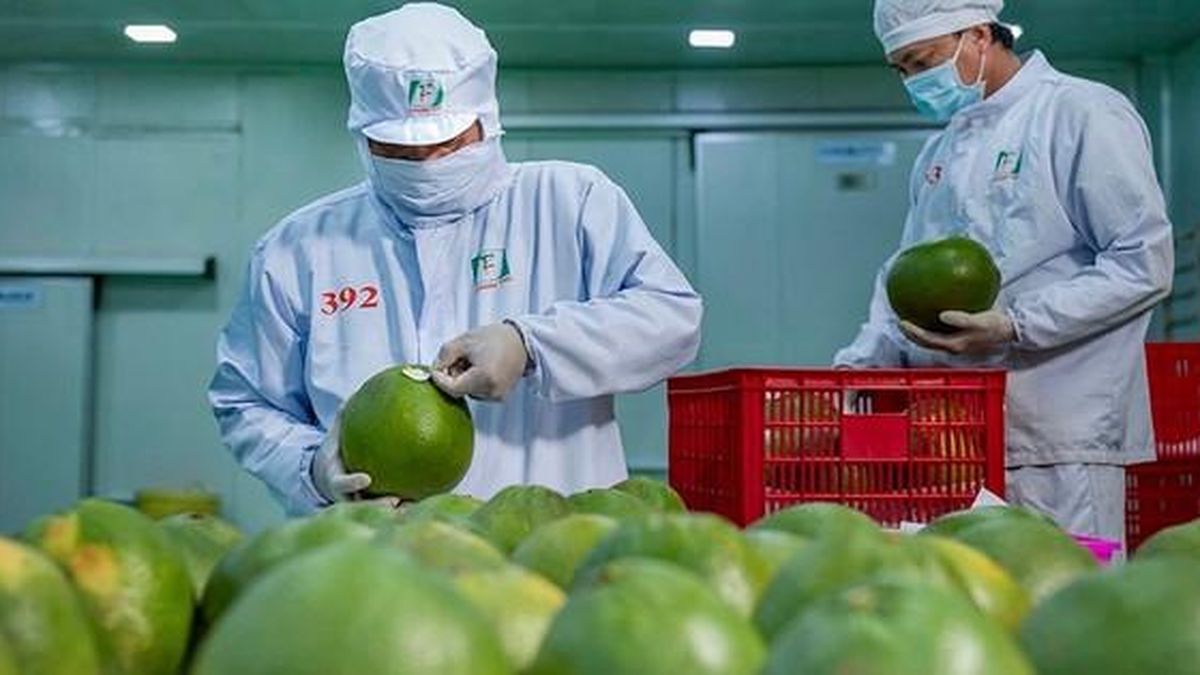
Fruit and vegetables illustrate that dependence most clearly. Exports of the category reached nearly $7.35 billion over the nine months, a 19.9% increase on the same period a year earlier. China absorbed 63% of that value, equivalent to more than $4.63 billion.
The concentration extends well beyond fresh produce. The Ministry identified China as the leading buyer of Vietnamese rubber, rice, cassava, cashew nuts, seafood, and wood and wood products. It also ranks among the top importers of Vietnamese tea, coffee and pepper. Monthly volumes and values dipped slightly at some points during the period, but the nine-month trend was upward across the main commodity groups. The Ministry attributes the broadening of Chinese import demand to improving quality in Vietnamese agricultural goods, with the benefits reaching farmers, enterprises and cooperatives.
Durian window gives Vietnam a fourth-quarter edge
The Ministry expects exports to China and to other markets to keep growing in the closing months of the year, citing supply availability and demand conditions. October is a particular advantage: durian in the Central Highlands enters its late-season peak harvest at a time when competing exporters have almost no fruit available, leaving Vietnam as effectively the only source of fresh durian for the Chinese market during that window. That position is expected to keep durian shipments at high levels.
November and December bring a second demand pulse, as buyers in China and other Northeast Asian markets, namely South Korea and Japan, along with Europe and North America, stock up for year-end holidays and the Lunar New Year. Vietnamese fruit and vegetable supply remains ample heading into that period, according to the Ministry.
Diversification and a $74 billion target
Alongside maintaining its China business, the Ministry of Agriculture and Environment has set out plans to broaden the export base, working established markets harder and opening room in newer ones:
- The European Union, Japan, South Korea and Australia, plus CPTPP and RCEP member states;
- The Middle East and South Asia;
- Africa and Latin America;
- Priority products for the newer markets: rice, coffee, pepper, processed fruit and vegetables, seafood and livestock products.
The stated policy direction is a shift away from volume-driven growth toward quality, added value, branding and digital transformation, with markets setting direction, quality and standards as the foundation, enterprises at the centre and producers as the primary actors. The Ministry is targeting more than $74 billion in agricultural exports for the full year of 2026, which implies roughly $17.7 billion in the fourth quarter alone.
Trade runs in both directions. China is also the largest supplier of Vietnam's main agricultural imports, with a 12.4% share, and the estimated value of those imports from China in the first nine months of 2026 was up 11.2% year on year. For processors on both sides of the border, the relationship is now an integrated input-and-output channel rather than a one-way export route.