China’s Pinghe Pomelo Harvest Expected to Rise 10% as Export Season Opens
Pinghe’s pomelo harvest is expected to increase by about 10% from last year as a slightly larger planted area supports output. Exporters are targeting the EU and Russia while facing slightly lower prices, high logistics costs and stricter product standards.
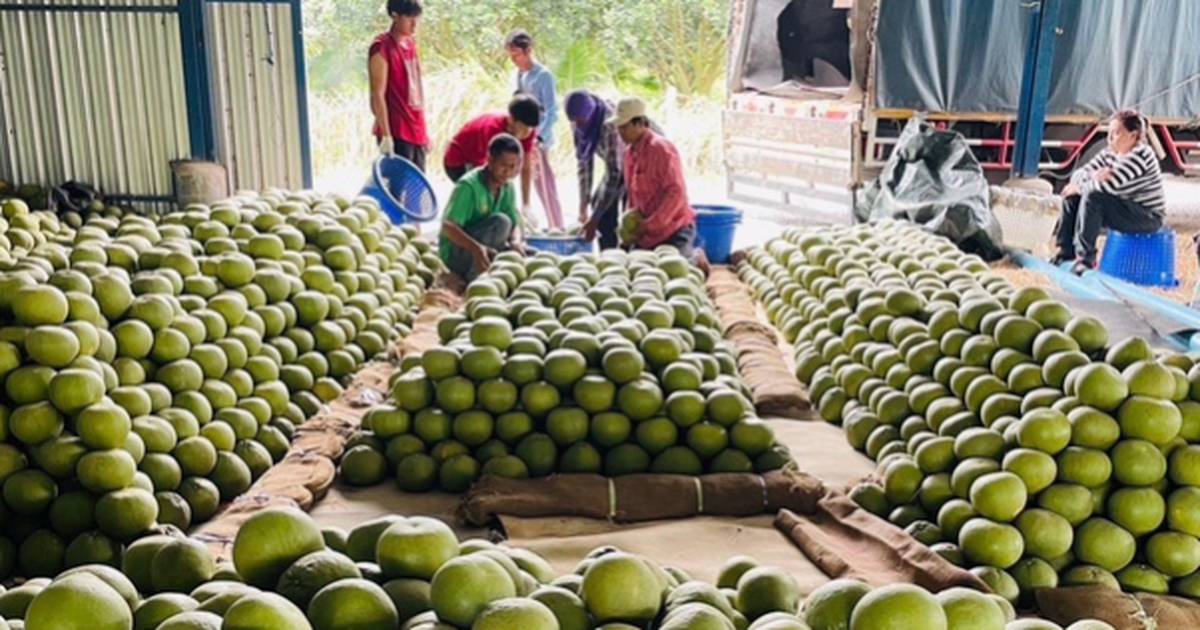
Higher output enters the export market
China’s Pinghe pomelo harvest has entered its harvesting and export phase, with production expected to increase by about 10% compared with the previous year. The expansion could give Chinese suppliers more fruit to place in the European Union and Russia, the two principal overseas markets identified by a local exporter.
CafeF reported that the area planted with pomelo increased slightly from 2025. Wen, head of Pinghe County Lipeng Fruit Industry Co., said the larger area was expected to lift total production by about 10%. Overall fruit quality remains stable, while sizes are more uniform than during the previous season. This consistency can help exporters meet buyer specifications and organize commercial grades more efficiently.
Prices soften while logistics remain costly
Export activity has only recently started, and businesses are arranging harvesting, initial processing and transport according to market demand. Prices are currently slightly below their level in the same period last year. Wen expects the market to remain relatively stable, but exporters are approaching the season cautiously because higher supply does not automatically translate into stronger margins.
Transport remains the main source of pressure. According to Wen, ocean freight capacity is relatively stable and transit times have shortened compared with last year, but total logistics costs remain high. Exporters therefore need to balance a modestly lower selling price against the cost of moving a perishable product over long distances. Wen said he hoped freight rates would decline in the coming months.
EU and Russia remain core destinations
The EU and Russia continue to be the company’s main export markets. As shipments resume for the new season, sales in these destinations are described as relatively stable. The expected increase in production should expand the volume available for foreign buyers, although the source provided no figures for total output, export tonnage or market shares.
Additional availability may intensify competition among citrus suppliers serving European and Russian buyers, particularly where fruit is compared by size, grade, delivered cost and compliance. The effect on competing origins, including Vietnam, will depend on shipment volumes and landed prices, neither of which has yet been disclosed. Slightly lower Chinese farm or selling prices could improve competitiveness, but high logistics expenses may absorb part of that advantage.
Exporters seek new markets and tighter controls
Pinghe County Lipeng Fruit Industry is also exploring the United States and New Zealand as potential markets. The effort is intended to diversify sales channels and reduce dependence on a limited number of destinations. Market entry, however, will depend on meeting the applicable import and plant-health requirements as well as achieving commercially viable transport costs.
International buyers are placing greater emphasis on pesticide residues, fruit quality and grading, according to CafeF. They are also increasingly requesting more environmentally friendly packaging. Wen said these requirements compel exporters to improve management from orchards through storage and transport, with quality controls maintained throughout the supply chain.
Trading is expected to become more active as the peak consumption period approaches. For producers and processors, the larger crop provides more raw material and potential sales volume. For exporters, the season presents a narrower calculation: output is up by about 10% and prices are slightly lower, while logistics remain expensive and compliance demands are rising. European and Russian importers may gain access to more uniformly sized fruit, but the final competitive impact will depend on freight rates and the volumes that actually reach those markets.