China’s expanding health-snack market creates opening for Thai suppliers
China’s snack market is projected to grow from 1.1804 trillion yuan in 2025 to 1.3330 trillion yuan in 2030. Thai suppliers may find opportunities in healthy, convenient and differentiated products, although competition from domestic brands and expanding sales channels is intensifying.
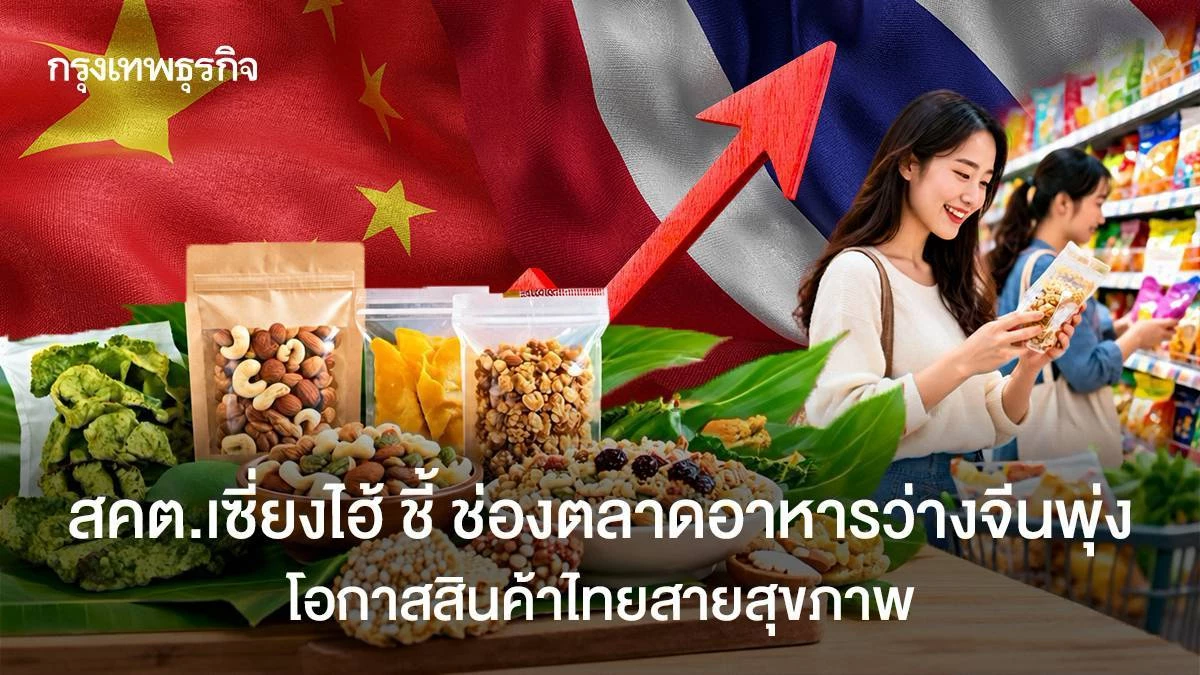
Market forecast to reach 1.3330 trillion yuan
China’s snack market is expected to expand as consumers increasingly prioritize health, quality and convenience, creating potential opportunities for Thai suppliers of processed fruit, nuts and other differentiated products. Bangkok Biz News, citing Thailand’s Department of International Trade Promotion and its Shanghai office, reported that the market was worth approximately 1.1804 trillion yuan in 2025 and is forecast to reach 1.3330 trillion yuan in 2030.
The industry covers a broad range of products, including nuts and seeds, savory snacks, fried and puffed foods, confectionery, chocolate, bakery goods, seasoned foods and processed fruit. Continued economic growth and consumer purchasing power are supporting demand, but a larger number of suppliers and sales formats is also increasing competition.
The market’s next phase is expected to be shaped by health-focused consumption, products designed for specific customer groups and the expansion of newer retail formats during 2026–2030. Consumers are moving beyond snacks purchased mainly for enjoyment and are paying more attention to ingredients, nutritional value, product formats and ease of consumption.
Frequent purchases reshape product development
A 2026 survey found that 40.44% of Chinese consumers bought snacks about seven to eight times per month, the largest group in the survey. A further 21.23% purchased snacks nine to 10 times monthly, indicating that the category has become a regular part of everyday consumption rather than an occasional purchase.
Puffed and fried snacks were the most popular category, selected by 43.46% of respondents. Bread, cakes and other bakery products followed at 43.36%, while processed soybean products accounted for 41.15%. Common consumption occasions included social gatherings, travel and leisure activities such as gaming and watching television series.
These patterns are pushing manufacturers to compete on more than taste. Demand is increasing for products with less sugar and fat, as well as snacks offering higher protein content or other nutritional benefits. Consumers are also seeking new products and a wider selection of flavors, requiring suppliers to differentiate their formulations, packaging and positioning.
Thai products face opportunity and competition
Thailand’s Shanghai trade promotion office identified processed fruit, nuts, savory snacks and products made from natural ingredients as promising categories for Thai businesses. Distinctive raw materials and Thai identity could help these products stand apart from Chinese alternatives, particularly when combined with small, portable packs that are easy to open and consume.
Market access is broadening through e-commerce platforms, livestream sales and specialist stores carrying products from multiple snack brands. The specialist snack-store segment was valued at approximately 603 billion baht in 2025 and is projected to reach about 961 billion baht in 2030, according to the report. These outlets could become an additional distribution channel for imported products.
Domestic competition remains significant. The “Guochao” trend, which integrates Chinese culture and identity into consumer goods, is strengthening local snack brands. Improvements in supply chains and the clustering of producers in regional manufacturing centers are also raising efficiency in production, product development and market expansion.
Thai companies therefore face a market with a large consumer base but a growing contest for shelf space and online attention. The Shanghai trade office advised suppliers to emphasize differentiation instead of competing solely on price. Product development, packaging and communications will need to reflect Chinese demand for health, quality, convenience and products tailored to particular consumption occasions, while an omnichannel strategy can connect e-commerce, livestreaming and physical snack stores.