China bans three more Indian rice exporters over GMO claims, total reaches 10
China has cancelled the registration of Sarla Foods, Pattabhi Agro Foods and Om India Trading Limited, raising to 10 the number of Indian rice exporters blocked from its market over alleged GMO content in broken rice. Indian exporters say the same consignments passed FSSAI testing at home and quality checks in other markets, and describe the measures as non-tariff barriers. India shipped 207,000 tonnes of non-basmati rice to China in 2025 and 492,000 tonnes in the first half of 2026.
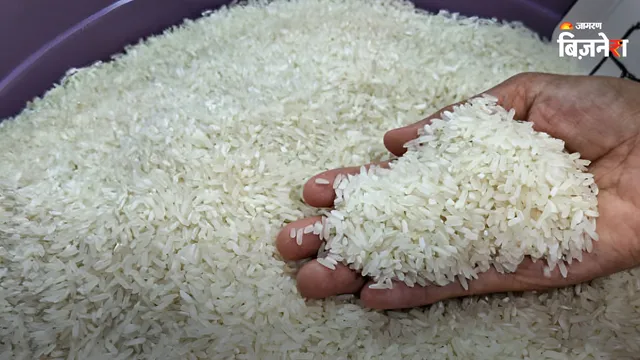
China has revoked the registration of three more Indian rice exporters, taking to 10 the number of Indian suppliers shut out of the Chinese market. The companies are Sarla Foods and Pattabhi Agro Foods, both based in Kakinada in Andhra Pradesh, and Om India Trading Limited of New Delhi, according to reports by Business Standard Hindi and Jagran.
China's General Administration of Customs (GACC) told the exporters that the Indian consignments did not meet required standards, after Chinese buyers reported that genetically modified organisms had been detected. Every affected cargo was broken rice. Seven exporters from Karnataka, Andhra Pradesh and Chhattisgarh had already been barred earlier in the year, and Beijing has not issued a public response to the objections raised by the Indian industry.
Exporters dispute the GMO findings
B.V. Krishna Rao, managing director of Pattabhi Agro Foods and president of the Rice Exporters Federation, said GACC classified the shipments as non-compliant after a Chinese buyer reported a GMO detection. Exporters note that the same cargoes had been inspected inside India before loading by China's own inspection arm and cleared at that stage, with the detection claim emerging only after arrival in China.
Mukesh Jain, president of the Rice Exporters Association of Chhattisgarh, said consignments returned from China were brought back and re-tested in India by the Food Safety and Standards Authority of India (FSSAI), which found no evidence of GMO material. The same lots were subsequently exported to other countries, where they passed quality checks without any issue.
The Indian government has told Beijing that genetically modified paddy is not grown commercially in India. Exporters describe the Chinese measures as non-tariff barriers applied under the cover of technical standards, and parts of the trade have characterised the sequence as a trade war conducted through regulation rather than duties. APEDA had already tightened testing and export parameters after the earlier round of rejections, but suspensions have continued.
Returned containers make the route uneconomic
According to Rao, the arithmetic of the China route no longer works for Indian suppliers:
- About $250 to ship a single container from India to China
- $2,500 to $4,500 in additional costs when a consignment has to be brought back from a Chinese port
- At least 70 non-basmati consignments rejected on GMO grounds by the end of May
Exporters say shipments to China have effectively stopped as a result, because one rejection destroys the margin on a full container of broken rice, a bulk commodity that carries little price cushion to absorb a return leg.
Volumes were rising before the curbs
Data from APEDA show India shipped 207,000 tonnes of non-basmati rice to China in the whole of 2025. In January-June 2026 alone the figure reached 492,000 tonnes, more than double the previous full year in six months. That made China one of the fastest-growing outlets for Indian non-basmati rice in the period immediately before the registrations were cancelled.
A wider pattern of rejections
Fred Gale, a former official at the US Department of Agriculture, called China's approach surprising, noting that Beijing has also turned away cargo from countries that do not grow genetically modified crops at all, including Russia, Belarus, Kazakhstan and Japan. He counted 146 such returned consignments in the first half of 2026.
Gale linked the dispute to China's own ageing state rice reserves, which Beijing wants to sell down and against which cheap Indian broken rice was competing directly. Broken rice from Vietnam, Myanmar and Pakistan has not been sent back. Indian exporters add that China is now sourcing rice from other origins, notably Pakistan, at higher prices.
