China imposes preliminary antidumping duties of up to 54.3% on Mexican and US pecans
China has imposed preliminary antidumping duties on pecans from Mexico and the United States, with reported rates reaching 54.3%. Mexico’s Economy Ministry will seek the removal of duties ranging from 17.8% to 51.6% for Mexican exporters before China issues its final ruling.
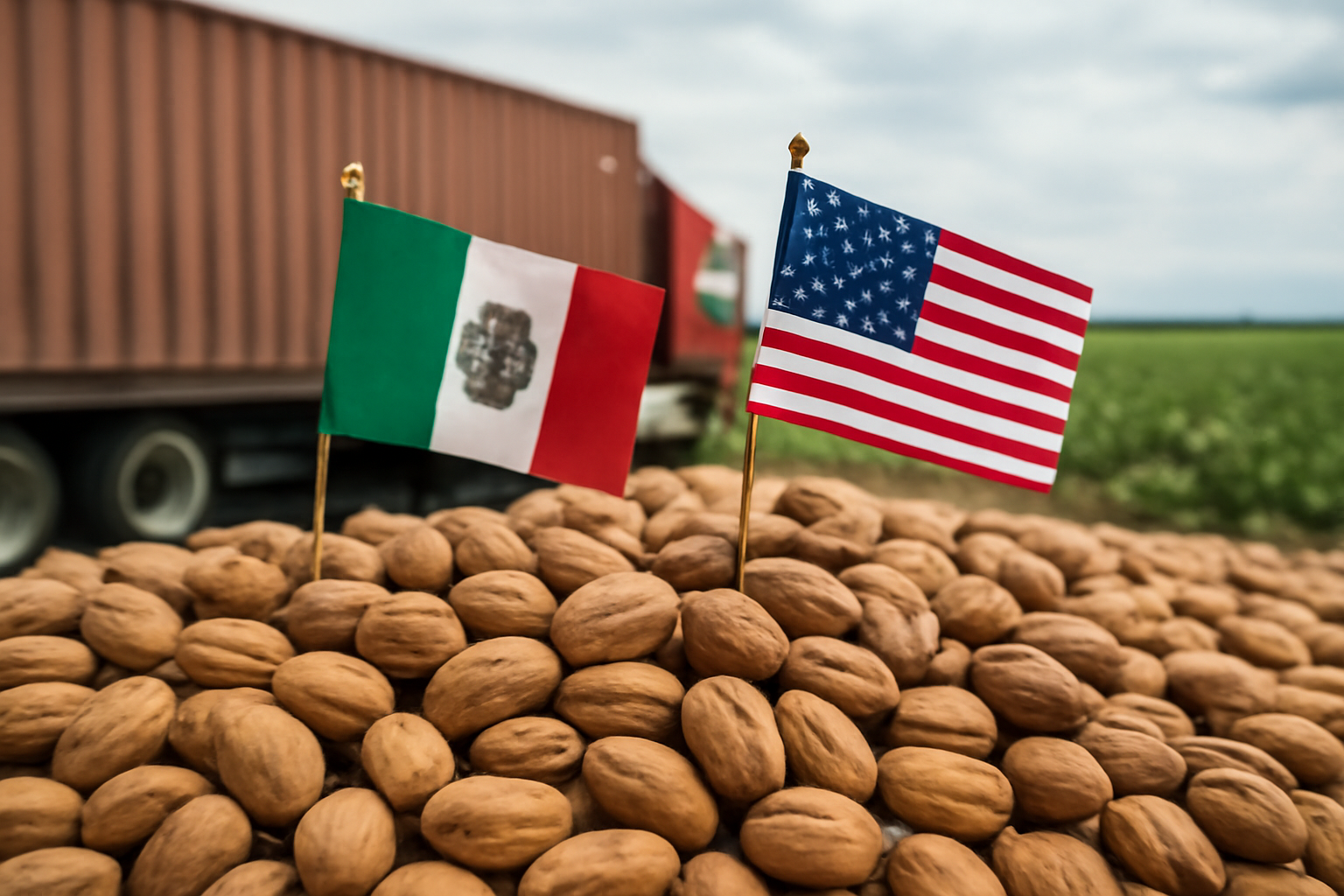
Preliminary duties target two major suppliers
China has imposed preliminary antidumping duties on pecans from Mexico and the United States, raising the cost of supplying the Chinese market. The highest rate cited in reports covering both countries is 54.3%, while the preliminary compensatory duties reported specifically for Mexican exports range from 17.8% to 51.6%.
The difference between the reported maximum rates appears to reflect the scope of the individual reports. Milenio places the range applied to Mexican exporters at 17.8% to 51.6%, while another account of the broader decision affecting Mexico and the United States cites duties of up to 54.3%. The available information does not identify which companies received each rate or provide a complete schedule for US suppliers.
Mexico seeks changes before the final ruling
Mexico’s Economy Ministry intends to ask China to withdraw the duties affecting Mexican pecan exports when the final resolution is issued, according to Milenio. The measures remain preliminary, leaving Mexico and the affected companies an opportunity to present their position before Beijing completes the proceeding.
The size of the range is commercially significant. An exporter subject to a 17.8% duty faces a materially different cost burden from one assessed at 51.6%. That company-specific variation can influence which suppliers remain competitive, how contracts are priced and whether Chinese buyers continue purchasing from established Mexican vendors while the investigation remains open.
Investigation adds pressure to pecan trade
China’s Ministry of Commerce established different duty rates after an analysis conducted since September 2025, according to one of the reports. Beijing opened the antidumping proceeding while it was also reviewing Mexican tariff measures. The available source material does not specify the products covered by that separate review or describe its connection to the pecan case beyond the timing.
For Mexican pecan businesses, the immediate issue is market access rather than a final loss of the Chinese market. Duties approaching 52% can make shipments substantially more expensive, potentially forcing exporters and Chinese importers to renegotiate prices, reconsider volumes or absorb part of the additional cost. The impact will depend on the rate assigned to each company and on the terms of existing sales agreements.
Final decision will determine longer-term impact
The case also affects US suppliers, although the supplied reports provide less detail about their individual rates. With both Mexican and US pecans covered, Chinese buyers may have to reassess procurement from two origins at the same time. The material provided does not state whether Beijing’s preliminary decision includes exemptions or separate treatment for individual exporters.
The final Chinese resolution is therefore the next decisive step. Mexico’s effort will focus on removing the preliminary duties or reducing their effect on its exporters. Until the final rates and company assignments are known, producers, processors, traders and importers face uncertainty over landed costs and the commercial viability of future pecan shipments to China.