Chile Targets North Asian Food Buyers with Seoul Export Summit
Chile is bringing more than 30 exporters together with over 70 buyers and importers from South Korea, Japan and Taiwan at a three-day summit in Seoul. Fresh fruit, salmon, pork, wine and processed foods are central to its effort to expand in affluent North Asian markets.
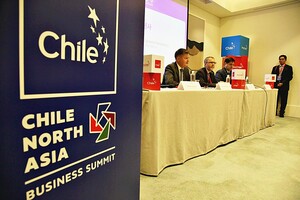
Chile brings exporters and buyers together in Seoul
Chile is stepping up its campaign to sell food and other products in North Asia, using Seoul as a meeting point for companies from South Korea, Japan and Taiwan. ProChile, the export promotion agency under Chile’s Ministry of Foreign Affairs, is holding the Chile–North Asia Business Summit 2026 from September 7 to 9.
More than 30 Chilean exporters and over 70 buyers and importers from the three North Asian markets are participating, according to Dongbang Ilbo. The program includes more than 400 scheduled business-to-business meetings, making it the largest international business-matching event organized by ProChile.
ProChile presented its regional strategy at a September 8 press briefing at Andaz Seoul Gangnam. Participants included Chilean Ambassador to South Korea Mathias Francke, ProChile Director General Ignacio Fernández and Frutas de Chile President Iván Marambio. The agency wants the summit to produce continuing commercial relationships rather than remain a one-off round of sales talks.
Food exports lead the diversification campaign
Fresh fruit and seafood are among the main categories in Chile’s North Asian push. The product list includes cherries, blueberries, grapes, apples, lemons and kiwifruit, as well as salmon, pork, frozen fruit, wine and processed foods. Marambio also presented Chile’s 2026–2027 fresh-fruit campaign for Asian markets.
Chile is emphasizing quality, food safety, product traceability and dependable supply. The strategy responds to rising interest among North Asian consumers in origin, production history and sustainability, alongside conventional quality and safety requirements. ProChile aims to use Chile’s production controls and supply chain reliability to strengthen confidence in the country’s food products and win a larger share of premium segments.
The campaign spans products with different logistics and sales cycles. Fresh cherries, berries and grapes require seasonal planning and tightly managed cold chains, while salmon, pork, frozen fruit and wine offer exporters a broader mix of year-round or longer-life products. Bringing buyers from three markets into one event gives Chilean suppliers an opportunity to compare requirements, identify distributors and discuss repeat business across the region.
Existing trade provides a base for regional growth
Chile’s exports to South Korea, Japan and Taiwan excluding copper and lithium totaled $4.78 billion in 2025, up about 6.4% from $4.494 billion a year earlier, Dongbang Ilbo reported. Japan was the largest of the three destinations at $2.756 billion, followed by South Korea at $1.622 billion and Taiwan at $402 million.
Chile’s commercial relationship with South Korea is supported by a free trade agreement signed in 2003 and implemented in 2004. It was South Korea’s first FTA and Chile’s first with an Asian country. Ambassador Francke said the agreement had underpinned the expansion of bilateral economic and trade ties over more than 20 years, while changing global trade conditions created a need to identify new areas of cooperation.
ProChile now intends to extend experience gained in South Korea to Japan and Taiwan, treating North Asia as a connected strategic export region. The three markets offer substantial consumer purchasing power and established import channels, but suppliers must meet demanding standards on consistency, traceability and safety. The Seoul meetings will test whether Chile can turn its broad product offering and existing trade links into sustained contracts, stronger country-brand recognition and greater access to premium food markets.