Chicago corn, soybean and wheat futures fall as strong dollar and US crop outlook weigh
Chicago corn, soybean and wheat futures closed lower as a stronger dollar and expectations for US production pressured internationally traded crops. December 2026 corn fell 4 cents to $5.3675 per bushel, soybeans lost 6.50 cents and wheat dropped by more than 20 cents.
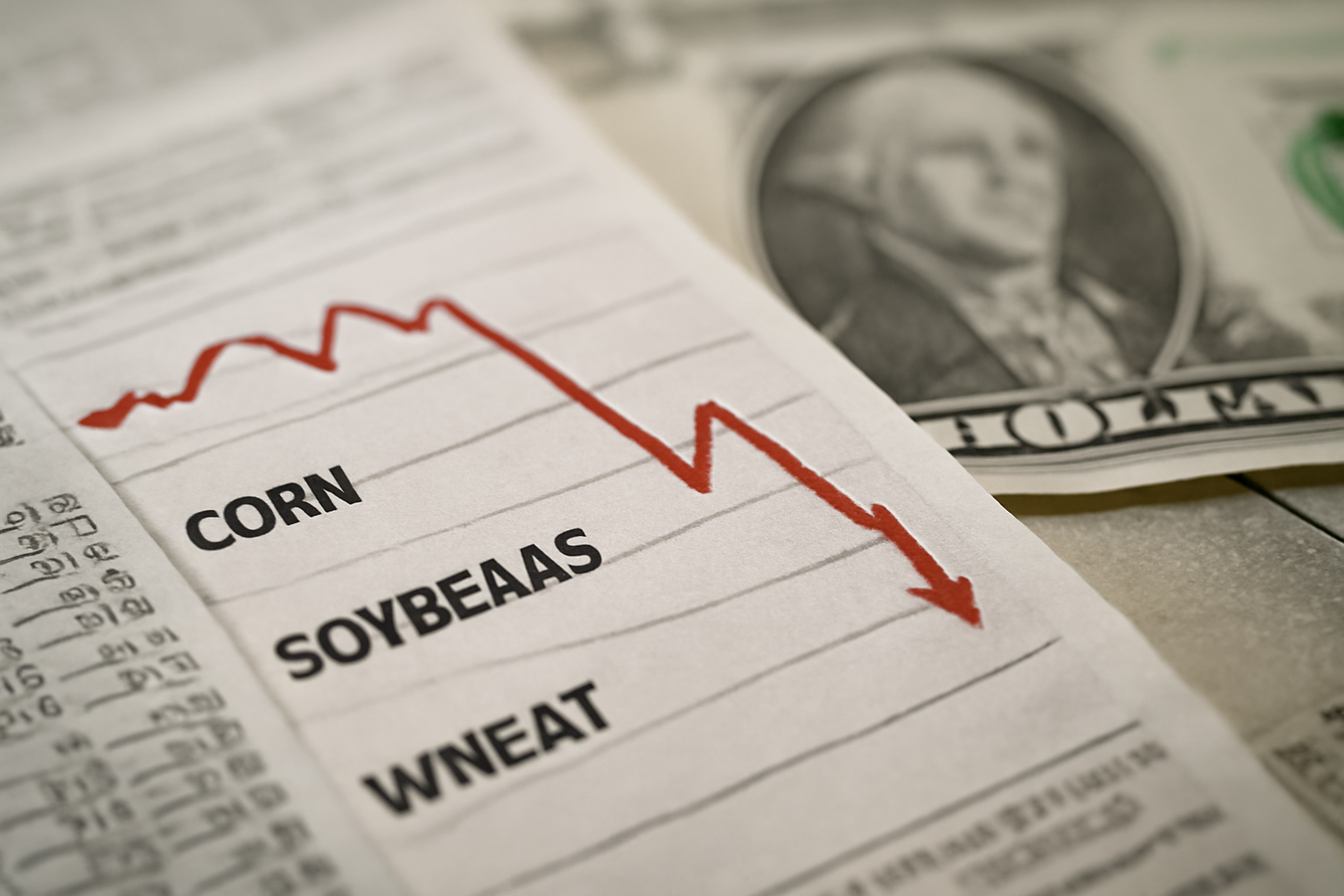
Grain contracts retreat in Chicago
Chicago grain futures closed broadly lower, with corn, soybeans and wheat all coming under selling pressure. The simultaneous decline across the three major crop markets reflected a combination of currency pressure and expectations surrounding US agricultural production.
December 2026 corn futures fell 4 cents to $5.3675 per bushel. Soybeans declined by 6.50 cents, while wheat recorded the sharpest stated move, dropping by more than 20 cents. Final prices for the soybean and wheat contracts were not provided.
The scale of the wheat decline made it the weakest of the three quoted markets in absolute cents per bushel. Corn experienced a smaller loss, while soybeans also moved lower as traders reduced exposure across agricultural futures.
Strong dollar raises pressure on US crops
A stronger US dollar was one of the factors weighing on prices. Because internationally traded agricultural commodities are commonly priced in dollars, currency appreciation can make US-origin crops more expensive for buyers using other currencies, unless sellers offset that effect through lower dollar prices.
This dynamic matters directly to exporters and international grain traders. When the dollar strengthens, competing origins can gain an advantage in destination markets where buyers compare landed costs closely. Importers may also delay purchases, reduce volumes or seek alternative suppliers if currency movements raise their local-currency costs.
The broad decline does not show that currency was the only influence on individual contracts. Corn, soybean and wheat markets have different demand channels, processing uses and supply conditions. Their concurrent fall nevertheless indicates that the stronger dollar was affecting the agricultural complex rather than a single commodity.
US production expectations shape supply outlook
The market was also monitoring the outlook for US production. Expectations of stronger or more readily available supply tend to limit futures prices because buyers face less urgency to secure crops, while producers and commercial holders have greater incentive to manage price risk.
For processors, livestock producers and other users of grain and oilseeds, lower futures can reduce the benchmark cost of future procurement. The final delivered price still depends on basis levels, freight, quality, contract timing and currency exposure. A futures decline therefore does not translate evenly into lower physical-market costs in every country.
Producers face the opposite pressure. Lower futures weaken prospective revenue and can influence hedging decisions, storage choices and the timing of sales. The December 2026 corn contract at $5.3675 per bushel provides a forward reference for market participants, but its 4-cent daily decline was considerably smaller than the reported fall of more than 20 cents in wheat.
The next direction will depend on how expectations for US output develop and whether the dollar continues to strengthen. Export competitiveness, importer purchasing decisions and the relationship between futures and local cash prices will determine how quickly the Chicago selloff reaches physical grain markets.