Camel milk gains ground as drought weakens cattle production in East Africa
Camel milk production is expanding as recurrent drought makes cattle farming increasingly difficult across East Africa. Commercial growth will depend on better hygiene, processing technology, cold chains and regional standards.
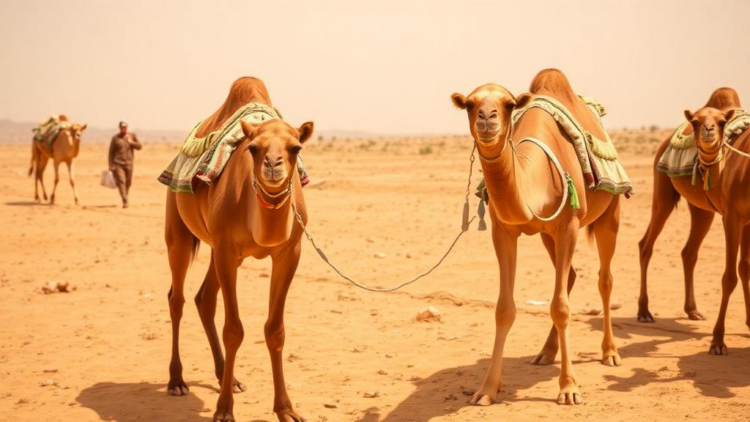
Camels gain importance in dryland dairy
Recurring drought and deteriorating rangelands are pushing pastoral communities in East Africa to rely more heavily on camels for milk. A review covered by Bioengineer.org, drawing on more than two decades of research in Ethiopia, Kenya, Somalia and Djibouti, presents the one-humped dromedary as a more resilient dairy animal in areas where cattle and goats struggle to maintain production.
Africa holds more than 80% of the world's camel population, and about 60% of those animals are concentrated in eastern African countries including Sudan, Somalia, Ethiopia and Kenya. Global camel milk output increased from about 3 million tonnes in 2017 to 4.11 million tonnes in 2022, according to the review. Production may have reached 5.4 million tonnes after allowing for underreporting, while average annual growth was estimated at approximately 2.45%. The global camel population could reach 60 million within the next 25 years.
Regional supply remains difficult to measure
Ethiopia has an estimated 1.7 million to 2.0 million camels, primarily in the Somali, Afar and Oromia regions. Afar, Somali, Karayu and Borana communities use the animals for milk, meat, transport and income. The review reports production of approximately 1.165 million litres of camel milk in Kenya and 0.956 million litres in Somalia. Camel milk represents about 40% of Somalia's total milk output and 12% of Ethiopia's.
Those figures are subject to substantial uncertainty. Mobile herds, weak livestock censuses and frequent cross-border movements make camel populations and milk volumes difficult to record. Informal trade between Ethiopia, Somalia and Kenya is already active, but poor roads, insecurity and a shortage of collection centres constrain the transition to larger regulated markets. Milk is commonly transported without refrigeration or formal quality controls, shortening shelf life and increasing losses and food-safety risks.
Processing potential meets technical and safety barriers
Camel milk generally contains 2.5% to 4.5% fat and 2.5% to 3.9% protein, as well as less lactose than bovine milk. It provides vitamin C and minerals including calcium, phosphorus, potassium, magnesium and sodium. The milk lacks β-lactoglobulin, a cow-milk whey protein associated with some infant allergies. However, low κ-casein levels, large casein micelles and other protein characteristics complicate industrial processing. Camel milk coagulates weakly with rennet, forms poor curds, ferments slowly and can be unstable under ultra-high-temperature treatment. Cheese and butter yields are also lower than for bovine milk.
Processors have nevertheless developed pasteurized milk, powder, yoghurt, cheese, ice cream, chocolate and probiotic beverages. Tiviski in Mauritania, Camelicious in Dubai and Addis Kidan Milk Processing Enterprises in Ethiopia supply packaged camel milk to urban or export customers. Peri-urban dairies are also beginning to aggregate supply from pastoral producers.
Food safety remains a central commercial obstacle. Studies cited by the review found bacterial counts above acceptable limits in Ethiopia's Somali Regional State and detected Staphylococcus aureus, Escherichia coli and other organisms in raw milk from pastoral areas. Other isolated pathogens included Streptococcus, Listeria, Salmonella and Pseudomonas species. Camel milk's antimicrobial components do not compensate for poor udder hygiene, unrefrigerated transport or contaminated traditional containers, particularly at ambient temperatures.
Expansion will therefore require investment beyond herd growth. Cold-chain infrastructure, veterinary services, hygienic collection, processing equipment and enforceable product standards are needed to connect dryland producers with urban and cross-border markets. The review notes that regulatory harmonization among Ethiopia, Somalia, Kenya, Sudan and Djibouti remains limited. Camels also reproduce slowly, with a gestation period of roughly 13 months and a restricted mating season, while drought, deforestation and rangeland degradation continue to restrict feed availability.