Brebes expands shallot exports to Thailand as Indonesia seeks wider regional markets
Brebes, which produces about 20% of Indonesia’s shallots, has dispatched a shipment to Thailand as the government seeks broader markets for farmers. Officials are pairing export expansion with domestic procurement and measures to improve seed supply and productivity.
Shipment opens another regional sales channel
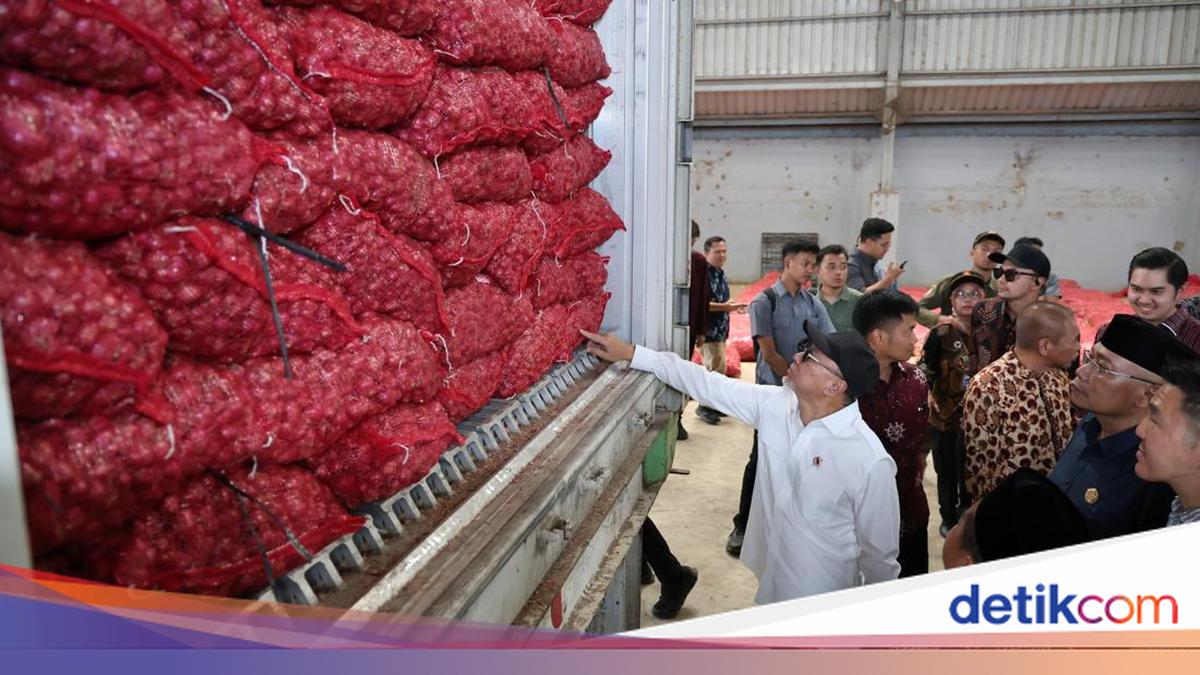
Indonesia has dispatched shallots from Brebes to Thailand, extending the regional reach of one of the country’s leading horticultural production centers. Coordinating Minister for Food Zulkifli Hasan released the shipment from a Controlled Atmosphere Storage facility on September 12, according to Detik.
Brebes shallots have already reached Vietnam, Malaysia and Singapore, in addition to Thailand. The government views these Southeast Asian markets as additional sales channels for farmers when domestic output is high, rather than as a replacement for Indonesia’s home market.
Zulkifli said the government must ensure that farmers have buyers after increasing production. He described the shipment as evidence that Indonesian shallots can both supply domestic consumers and compete in regional export markets. The available source did not disclose the shipment’s volume, value, buyer or commercial terms.
Brebes supplies a fifth of national production
Brebes accounts for approximately 20% of Indonesia’s shallot production and 60% of output in Central Java, Detik reported. The district routinely plants between 30,000 and 35,000 hectares and harvests around 300,000-350,000 tonnes annually, giving exporters a substantial production base from which to develop regional business.
The scale also makes market management important. A large harvest concentrated in one producing district can place pressure on farmgate prices if traders, processors and domestic distribution channels cannot absorb supplies quickly. Access to Thailand and other nearby markets could give growers and merchants another outlet, although the commercial effect will depend on regular shipment volumes, quality compliance and delivered costs.
Controlled-atmosphere storage may help the supply chain manage a perishable crop by providing more flexibility between harvest and sale. The government has not provided operational data for the Brebes facility or said how much export-grade product it can handle. Those details will be important for assessing whether exports can become a consistent program rather than a series of individual shipments.
Exports must remain aligned with domestic supply
The government says domestic shallot demand is already being met, allowing it to encourage higher production and pursue better prices through exports. At the same time, officials intend to balance overseas sales with availability and price stability in Indonesia, where shallots are a widely used food ingredient.
Domestic procurement is another part of that approach. Authorities are encouraging the National Nutrition Agency to source farmers’ shallots for the Free Nutritious Meals program. If implemented at scale, this channel could broaden demand inside Indonesia alongside sales to commercial distributors and foreign buyers.
Further measures will focus on seed production and farm productivity, including reducing dependence on imported planting material while raising export quality. For producers, the opportunity is a larger and more diversified customer base. For traders and importers in Southeast Asia, Brebes offers annual output of up to 350,000 tonnes, but dependable trade will require consistent specifications, storage performance and scheduling. The export initiative was also highlighted during the 2026 Brebes Shallot Festival, which featured an 8-meter shallot display.