Brazilian orange juice maintains $1.08 billion US flow despite tariff threat
Brazilian orange juice has maintained a $1.08 billion flow to the United States after being spared the broader 25% tariff. CitrusBR points to declining Florida production and notes that Brazilian suppliers already pay a duty of $415 per tonne.
Brazilian juice avoids broader tariff
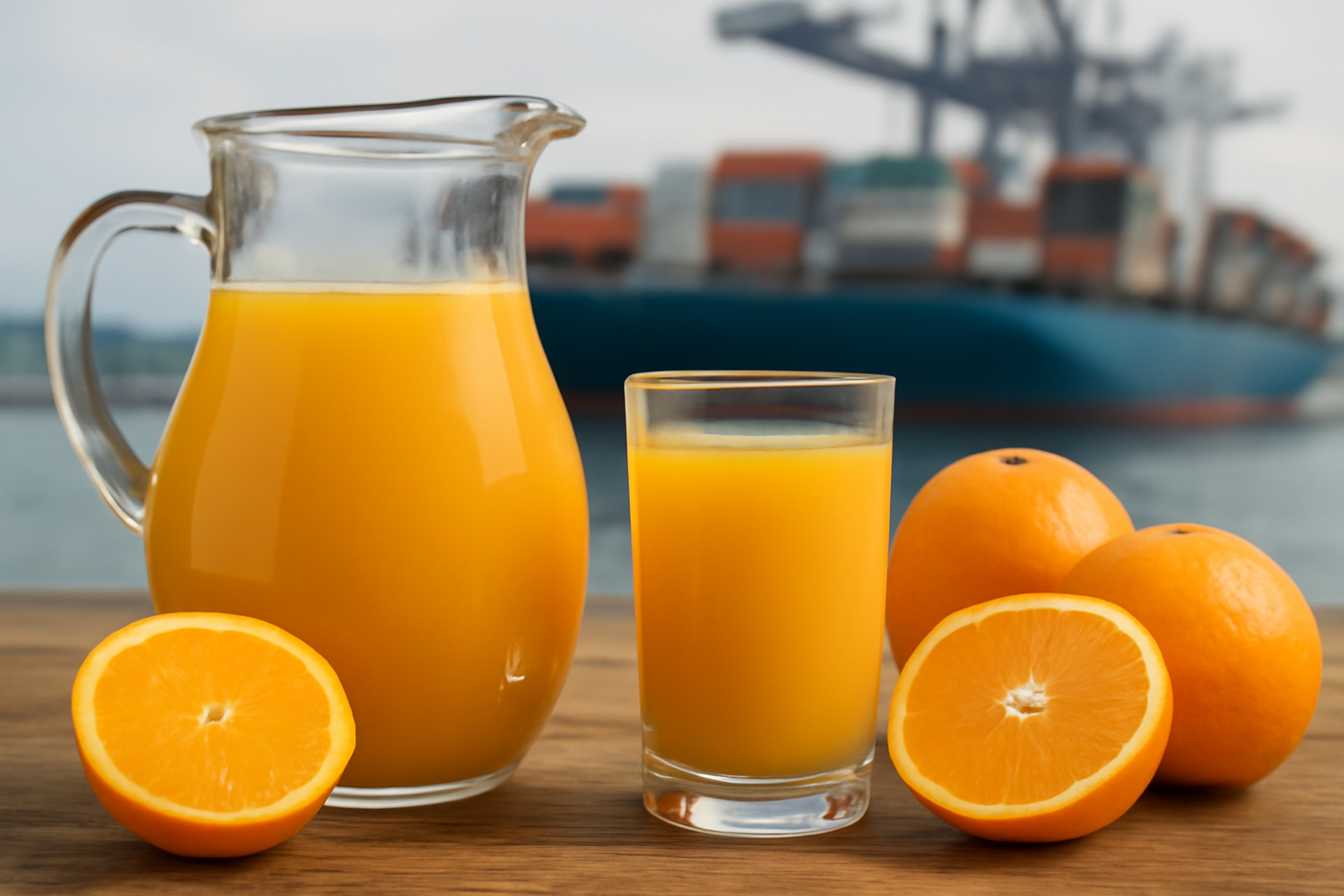
Brazilian orange juice has maintained a $1.08 billion flow to the United States after escaping the broader 25% tariff that threatened the trade. The outcome preserves access to a major destination for Brazil’s citrus industry while US buyers continue to contend with declining orange production in Florida.
CitrusBR, the association representing Brazilian citrus juice exporters, cited Florida’s production decline as an important factor behind continued US demand. The domestic supply constraint leaves processors and beverage companies more dependent on external juice even as trade policy adds uncertainty to purchasing decisions.
The exemption does not mean Brazilian product enters the US market without a tariff. According to CitrusBR, the Brazilian industry already pays a duty of $415 per tonne. That existing charge remains part of the delivered cost faced by suppliers and buyers, but the sector has avoided the additional pressure that a broader 25% measure would have created.
Florida decline supports import demand
Falling production in Florida changes the commercial balance between domestic supply and imports. When local output cannot cover processors’ requirements, imported orange juice becomes more important for maintaining production volumes, product availability and continuity of supply.
For Brazilian producers and exporters, the $1.08 billion flow demonstrates the scale of their exposure to the US market. It also shows why the tariff treatment matters: an additional percentage-based charge could affect margins, contract negotiations and the relative cost of Brazilian juice for American customers.
US processors face the opposite calculation. They must weigh the existing $415-per-tonne duty against the need to secure sufficient raw material while Florida output declines. The availability of Brazilian juice gives buyers another supply source, but the tariff remains embedded in procurement costs and can influence prices throughout the processing chain.
Trade remains exposed to policy decisions
Avoiding the broader 25% tariff removes an immediate risk but does not eliminate policy exposure. Brazilian exporters still operate under the existing per-tonne duty, while buyers must account for that cost when setting purchasing plans and negotiating supply agreements.
The market impact therefore extends beyond the headline value of $1.08 billion. Brazilian citrus growers, juice processors, exporters and US beverage companies all depend on the continuity of this flow. With Florida production declining, any future change in tariff treatment could have direct consequences for sourcing costs, supplier competition and the availability of orange juice in the United States.