Brazil redirects EU-blocked beef to Morocco, adding pressure on Spanish producers
Brazilian beef suspended from the European market is being sold into Morocco, a market Spain lost after an outbreak of lumpy skin disease. Speakers at the second Foro Rural in Galicia argued the sanitary block is hitting Spanish beef harder than the Mercosur agreement, whose safeguard caps imports at 99,000 tonnes a year.
A health ban with a trade side effect
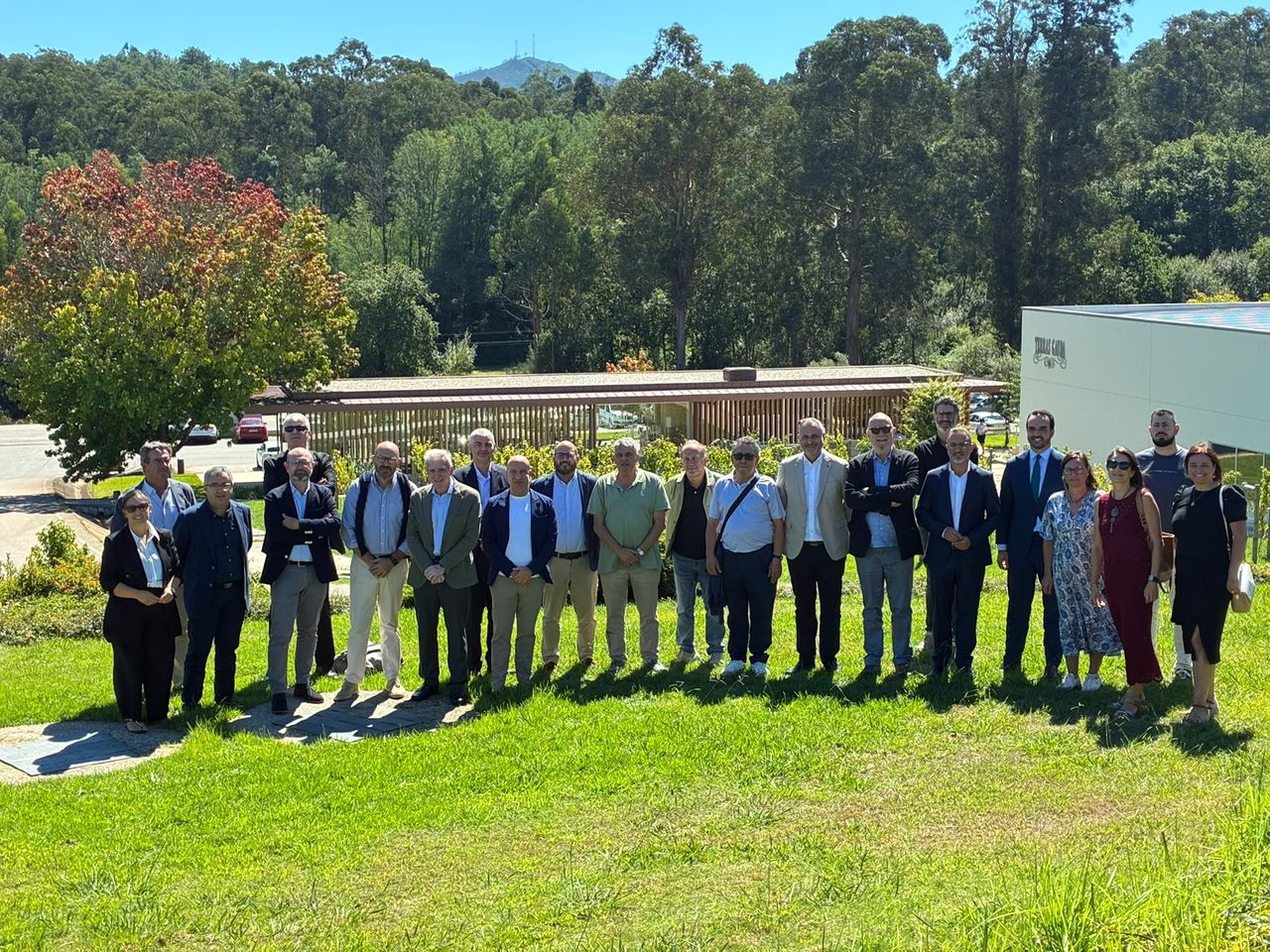
Brazilian beef shut out of the European Union is being redirected to Morocco, until recently one of the main export markets for Spanish beef. That was one of the conclusions drawn at the second edition of Foro Rural, organised by the Foro Económico de Galicia at Bodegas Terras Gauda, as reported by La Voz de Galicia. Morocco closed its market to Spanish cattle after lumpy skin disease was detected in Spain.
“Brazil cannot sell beef to Spain right now, but it is flooding the Moroccan market, which was one of our main customers, and that also affects us,” said José María García Álvarez-Coque, professor at the Universitat Politècnica de València and a specialist in international market analysis. He attributed the block to sanitary policy rather than to the trade agreement: “The Commission has just decreed the suspension of Brazilian beef, but that is not a mirror clause, it is protecting our health.” Measures of that kind, he argued, can hit individual sectors harder than Mercosur itself.
The cause of falling Spanish beef prices is contested. Some blame the closure of the Moroccan market, while others hold Mercosur responsible, according to La Voz de Galicia.
What the agreement actually moves
García Álvarez-Coque described the deal as complex but broadly positive, arguing that it ends the sector's isolation and opens a compatible market. He expects the EU to export industrial goods and import raw materials, with agricultural flows heavily skewed toward South America. The figures presented at the forum:
- Mercosur agricultural exports of around 25 billion euros, against 8 billion euros going the other way.
- A market of more than 200 million people with room to grow.
- Wine tariffs of 35% and olive oil tariffs of 10%, both set to fall.
- Soybeans identified as essential to cutting European dependence on markets that have become more volatile, such as the American one.
- A beef safeguard limiting imports to 99,000 tonnes a year, equivalent to 1.5% of European production.
Beatriz Alvargonzález, the European Commission's representative in Spain, said such agreements reduce reliance on a single supplier and that negotiators build in several layers of protection for sensitive sectors. “What matters is not to close doors, but also that those inside play by the same rules as us,” she said. García Álvarez-Coque was blunter on reciprocity: “You can ban glyphosate here but not there, which is why I think mirror clauses are a fallacy; perfect reciprocity is impossible.”
Galicia's exposure runs through feed
Galicia produces 94,000 tonnes of beef a year, slightly less than the volume the Mercosur quota would allow into the entire European Union. Juan José Cerviño, director of the CAP, used the comparison to argue that neither figure is large enough to set European prices: “Can anyone think that if Galicia decided one day to give away all the meat it produces it would affect prices in the rest of Europe? No, because the volume is small, the same as with Mercosur.”
He also pointed to the region's dependence on imported animal feed:
- 91% of poultry and pig feed.
- 41% of dairy cattle feed.
- 26% of beef cattle feed.
“Losing agreements like Mercosur could complicate things a great deal for us if the United States decides not to sell to us or Russia takes Ukraine,” Cerviño said. Adrián Martínez, speaking for the Ministry of Agriculture, said operators have to take decisions in a complex and uncertain context. Farm organisations called for vigilance: Juan Pérez of Asaga said Galician beef is profitable and could compete internationally if everyone faced the same conditions; María Ferreiro of the Sindicato Labrego Galego warned that 99,000 tonnes may look small but could arrive in one specific place with one specific function; Jacobo Feijóo of Unións Agrarias said the sector must make use of such agreements while watching markets for breaches. García Álvarez-Coque closed by noting that problems such as the lack of generational renewal and the small scale of farms are not solved by the absence of an agreement.