Brazil’s Cotton Candy grape growers seek new markets as US share falls
Cotton Candy grapes occupy about 500 hectares in Brazil’s São Francisco Valley, with regional output estimated at around 800 containers per season. Additional US tariffs and an early California harvest cut the US share of sales from about 90% historically to 65%-70% this season.
A specialty crop built around US demand
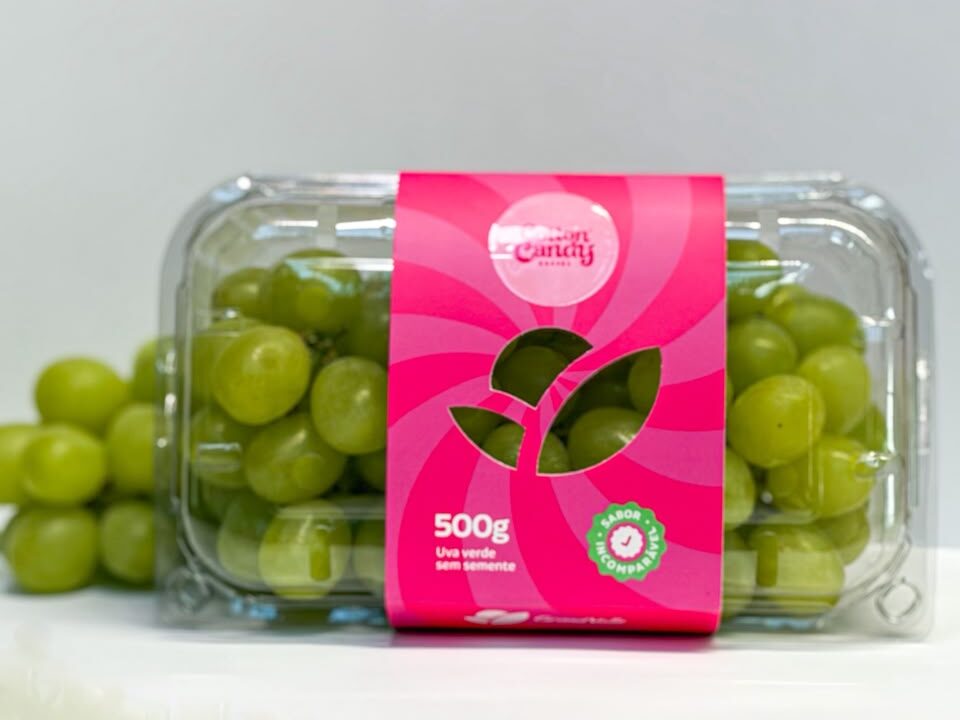
Brazilian growers of Cotton Candy grapes are trying to diversify sales after additional US tariffs and an earlier California harvest disrupted their main export channel. The white seedless variety, known for a flavor resembling cotton candy, is cultivated on about 500 hectares in the São Francisco Valley around Petrolina, Pernambuco, according to Movimento Econômico.
The variety has been grown in Brazil since 2015. It was originally developed in California by IFG, a company later acquired by Spain’s SNFL. Cotton Candy was among several seedless varieties introduced as the valley shifted away from its former concentration on seeded grapes such as Italia and Red Globe. Partnerships with international breeding companies from the United States, Israel and Spain supported that change.
João Marcos de Souza, export sales representative at GrandValle, told Movimento Econômico that the grape’s distinctive taste created demand for the variety itself, regardless of the producer or retailer. In the United States, packaging, social media campaigns, recipes and influencer content have reinforced Cotton Candy as a consumer-facing brand rather than simply another white grape.
Tariffs and California supply squeeze the season
Historically, approximately 90% of the valley’s Cotton Candy crop was exported, primarily to the United States. This season, the US share fell to an estimated 65%-70% after additional tariffs on Brazilian products. Growers responded by selling more fruit in Brazil and seeking customers in the Netherlands and England.
The alternatives do not provide equivalent returns. Souza said a five-kilogram box has a reference price of about R$ 70 in Brazil, compared with R$ 100-R$ 110 for sales in the United States. On the domestic market, the specialty variety is often sold as an ordinary white grape because Brazilian consumers do not yet seek it by name. He estimated that redirecting fruit away from the intended US channel could result in a loss of about 60%-70% against the expected value.
Competition also intensified when weather conditions brought California’s harvest forward by three to four weeks. That placed local and Brazilian grapes in the US market at the same time. The first four or five weeks were particularly difficult, Souza said, although conditions improved as California volumes declined and Brazilian fruit gained more shelf space. Only two of the four importers that traditionally handled the variety were able to operate this season.
Output scale and the search for diversification
The São Francisco Valley harvest generally runs from mid-August to the end of November. Average productivity is estimated at 25 tonnes per hectare, while the region’s growers collectively harvest approximately 800 containers during the season. Shipments travel mainly by sea in refrigerated cargo. GrandValle itself has between 17 and 20 hectares planted with Cotton Candy grapes.
China offers a possible new outlet following the opening of its market to Brazilian grapes, but no Brazilian Cotton Candy shipments have been made there yet. Exporters have joined market missions, while producers work on protocols and farm adaptations required by buyers. Souza expects the first Brazilian shipment in 2027 and noted that Chinese consumers already know the variety through supplies from other origins.
That prospect has not triggered expansion plans. According to Souza, some growers intend to maintain their current area or reduce plantings because of profitability concerns and dependence on one principal market. For producers, the immediate challenge is therefore not simply finding demand, but securing channels capable of paying the premium required for a licensed specialty grape with refrigerated logistics and a narrow seasonal sales window.