Bima Targets Higher-Value Processing After 119,311-Tonne Salt Harvest
Indonesia’s Bima Regency produced 119,311.24 tonnes of salt in 2025, down 8.35% from the previous year. A Rp13 billion washing plant is intended to improve quality, expand industrial sales and retain more processing value locally.
Bima moves from raw salt toward processing
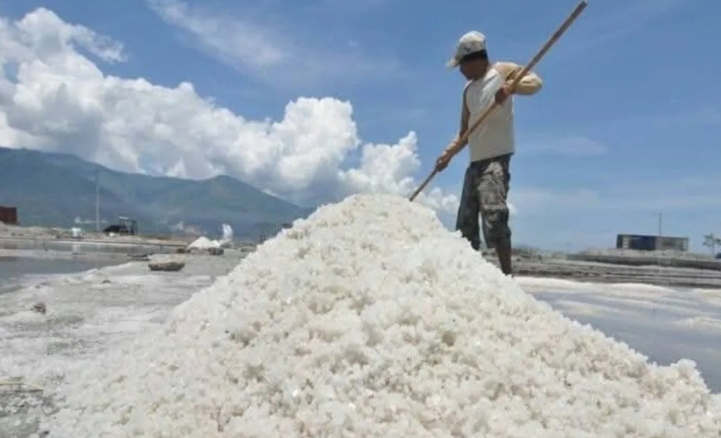
The government of Bima Regency in Indonesia’s West Nusa Tenggara province is promoting downstream salt processing after local production reached 119,311.24 tonnes in 2025. The initiative aims to improve product quality, open access to industrial customers and raise income for approximately 3,000 salt-farming families.
According to Pantau and ANTARA, the sector supports the livelihoods of an estimated 9,000 to 12,000 people when family members are included. Production comes from approximately 1,564.59 hectares of ponds across Palibelo, Woha, Bolo, Sape and Lambu districts, making salt an important economic activity for Bima’s coastal communities.
Output remains high, but quality limits industrial access
Bima’s salt output has fluctuated considerably. Data from the regency’s Marine and Fisheries Service show production of 100,815 tonnes in 2021, 77,739.68 tonnes in 2022, 108,686.98 tonnes in 2023 and 130,186.32 tonnes in 2024. The 2025 harvest was 8.35% below the 2024 level but still provided a substantial raw-material base for local processing.
Most of the salt is classified as KW2 or KW3, according to Irmalashari, head of institutions and investment at Bima’s Marine and Fisheries Service. Some KW1 salt is produced around Nanga, where proximity to the sea supports better quality, but the area lacks road access. The quality gap restricts entry into industries that require consistent raw-material specifications, making improvements at pond level as important as investment in factories.
Bima salt is already sold across Indonesia, including Bali, Java, Makassar, East Nusa Tenggara, Banjarmasin, Kabaena, Medan and Jakarta. ANTARA reported that salt is consolidated in company warehouses and sent mainly to processing plants in East Java. One plant in Gresik reportedly purchased about 1,500 tonnes from Bima in the previous year, although the local government does not have detailed shipment figures for each destination.
Rp13 billion plant provides an initial processing base
A washing plant in Donggobolo village, Woha district, is intended to retain more of that value in Bima. The facility, built with approximately Rp13 billion in assistance from Indonesia’s Ministry of Marine Affairs and Fisheries, has warehouse capacity of up to 2,000 tonnes. It can wash, purify and iodize salt, reducing impurities and helping products meet industrial requirements and the Indonesian National Standard.
The plant’s inauguration was accompanied by the launch of Garam Merah Putih Bima, a locally branded iodized consumer salt. Planned products include coarse salt, processed salt and iodized salt, while potential customers include mining, chemicals, cosmetics, food and beverage businesses. The ministry is encouraging partnerships among private companies, the regional government-owned enterprise and cooperatives, alongside market expansion in Java, Sulawesi and Kalimantan.
Market access will determine returns for farmers
Processing capacity alone will not guarantee higher producer income. The facility must secure regular supplies, maintain quality and develop reliable buyers capable of absorbing output from each producing village. With the 2025 harvest far exceeding the plant’s 2,000-tonne storage capacity, most Bima salt will continue to depend on broader domestic distribution networks.
The project nevertheless gives Bima a route to shift part of its production from unprocessed material into standardized products. Its commercial impact will depend on road improvements, particularly around higher-quality production areas, and on whether partnerships can provide farmers with dependable purchasing and prices while building viable industrial sales.