Belarus Seeks More Potato Acreage, but Expansion Depends on Securing Buyers
Belarus plans to expand commercial potato acreage only after the government secures additional markets. Russia is the main prospective destination, while machinery costs and harvesting capacity remain constraints.
Government makes sales a condition for expansion
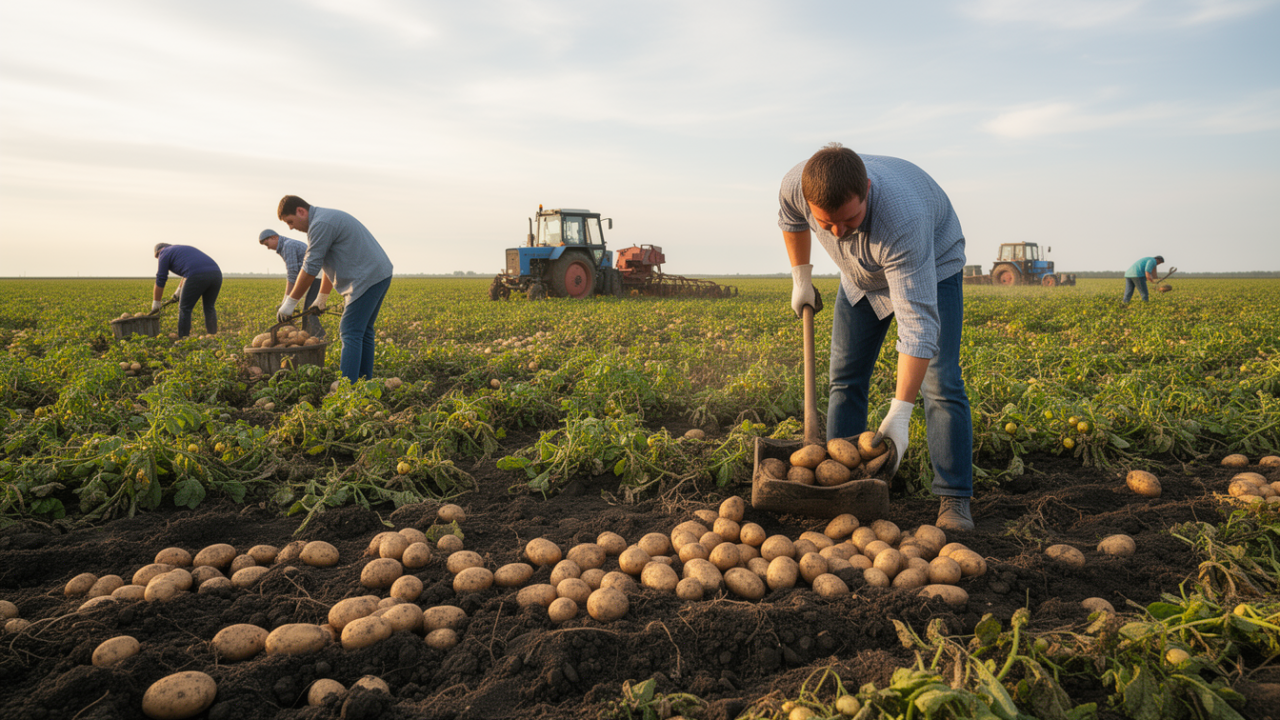
Belarusian President Alexander Lukashenko has instructed the country to expand potato planting, but only where future sales can be secured. Large commercial farms currently cultivate 22,000 hectares, an area the president described as insufficient for the country. The government has been tasked with finding additional markets before winter, making buyer commitments a prerequisite for increasing production.
Vadim Makhanko, director general of the Scientific and Practical Center of the National Academy of Sciences of Belarus for Potato, Fruit and Vegetable Growing, said existing output fully covers household demand and the needs of domestic processors. These include starch factories and producers of chips, french fries and mashed potato products. Around 300,000 tonnes are currently available for export, according to Pravda.ru.
Russia offers an opportunity but also a price test
Russia remains the main prospective export market. A forecast for 2026 indicates that Russian potato production could decline by 1 million tonnes because of adverse weather and reduced planting. That potential shortfall could create additional demand for Belarusian potatoes, provided suppliers can combine competitive prices with consistently high quality.
The sales condition reflects the risk of expanding acreage before demand is established. Makhanko warned that higher output without a clear marketing plan could create a surplus and drive prices sharply lower, as happened in 2023. For producers, the government’s approach ties planting decisions more directly to export contracts, processing demand and the capacity of distributors to absorb additional volumes.
Average potato yield across Belarus reached 332 centners per hectare this year, 10 centners above the previous year. The improvement was attributed both to the work of agricultural producers and to favorable rainfall. At that yield, expanding acreage could add substantial volumes, increasing the importance of storage, grading, packaging and timely access to buyers.
Specialized varieties and harvesting equipment
The national research center is concentrating on specialized potato varieties suited to different market segments. This is relevant for processors because starch, chips, french fries and mashed products require distinct characteristics. A broader range of targeted varieties could help farms align production with contracted industrial demand rather than relying mainly on the fresh market.
Equipment remains a constraint. Makhanko said Belarus has developed a complete line of machinery for soil preparation, planting, warehouse logistics and packaging, but harvesting is still a weak link. A potato harvester produced by Gomselmash requires further development to reach the standard of international equivalents. Self-propelled harvesters from the European Union and the United States are too expensive for smaller farms and are considered economically justified only for operations cultivating at least 500 hectares. Belarus therefore has a potential sales opportunity in Russia, but acreage growth will depend on confirmed demand, workable prices and the ability to harvest and handle larger crops efficiently.