Bayan Sulu adds 16,600 tonnes of confectionery capacity to challenge imports in Kazakhstan
Bayan Sulu has invested more than 14 billion tenge in a new confectionery complex in Kostanay, adding 16,600 tonnes of annual capacity. The company aims to gain ground in a Kazakh market where imports account for an estimated 65% while retaining its substantial export business.
New complex raises annual capacity to 68,000 tonnes
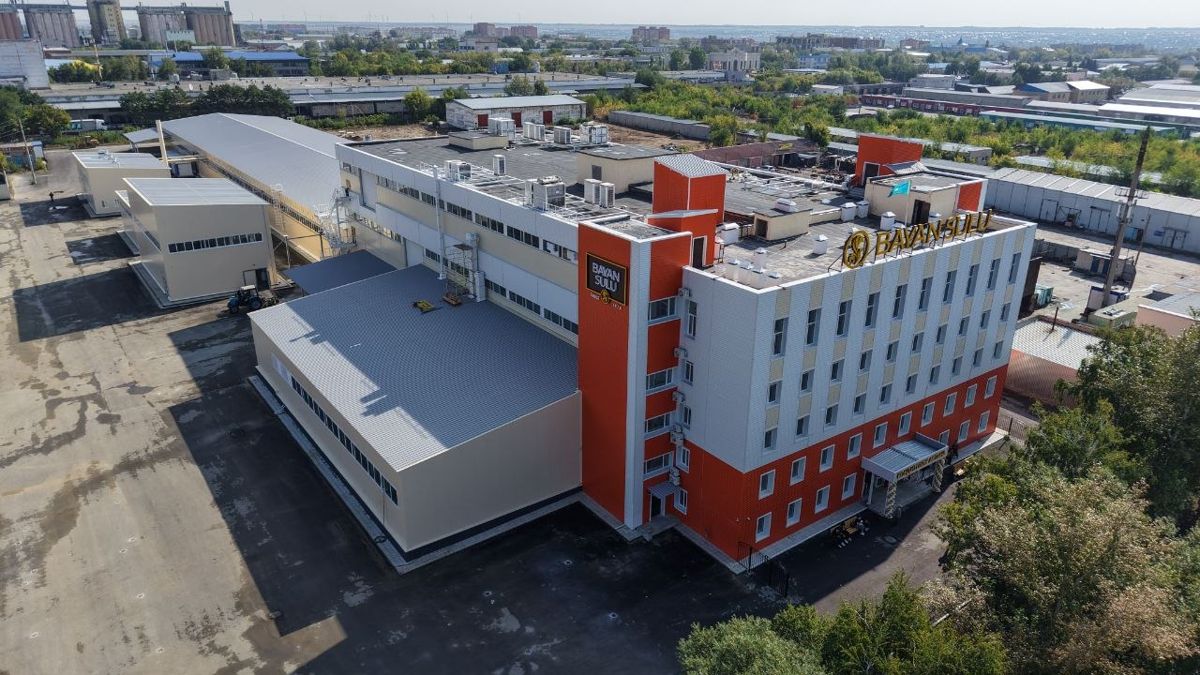
Kazakh confectionery producer Bayan Sulu commissioned its new Confectionery Capital production complex in Kostanay on August 19, expanding capacity as it seeks to compete with imported sweets. According to Forbes Kazakhstan, investment in the project exceeded 14 billion tenge.
The complex adds 16,600 tonnes of confectionery capacity per year. Once it reaches its designed output, the factory will be able to produce up to 68,000 tonnes annually. The project also created 260 jobs. This is a substantial step from the factory's original scale: when Bayan Sulu was founded in Kostanay in 1974, its caramel and biscuit workshops had combined annual output of 8,260 tonnes.
Biscuits at the center of the expansion
The new site will produce sugar biscuits, kurabie, filled biscuits and American-style cookies. Bayan Sulu already operates five lines in its biscuit workshop, but the company says demand in some categories is running ahead of its existing technical capabilities. The additional equipment is intended to increase both production volumes and the range of formats that can be brought to market.
Bayan Sulu currently makes more than 300 products under approximately 90 brands. Its portfolio includes candy, caramel, chocolate, wafers, biscuits, marmalade and marshmallow products. The latest investment continues a modernization program that began a new phase in 2016 with the development of biscuit production, followed by lines for wafers and different types of biscuits.
Import substitution and local processing
Bayan Sulu estimates that imported goods account for about 65% of Kazakhstan's confectionery market. The share represents strong competition for domestic factories, but it also defines the addressable space for local producers able to match foreign products in quality, variety and speed of product development. Company president and management board chairman Timur Sadykov said the objective was not merely to produce more, but to expand in categories where a domestic supplier can offer comparable quality and steadily increase its market presence.
The complex also links confectionery manufacturing with Kazakhstan's agricultural sector. Bayan Sulu uses domestically produced flour and molasses, processing them into higher-value finished goods for the local market or export. This is particularly relevant to Kostanay Region, one of the country's largest agricultural areas, because food-processing investment can generate additional demand for local raw materials. The project is also aligned with the national goal, announced in Kazakhstan's 2023 address to the nation, of raising the processed share of agricultural output to 70%.
Exports remain central to growth plans
The domestic market is only one destination for the new capacity. In 2025, Kazakhstan accounted for 55% of Bayan Sulu's total sales and exports for 45%. Russia received 78% of the company's exports, while its products were also shipped to Belarus, Ukraine, Mongolia, China, Armenia, Azerbaijan, Uzbekistan, Turkmenistan, Kyrgyzstan and Tajikistan. The new complex can therefore support both import substitution at home and further export growth. Bayan Sulu plans to commission two more modern production lines over the next few years, with a strategic target of exceeding 100,000 tonnes of confectionery output annually. Reaching that level will depend not only on installing capacity, but also on adapting quickly to changing consumer preferences and converting new tastes and formats into mass production.