Bangladesh Tea Board targets annual tea output of 115 million kg by 2030
The Bangladesh Tea Board aims to raise annual tea production to 115 million kg by 2030. Its plan centers on expanding high-yielding varieties developed by the Bangladesh Tea Research Institute, with greater export capacity as the intended result.
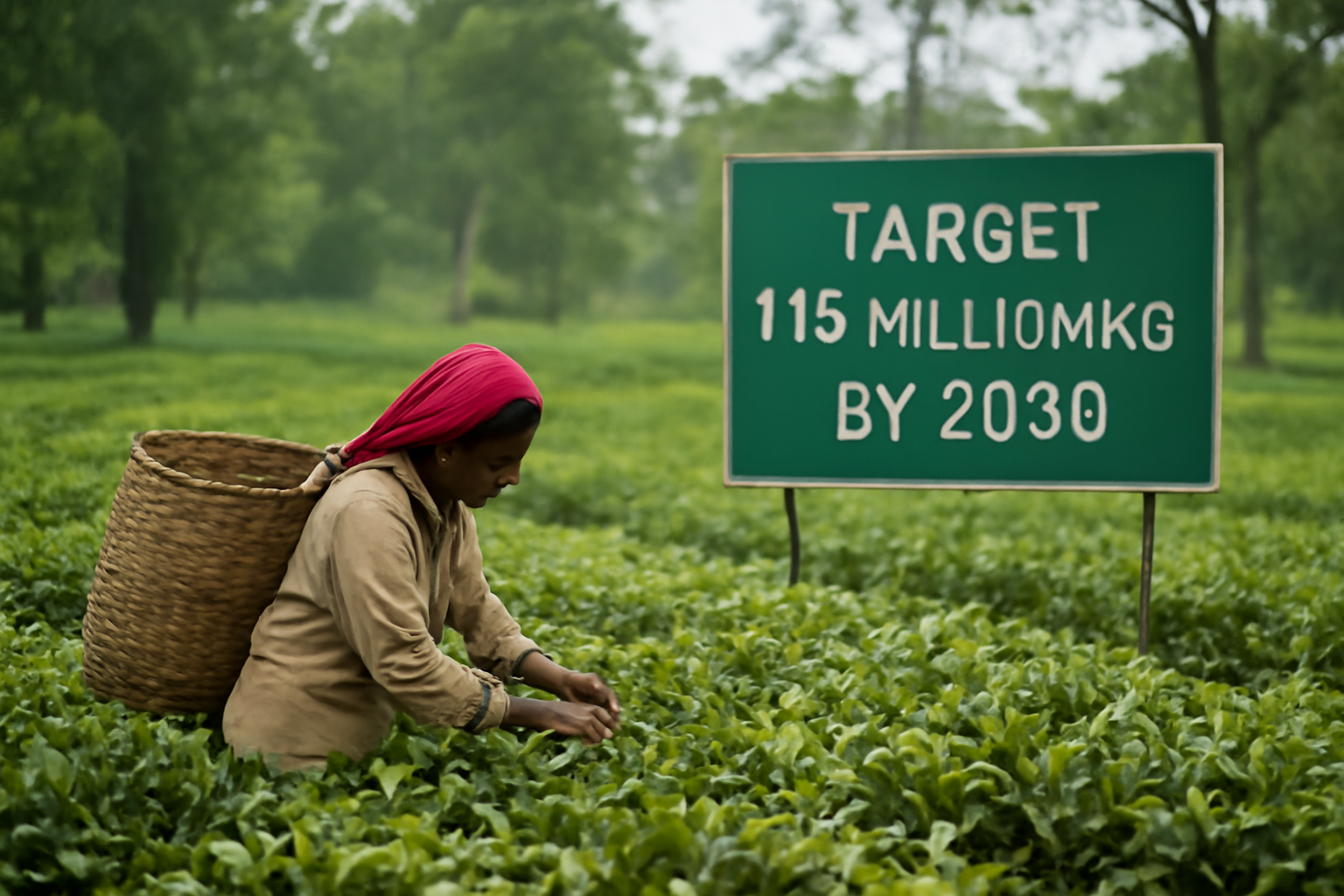
Tea Board sets a 2030 production goal
The Bangladesh Tea Board has set a target of producing 115 million kg of tea annually by 2030, according to the Dhaka Tribune. The production objective establishes a clear benchmark for the country’s tea industry and places higher agricultural yields at the center of its expansion strategy.
The plan relies on wider cultivation of high-yielding tea varieties developed by the Bangladesh Tea Research Institute. Expanding these varieties could allow growers to obtain more output from cultivated land, although the available source material does not specify the acreage to be converted, the expected yield per hectare or the investment required.
High-yield varieties underpin expansion
The focus on research-developed varieties makes planting material a central element of the program. Successful implementation will depend on how quickly suitable plants can be multiplied and adopted by estates and other growers. Field performance, access to planting material and the time needed for new bushes to reach productive maturity will determine how much of the targeted volume can be delivered by 2030.
For producers and processors, a larger crop would also require coordination beyond cultivation. Additional leaf production must be harvested, transported and processed without compromising quality. The report does not provide details about planned factory capacity, financing, labor requirements or supporting infrastructure, leaving the operational path to 115 million kg open.
Export capacity is part of the objective
The expansion is intended to strengthen Bangladesh’s capacity to export tea. A higher national crop can create more room for overseas sales, but the actual exportable surplus will also depend on domestic demand and the quality and composition of the additional output. The source does not state a separate export-volume target or identify priority destination markets.
For exporters and buyers, the 115 million kg benchmark therefore signals potential future availability rather than a guaranteed increase in shipments. Traders will need evidence of annual planting progress, harvested volumes and processing capacity to assess the likely effect on supply. Producers, meanwhile, will have to match additional volume with grades and quality levels acceptable to buyers.
The target gives the industry a defined deadline and a specific production figure. Its commercial significance will depend on execution: the distribution of high-yielding varieties, their performance under local conditions and the ability of factories and marketing channels to absorb a larger harvest. Progress against those elements will show whether the program can translate agricultural research into additional production and export capacity.