Bangladesh paddy prices fall to Tk650-750 per maund as fertiliser costs stay high
Bangladeshi farmers are selling paddy at Tk650-Tk750 per maund, against Tk1,000-Tk1,200 a year earlier, according to The Daily Observer. With fertiliser prices still elevated, many growers say the crop no longer covers its cultivation cost, shifting margin down the chain to millers and traders.
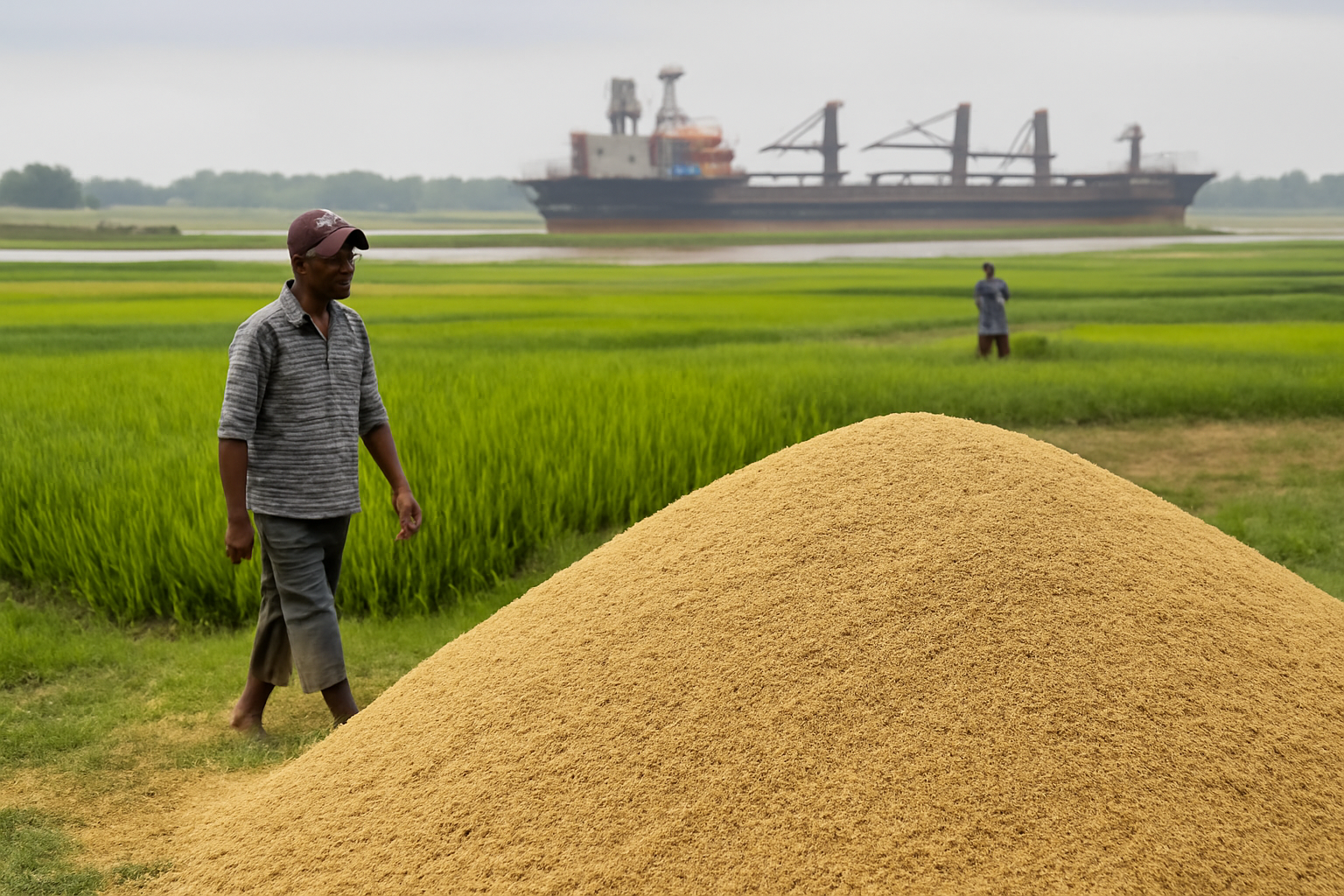
Paddy growers in Bangladesh are selling their crop at Tk650 to Tk750 per maund, against Tk1,000 to Tk1,200 at the same point last year, while fertiliser costs remain high, leaving many unable to recover what they spent on the field, The Daily Observer reported.
About a third off last year's farmgate price
The gap is wide at both ends of the range. The top of this season's band, Tk750, sits 25 per cent below the bottom of last year's Tk1,000-Tk1,200 range, meaning the best price available to a farmer today is worse than the worst price available a year ago. At the lower end, Tk650 is roughly 46 per cent below last year's Tk1,200 ceiling. Measured at the midpoints, farmgate paddy is worth about a third less than it was twelve months earlier.
For a crop whose cost base is dominated by purchased inputs, a move of that size is the difference between a thin margin and a loss. That is the point The Daily Observer's reporting makes: the issue is no longer weaker earnings but an inability to cover the cost of cultivation. Farmers in that position typically sell early and in full rather than holding stock, because they are financing the next crop out of this one.
Input costs have not followed prices down
Fertiliser is the cost item flagged in the reporting, and it is the one least connected to the paddy market. Fertiliser pricing in Bangladesh tracks imported urea, phosphate and potash values and domestic subsidy settings, not the price a miller pays for grain. When output prices drop by a third and the input bill holds flat, the entire adjustment lands on the grower.
The same asymmetry applies to the other main cost lines a paddy farmer carries into the season — irrigation, labour and land rent. None of them reprice downward within a single harvest cycle. A farmer who committed to a fertiliser programme when prices were set months ago has no mechanism to claw that spending back when the crop sells below expectation.
Where the margin goes
Cheaper paddy does not remove value from the rice chain; it relocates it. Millers and traders buying at Tk650-Tk750 are acquiring raw material materially below last year's cost, which widens processing margins if milled rice does not fall by the same proportion. Whether any of that reaches consumers depends on milling economics and on how much stock is held rather than turned over. Retail rice prices historically move down more slowly than farmgate paddy, because the farmgate end of the chain is the one with no pricing power and no ability to wait.
What to watch into the trade season
Three variables determine whether the farmgate price recovers from here: the volume and price of official procurement, import policy on milled rice, and the size of the harvest itself. Procurement sets a floor only if the offtake is large enough and reaches growers rather than intermediaries. Import decisions work in the opposite direction — additional supply arriving into a market already clearing at Tk650-Tk750 compounds the pressure on domestic growers, while restraint on imports supports them.
The more durable risk is behavioural and sits in the next cycle. Growers who lose money on one crop reduce fertiliser application on the following one, and yields fall with it. A low-priced harvest is frequently followed by a smaller one, and in a market of Bangladesh's scale a yield shortfall converts quickly into import demand. For traders and importers, the current price weakness is therefore worth reading as a signal about next season's supply as much as a comment on this one.