Asian Feed Demand Intensifies Competition for Broken Rice in West Africa
China’s broken-rice imports rose above 3.5 million tonnes in 2022 as high corn prices encouraged feed mills to seek substitutes. The shift brought Asian industrial buyers into greater competition with West African consumers, although USDA researchers found no evidence of a food-supply shock so far.
China emerges as a major buyer
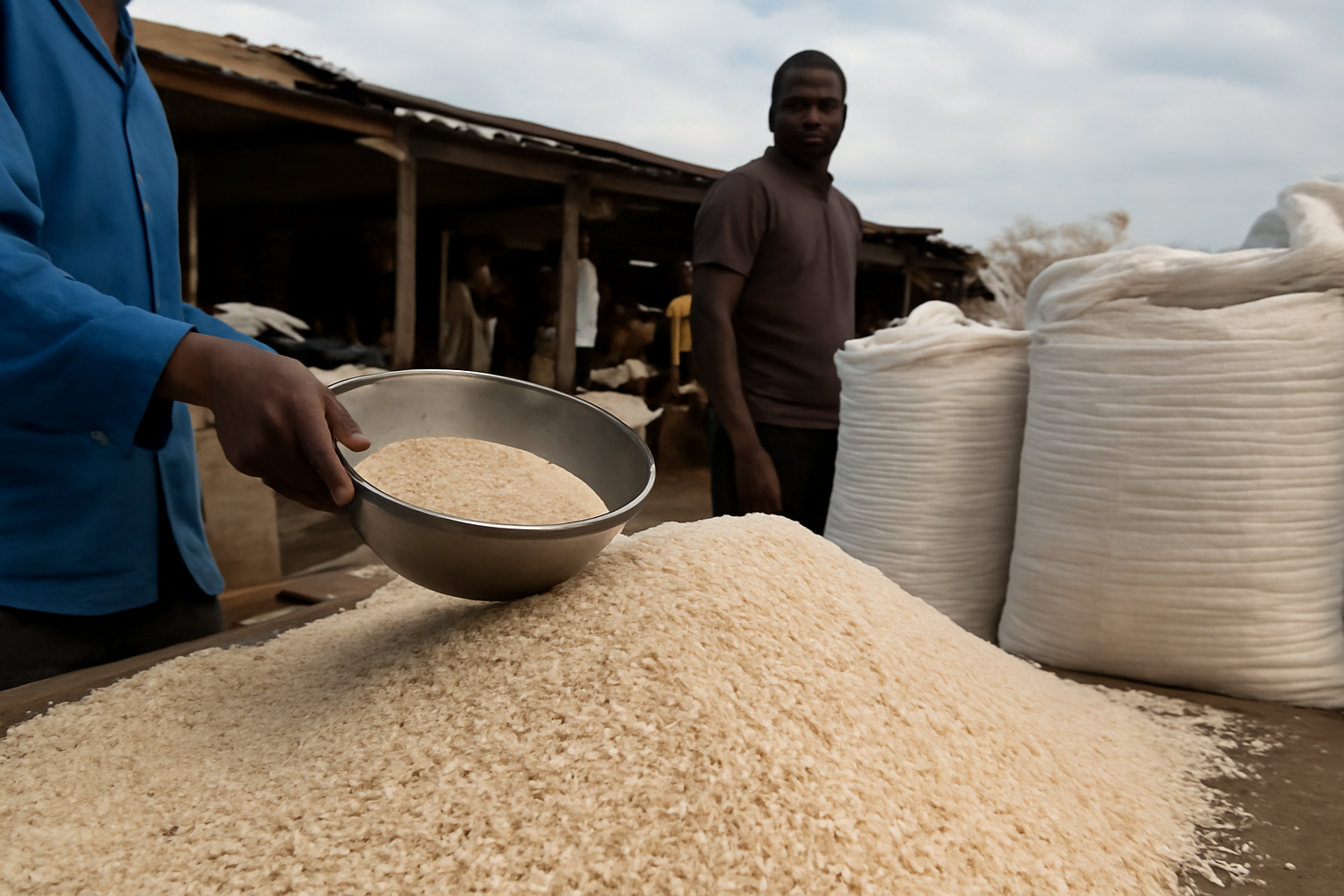
Demand from Asian feed and industrial users is changing a broken-rice market that has traditionally supplied lower-income consumers in West Africa. Broken rice consists of grain fragments produced during milling. While most consumers prefer whole grains, the lower-priced product is an important food staple in countries including Senegal, the Gambia and Côte d’Ivoire.
The US Department of Agriculture’s Economic Research Service said global broken-rice trade expanded from less than 1 million tonnes annually in the early 1990s to more than 10 million tonnes in 2022. Its April 2025 report found that broken rice’s share of trade in milled and broken rice increased from 12.8% in 2006–10 to about 17.8% in 2021–22. The product is now used not only as food, but also in animal feed, industrial processing and consumer-product blends.
Feed economics redirect trade flows
China accounted for most of the increase in broken-rice imports between 2019 and 2022. USDA data show its purchases rising from less than 1 million tonnes in 2019 to 2.5 million tonnes in 2021 and more than 3.5 million tonnes in 2022, when China became the leading importer. The increase followed higher Chinese feed-grain prices and the recovery of the country’s pig sector after the 2018–19 African swine fever epidemic.
Global corn prices climbed further after Russia’s invasion of Ukraine in 2022. With low-priced Indian broken rice becoming competitive against corn, Chinese feed mills had an incentive to change ingredients. The USDA said this meant that Chinese feed producers were effectively competing in the international market with lower-income West African consumers. Vietnam also became an important Asian buyer: recorded exports to the country from eight suppliers increased from 28,000 tonnes in 2020 to 435,940 tonnes in 2021 before falling to 232,860 tonnes in 2022 and 40,900 tonnes in 2023.
West African exposure remains
Africa imported between 3.4 million and 3.8 million tonnes of broken rice annually during 2018–21, according to the USDA, before purchases reached 4.1 million tonnes in 2022. West African countries accounted for the largest share among 21 African importers, led by markets including Senegal, Burkina Faso, Guinea, Côte d’Ivoire, Ghana, Togo and Benin. Demand in several of these countries is relatively resistant to price changes because broken rice is embedded in local diets.
The competition eased in 2023. India’s September 2022 ban on exports of 100% broken rice raised rice prices, while corn prices declined after record Brazilian harvests. China’s imports consequently dropped to about 850,000 tonnes in 2023. African imports also fell by 1 million tonnes from the previous year to 3.1 million tonnes. India exempted some African countries, including Senegal, from its restriction.
The USDA found no evidence that the Asian feed-demand surge had yet reduced food supply among major West African importers. It also described global supply as resilient despite India’s restriction. The longer-term risk remains tied to relative prices: another sharp increase in corn or wheat costs could quickly return broken rice to feed rations. With undernourishment in West Africa at 19.5% in 2024, competition between industrial users and food buyers remains a food-security concern for importers, governments and traders.