Asian appliance makers overtake European rivals as Poland faces price and export pressure
Asian manufacturers captured 44% of Europe’s household appliance market in 2025, exceeding European producers for the first time. In Poland, appliance prices fell 5% over two years, while first-quarter exports from Polish factories to EU markets declined 10% by value.
Asian manufacturers take the lead in Europe
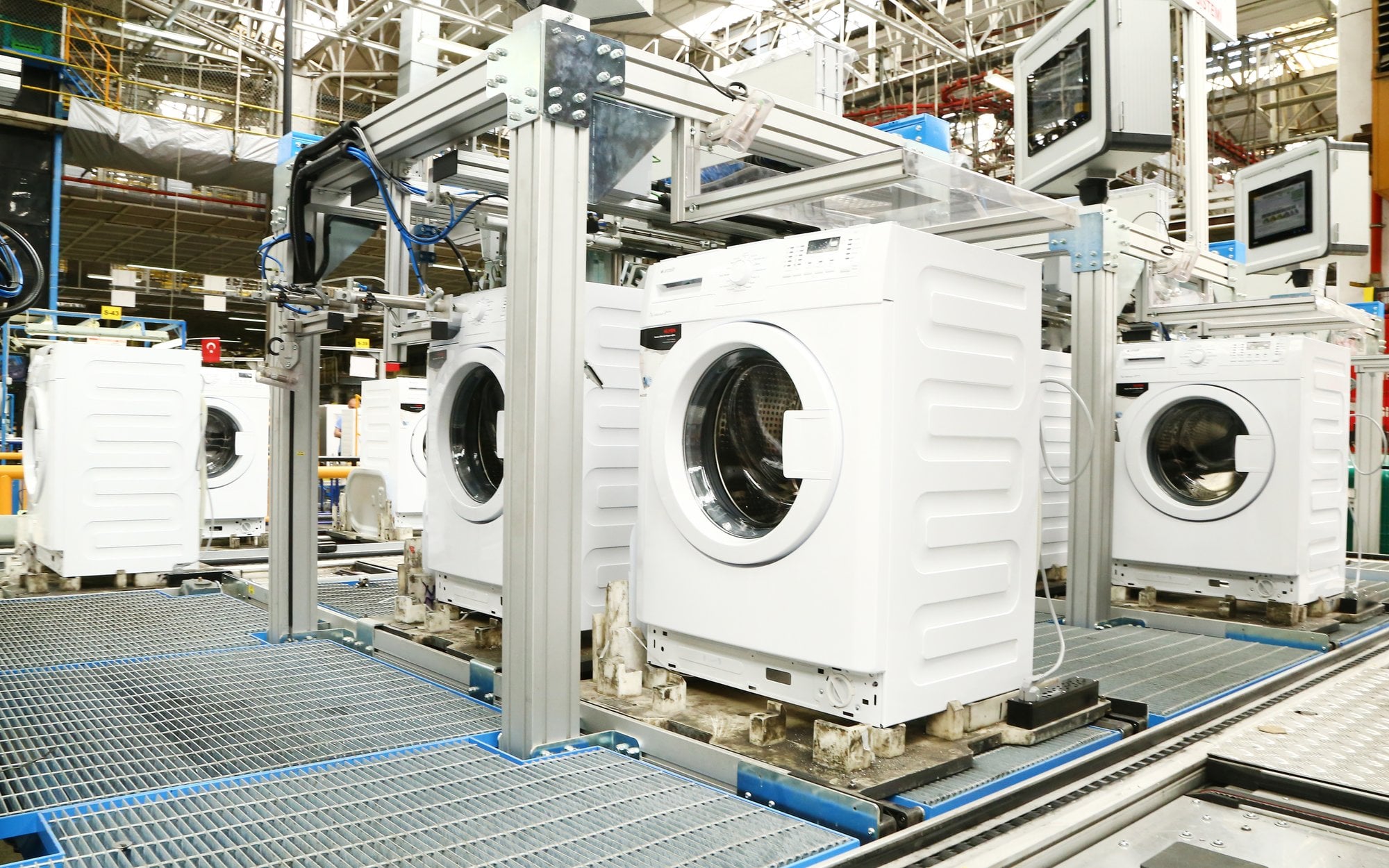
Asian manufacturers accounted for 44% of Europe’s household appliance market in 2025, surpassing European companies for the first time, Rzeczpospolita reported. Europe remains the world’s largest appliance market, but a sector historically led by local producers is increasingly supplied by imported equipment. Chinese products alone now represent 35% of the Polish market by volume.
Sales data for the 12 months through the end of March 2026 show that consumer demand has not collapsed. Cooking hobs were the only category expected to record a year-on-year volume decline, at 1.1%. The picture is weaker by value: almost every appliance segment lost several percentage points, while clothes dryers were the only category to grow, rising 4.7%. The difference between volume and value indicates sustained purchasing but lower average selling prices.
Falling prices squeeze Polish factories
Producers in Poland estimate that appliance prices fell 5% over the past two years despite increases in raw-material, wage, energy and financing costs. Robert Stobiński, president of Amica Group, said most market segments had recorded no price growth for three years, meaning a decline in real terms after inflation. Beko Poland country director Michał Grzeliński said manufacturers cannot fully pass higher energy, labor, financing and regulatory costs on to consumers, reducing margins and limiting investment in European plants.
The pressure is already visible in trade and production. In the first quarter, appliance exports from Polish factories to other EU markets fell 10% by value, while Chinese exports rose 7%. Rzeczpospolita reported that Poland produced 26 million appliances in 2025, including more than 23 million large appliances, representing a 4% decline. Weak European demand and the closure of several Polish factories were cited as the causes, with several thousand jobs lost.
Industry calls for equal rules and targeted support
Electrolux, which operates five factories in Poland, argues that appliances imported into the EU should face the same environmental, safety and producer-responsibility requirements as goods manufactured inside the bloc. Company spokeswoman Dominika Kosman said European plants also need lower energy costs, more predictable regulation and support for investment in modern production. BSH spokesman Andrzej Maślak said EU Green Deal obligations impose additional costs on EU manufacturers that importers of finished products do not bear. He also pointed to subsidized exports and the weak Chinese yuan as sources of competitive pressure.
Amica’s Stobiński cautioned that broad tariffs or taxes could raise consumer prices because Europe lacks enough spare production capacity to replace current imports. He instead proposed demand support limited to appliances manufactured in Europe, linking industrial assistance with the replacement of older equipment by more energy-efficient models. The dispute leaves policymakers balancing affordable appliances against the risk of losing factories, investment, technological capabilities and tens of thousands of industrial jobs across Europe.