Afghanistan-Pakistan border closure cuts Afghan grape exports to 256 tonnes
Border closures have prevented growers in southern Afghanistan from reaching their main grape market in Pakistan. Exports have fallen from 44,225 tonnes in 2025 to 256 tonnes so far this year, while excess domestic supply has pushed down fresh grape and raisin prices.
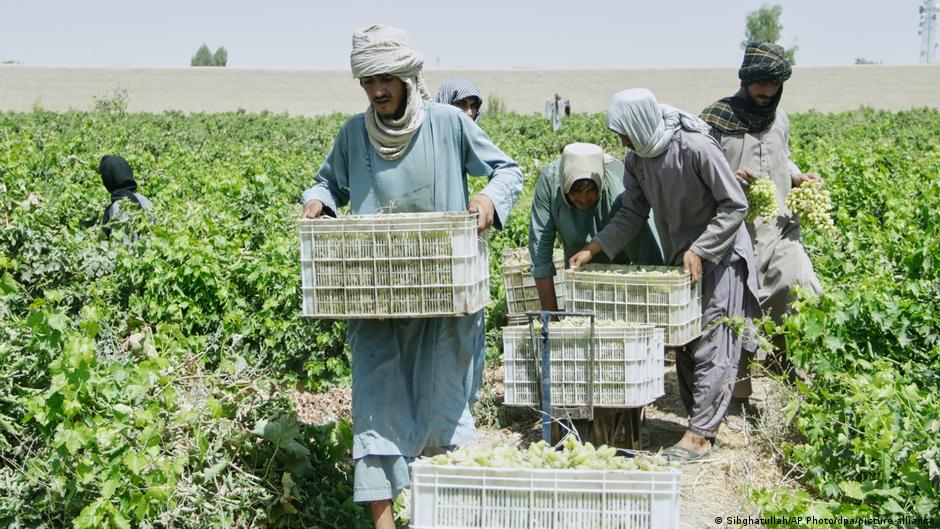
Harvest loses access to its main market
Grape growers in Kandahar are harvesting an abundant crop without reliable access to Pakistan, traditionally the principal foreign market for fruit from southern Afghanistan. Deutsche Welle reports that border crossings were closed following months of tension and fighting between Taliban-controlled Afghanistan and Pakistan. Islamabad accuses the Taliban administration of sheltering and supporting Pakistani insurgents, an allegation the Taliban authorities repeatedly deny.
The closure has blocked a major commercial route for highly perishable fresh fruit. Growers have redirected grapes to Afghan markets, but the additional supply has depressed domestic prices. Some are drying a larger share of the crop to produce raisins, although that outlet offers limited relief because raisin prices have also fallen sharply inside Afghanistan.
Exports collapse from 2025 levels
Abdul Baqi Bina, deputy head of the Kandahar Chamber of Commerce and Investment, told the Associated Press that five southern provinces responsible for most Afghan grape production exported 44,225 tonnes worth $13.8 million in 2025. Almost 43,000 tonnes went to Pakistan, with the remainder shipped to Bangladesh, Iraq and India. So far this year, total grape exports amount to only 256 tonnes worth $100,000.
The figures show how difficult it will be for alternative destinations to absorb the volumes normally sold across the Pakistani border. Bangladesh, Iraq and India were already buyers, but together took only a small fraction of the 2025 crop. For fresh grapes, longer routes also increase delivery time and spoilage risk. The immediate alternatives are therefore domestic sales or processing, and both channels are under price pressure.
Raisin prices and rural employment fall
Sakhi Jan, a vineyard owner in Kandahar's Zhari district, said one seer of raisins previously sold for 1,000 to 1,200 afghanis but now fetches only 400 to 450 afghanis. He said the reduced income barely supports his family of 10. The decline is particularly damaging in a country already facing economic crisis, poverty and malnutrition.
Employment has contracted along with market access. Qudratullah Popal said one vineyard employed 1,500 workers last year but only 15 this year, despite a good harvest. The disruption affects seasonal laborers, traders, exporters and vineyard owners, while pomegranates and other fruit exports have also suffered, according to Bina. Exporter Haji Abdul Hai said that in his 50 years he had never seen the routes closed to the present extent. Growers and traders are calling on both governments to reopen the crossings and reach an agreement, as neither the saturated domestic market nor raisin production can replace Pakistan at the volumes reported for 2025.