Twenty-five companies plan L1.83 billion of investment in Honduras
Twenty-five companies authorized to join special regimes in Honduras plan initial investment of L1,830.6 million and 3,446 jobs. The pipeline covers agriculture, apparel, wiring harnesses and business services, with projected exports of L2,137.4 million.
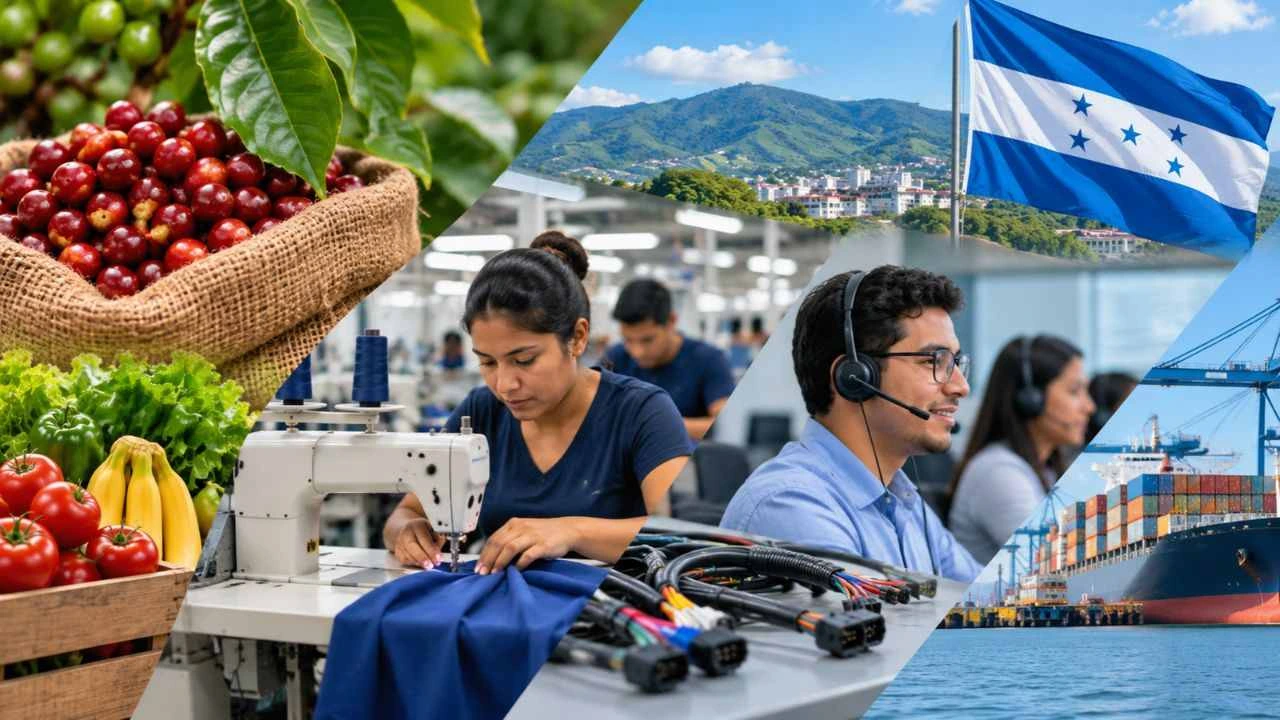
Investment pipeline spans agriculture, manufacturing and services
Twenty-five companies plan to invest an initial L1,830.6 million in Honduras after receiving authorization to enter special economic regimes during the first nine months of 2026. According to the Secretariat of Economic Development, or SDE, the proposed projects could generate 3,446 jobs across agricultural production, manufacturing and services.
TuNota reports that the activities range from producing and marketing coffee, fruit and vegetables to manufacturing clothing and wiring harnesses. The approved group also includes call centers and companies that outsource business processes. Some projects involve traditional foods and merchandise aimed primarily at consumers seeking products from their countries of origin.
The companies project exports worth L2,137.4 million and re-exports exceeding L378.9 million. Apparel, wiring harnesses, coffee and horticultural products connect the investment pipeline directly with international supply chains, while service operations broaden its scope beyond physical goods.
Employment and output depend on project execution
The announced figures remain company projections rather than completed investment. Neither the companies' identities nor the locations of their facilities and schedules for starting operations have been disclosed. The SDE also did not specify how the 3,446 jobs would be divided among agriculture, manufacturing and services, what professional or technical profiles would be required, or how many positions would come from entirely new operations.
That leaves execution as the main test of the program's economic impact. Authorization under a special regime allows a project to advance under defined fiscal and customs conditions, but it does not establish when capital will be deployed, production will begin or workers will be hired. The eventual contribution to output and trade will therefore depend on how much of the L1,830.6 million pipeline moves from approved plans into operating capacity.
Authorities expand and digitize special regimes
The new approvals form part of a wider set of measures for companies operating under Honduras's special regimes. Under Decree 2-2026, benefits provided by the Temporary Import Regime were extended to 125 companies for five fiscal periods. More than 800 companies also underwent technical regularization procedures related to the administration of tax benefits, intended to support compliance and operational continuity.
The SDE has moved applications, amendments, suspensions, cancellations and benefit certificates onto its Online Citizen Services System. During the reported period, the authority issued 656 certificates, carried out 228 compliance inspections and held 18 training sessions. It also recorded approximately 3,670 valid licenses for representatives, distributors and agents. The report did not quantify reductions in processing time or administrative savings, leaving the practical efficiency gains unmeasured alongside the still-pending investment and employment targets.