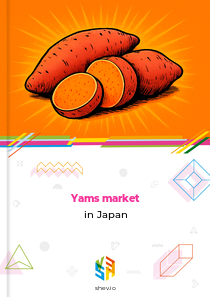







Earlier Report Observations
The Japanese yam market began the period with a volume of 152.7 thousand tons in 2018, characterized by cultivation primarily in Okinawa and distribution focused on high-end supermarkets, which limited widespread availability. Despite these structural factors, market volume expanded to 171.6 thousand tons by 2021, experiencing only a slight stabilization in 2020.
After the 2021 peak, the market contracted to 151.2 thousand tons in 2022, with value dropping sharply to $436.6 million, before recovering to 157.7 thousand tons and $532.9 million in 2023.
From 2024, industry efforts shifted toward export promotion, including market research in the United States for 'nagaimo'. Concurrently, agricultural research advanced, such as the development of cutting propagation techniques through a collaboration between Tokyo University of Agriculture and the International Institute of Tropical Agriculture, aimed at improving varieties and production efficiency, while growing consumer health consciousness continued to shape demand.
Table of content
- 1. Disclaimer
- 2. Terms of use of the report
- 3. Product codes in the statistical classifications used in the report
-
4. Key Market Indicators and Trends
-
4.1. Key Market Indicators
-
4.1.1. In kind
- 4.1.1.1. Production, 2018-2023
- 4.1.1.2. Imports, 2018-2025
- 4.1.1.3. Exports, 2018-2025
- 4.1.1.4. Market size, 2018-2023
-
4.1.2. In value
- 4.1.2.1. Production, 2018-2023
- 4.1.2.2. Imports, 2018-2025
- 4.1.2.3. Exports, 2018-2025
- 4.1.2.4. Market size, 2018-2023
-
4.1.1. In kind
- 4.2. Market Trends and Factors
-
4.1. Key Market Indicators
-
5. Production
-
5.1. Production in Japan
- 5.1.1. Annual dynamics of production in Japan in kind, 2018-2023, K t
- 5.1.2. Annual dynamics of production in Japan in value, 2018-2023, $ US
-
5.2. Global production by Country, 2018-2023
- 5.2.1. Annual dynamics of production by macroregions in kind, 2018-2023, K t
- 5.2.2. Dynamics of production structure by macroregions in kind, 2018-2023
- 5.2.3. Annual dynamics of production by country in kind, 2018-2023, K t
- 5.2.4. Structure of production by countries in kind, 2018-2023
- 5.2.5. Dynamics of peoduction structure by countries in kind, 2018-2023
-
5.1. Production in Japan
-
6. Exports
-
6.1. Exports (Direct Data)
- 6.1.1. Exports - Total information
-
6.1.2. Exports in kind, t
- 6.1.2.1. Annual dynamics of product's exports from Japan in kind, 2018-2025, t
- 6.1.2.2. Dynamics of product's exports in kind from Japan by countries, 2018-2025, t
- 6.1.2.3. Structure of product's exports in kind by countries, 2018-2025
-
6.1.3. Exports in value, K $ US
- 6.1.3.1. Annual dynamics of product's exports from Japan in value, 2018-2025, K $ US
- 6.1.3.2. Dynamics of product's exports in value from Japan by countries, 2018-2025, K $ US
- 6.1.3.3. Structure of product's exports in value by countries, 2018-2025
-
6.1.4. Average price of product's exports, $ US/t
- 6.1.4.1. Annual dynamics of average price of product's exports from Japan, 2018-2025, $ US/t
- 6.1.4.2. Dynamics of average price of product's exports from Japan by countries, 2018-2025, $ US/t
-
6.2. Exports (Mirror Data)
- 6.2.1. Exports - Total information
-
6.2.2. Exports in kind, t
- 6.2.2.1. Annual dynamics of product's exports from Japan in kind, 2018-2025, t
- 6.2.2.2. Dynamics of product's exports in kind from Japan by countries, 2018-2025, t
- 6.2.2.3. Structure of product's exports in kind by countries, 2018-2025
-
6.2.3. Exports in value, K $ US
- 6.2.3.1. Annual dynamics of product's exports from Japan in value, 2018-2025, K $ US
- 6.2.3.2. Dynamics of product's exports in value from Japan by countries, 2018-2025, K $ US
- 6.2.3.3. Structure of product's exports in value by countries, 2018-2025
-
6.2.4. Average price of product's exports, $ US/t
- 6.2.4.1. Annual dynamics of average price of product's exports from Japan, 2018-2025, $ US/t
- 6.2.4.2. Dynamics of average price of product's exports from Japan by countries, 2018-2025, $ US/t
-
6.1. Exports (Direct Data)
-
7. Imports
-
7.1. Imports (Direct Data)
- 7.1.1. Imports - Total information
-
7.1.2. Imports in kind, t
- 7.1.2.1. Annual dynamics of product's imports to Japan in kind, 2018-2025, t
- 7.1.2.2. Dynamics of product's imports in kind to Japan by countries, 2018-2025, t
- 7.1.2.3. Structure of product's imports in kind by countries, 2018-2025
-
7.1.3. Imports in value, K $ US
- 7.1.3.1. Annual dynamics of product's imports to Japan in value, 2018-2025, K $ US
- 7.1.3.2. Dynamics of product's imports in value to Japan by countries, 2018-2025, K $ US
- 7.1.3.3. Structure of product's imports in value by countries, 2018-2025
-
7.1.4. Average price of product's imports, $ US/t
- 7.1.4.1. Annual dynamics of average price of product's imports to Japan, 2018-2025, $ US/t
- 7.1.4.2. Dynamics of average price of product's imports to Japan by countries, 2018-2025, $ US/t
-
7.2. Imports (Mirror Data)
- 7.2.1. Imports - Total information
-
7.2.2. Imports in kind, t
- 7.2.2.1. Annual dynamics of product's imports to Japan in kind, 2018-2025, t
- 7.2.2.2. Dynamics of product's imports in kind to Japan by countries, 2018-2025, t
- 7.2.2.3. Structure of product's imports in kind by countries, 2018-2025
-
7.2.3. Imports in value, K $ US
- 7.2.3.1. Annual dynamics of product's imports to Japan in value, 2018-2025, K $ US
- 7.2.3.2. Dynamics of product's imports in value to Japan by countries, 2018-2025, K $ US
- 7.2.3.3. Structure of product's imports in value by countries, 2018-2025
-
7.2.4. Average price of product's imports, $ US/t
- 7.2.4.1. Annual dynamics of average price of product's imports to Japan, 2018-2025, $ US/t
- 7.2.4.2. Dynamics of average price of product's imports to Japan by countries, 2018-2025, $ US/t
-
7.1. Imports (Direct Data)
-
8. Trade balance
-
8.1. Trade balance (Direct Data)
- 8.1.1. In kind, t
- 8.1.2. In value, K $ US
-
8.2. Trade balance (Mirror Data)
- 8.2.1. In kind, t
- 8.2.2. In value, K $ US
-
8.1. Trade balance (Direct Data)
-
9. Top buying and selling countries, 2018-2025
-
9.1. Direct Data
- 9.1.1. Import in Value by Countries-buyers
- 9.1.2. Export in Value by Countries-suppliers
-
9.2. Mirror Data
- 9.2.1. Import in Value by Countries-buyers
- 9.2.2. Export in Value by Countries-suppliers
-
9.1. Direct Data
Production yams in Japan
In kind, 2018-2021, K t
Japan was among the world's leading producers of yams from 2018 to 2021, ranking 15th globally by production volume.
Top producers of yams, 2018-2021
World map of production of yams, 2018-2021
In 2021, Japan produced 177.4 thousand tons of yams, showing a moderate increase of 4.0% compared to 2020. Over the period from 2018 to 2021, production grew by 12.7%, which translates to an annualized rate of 4.1%. The largest increase occurred in 2019, at 9.7%, while the largest decline was in 2020, at 1.3%.
Annual dynamics of production in Japan in kind, 2018-2021, K t
| Parameter | 2019 | 2020 | 2021 | CAGR | |
|---|---|---|---|---|---|
| 1 | Change from last year | 9.7% | (1.3%) | 4.0% | 4.1% |
In value, 2018-2021, M $ US
Yam production in Japan declined for the second consecutive year in 2021, with output valued at 552.1 million US dollars, marking a slight decrease of 2.8% from the previous year. From 2018 to 2021, production increased by 5.7%, with a compound annual growth rate of 1.9%. The highest value was recorded in 2019 at 604.4 million US dollars, which also saw the largest increase of 15.7%. The largest decline occurred in 2020, at 6.1%.
Annual dynamics of production in Japan in value, 2018-2021, M $ US
| Parameter | 2019 | 2020 | 2021 | CAGR | |
|---|---|---|---|---|---|
| 1 | Change from last year | 15.7% | (6.1%) | (2.8%) | 1.9% |
Exports yams from Japan
Exports in kind, t
Yam exports from Japan increased for the third consecutive year in 2021, reaching 6,773 tons, a strong rise of 13.0% year-over-year. Between 2018 and 2021, exports grew by 14.2%, equating to an annualized rate of 4.5%.
Annual dynamics of product's exports from Japan in kind, 2018-2021, t
| Parameter | 2019 | 2020 | 2021 | CAGR | |
|---|---|---|---|---|---|
| 1 | Change from last year | 0.3% | 0.8% | 13.0% | 4.5% |
From 2018 to 2021, Asia, not elsewhere specified, and the United States dominated Japan's yam exports in volume, together accounting for 85.5% of total flows, with other destinations making smaller individual contributions.
Structure of product's exports in kind by countries, 2018-2021
World map of product's exports from Japan in kind, 2018-2021
Exports in value, K $ US
In 2021, Japan's yam exports totaled 21,080 thousand US dollars, showing a limited gain of 5.6% year-over-year. Between 2018 and 2021, exports increased by 7.2%, with an annualized rate of 2.3%. The largest increase was in 2019 at 5.8%, while the largest decline occurred in 2020 at 4.1%.
Annual dynamics of product's exports from Japan in value, 2018-2021, K $ US
| Parameter | 2019 | 2020 | 2021 | CAGR | |
|---|---|---|---|---|---|
| 1 | Change from last year | 5.8% | (4.1%) | 5.6% | 2.3% |
From 2018 to 2021, two leading markets—Asia, not elsewhere specified, and the United States—together accounted for 84.4% of Japan's total yam exports in value terms, with the remaining volume spread across a wide range of other countries.
Structure of product's exports in value by countries, 2018-2021
World map of product's exports from Japan in value, 2018-2021
Imports yams to Japan
Imports in kind, t
Imported yam volumes in Japan declined for the third consecutive year in 2021, standing at 984 tons, reflecting a gradual decrease of 6.1% compared to the previous year. Between 2018 and 2021, imports decreased by 21%, equating to an annualized rate of 7.6%.
Annual dynamics of product's imports to Japan in kind, 2018-2021, t
| Parameter | 2019 | 2020 | 2021 | CAGR | |
|---|---|---|---|---|---|
| 1 | Change from last year | (6.1%) | (10.5%) | (6.1%) | (7.6%) |
Throughout 2018 to 2021, the country structure of Japan's yam imports in volume was primarily shaped by China and Vietnam, which together held a joint share of 99.8% of total flows.
Structure of product's imports in kind by countries, 2018-2021
World map of product's imports to Japan in kind, 2018-2021
Imports in value, K $ US
Foreign yam supplies to Japan declined for the third consecutive year in 2021, with imports registering 5,290 thousand US dollars, down by 5.7% from the previous year. Over the period from 2018 to 2021, imports decreased by 14.4%, with a compound annual growth rate of 5.0%.
Annual dynamics of product's imports to Japan in value, 2018-2021, K $ US
| Parameter | 2019 | 2020 | 2021 | CAGR | |
|---|---|---|---|---|---|
| 1 | Change from last year | (6.2%) | (3.2%) | (5.7%) | (5.0%) |
From 2018 to 2021, China and Vietnam formed a highly concentrated pair of markets for Japan's yam imports in value terms, together taking 99.8% of total flows.
Structure of product's imports in value by countries, 2018-2021
World map of product's imports to Japan in value, 2018-2021
Related Reports

2026-03-27
Yams market in Dominican Republic
2026-03-27
2026-03-27
2026-03-27

2026-03-30

Cauliflowers and broccoli market in Japan
2026-03-27

Cucumbers and gherkins market in Japan
2026-03-27

2026-03-27
Why Choose Us?
Only Verified Data
No Hidden Costs or Separate Fees
Smarter Subscription Pricing
Contact Our Team
Submit your inquiry using the form below — our team will get back to you within 24 hours.