






"Latin America and the Caribbean" region includes following countries:
 Argentina
 Bolivia
 Brazil
 Chile
Chile Colombia
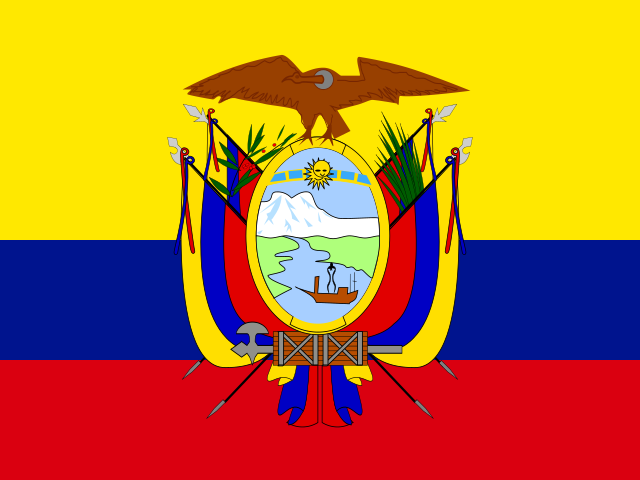 Ecuador
 Falkland Islands (Malvinas)
 French Guiana
 Guyana
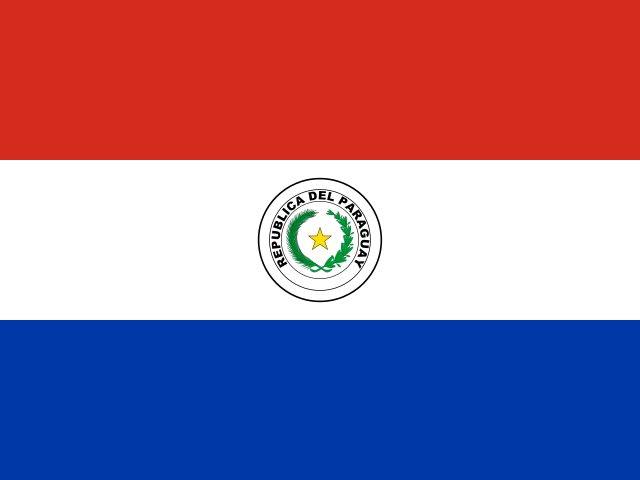 Paraguay
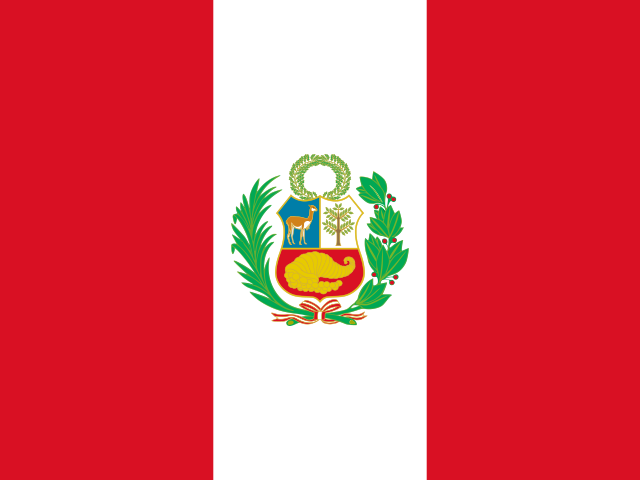 Peru
Peru Suriname
 Uruguay
 Venezuela
 Belize
 Costa Rica
 El Salvador
 Guatemala
 Honduras
 Mexico
 Nicaragua
 Panama
 Antigua and Barbuda
 the Bahamas
 Barbados
 British Virgin Islands
 Cayman Islands
 Cuba
Cuba Dominica
 Dominican Republic
 Grenada
 Guadeloupe
 Haiti
Haiti Jamaica
 Martinique
 Montserrat
 Curacao
 Aruba
Aruba Saint Maarten (Dutch part)
 Bonaire
 Puerto Rico
 Saint Kitts and Nevis
 Anguilla
 Saint Lucia
 Saint-Martin (French Part)
 Saint Vincent and the Grenadines
 Trinidad and Tobago
 Turks and Caicos Islands
 United States Virgin Islands
Earlier Report Observations
The market volume for fresh watermelons in Latin America and the Caribbean gradually declined from 4 544 thousand tons in 2018 to 4 324 thousand tons in 2023, while production fluctuated, peaking at 5 546 thousand tons in 2019 and recovering to 5 384 thousand tons in 2023 after a dip.
Production growth in 2019 was partly driven by Chile's Origen Consciente program, launched in 2018, which promoted certified sustainability standards in agriculture and encouraged output expansion. Later, in 2023, Mexico's focus on watermelon as a key export commodity, supported by collaborative logistics models, boosted regional production but also increased export volumes, which tempered domestic market volume growth.
Market volume contracted in 2020 and 2022, with a further slight decrease in 2023. During the latter years, the adoption of new product formats and promotional activities in important markets helped maintain consumption alongside the rising export orientation.
Table of content
- 1. Disclaimer
- 2. Terms of use of the report
- 3. Product codes in the statistical classifications used in the report
-
4. Key Market Indicators and Trends
-
4.1. Key Market Indicators
-
4.1.1. In kind
- 4.1.1.1. Production, 2018-2023
- 4.1.1.2. Imports, 2018-2024
- 4.1.1.3. Exports, 2018-2024
- 4.1.1.4. Market size, 2018-2023
-
4.1.2. In value
- 4.1.2.1. Production, 2018-2023
- 4.1.2.2. Imports, 2018-2024
- 4.1.2.3. Exports, 2018-2024
- 4.1.2.4. Market size, 2018-2023
-
4.1.1. In kind
- 4.2. Market Trends and Factors
-
4.1. Key Market Indicators
-
5. Production
-
5.1. Production in Latin America and the Caribbean
- 5.1.1. Annual dynamics of production in Latin America and the Caribbean in kind, 2018-2023, K t
-
5.2. Global production by Country, 2018-2023
- 5.2.1. Annual dynamics of production by macroregions in kind, 2018-2023, K t
- 5.2.2. Dynamics of production structure by macroregions in kind, 2018-2023
- 5.2.3. Annual dynamics of production by country in kind, 2018-2023, K t
- 5.2.4. Structure of production by countries in kind, 2018-2023
- 5.2.5. Dynamics of peoduction structure by countries in kind, 2018-2023
-
5.1. Production in Latin America and the Caribbean
-
6. Exports
-
6.1. Exports (Direct Data*)
- 6.1.1. Exports - Total information
-
6.1.2. Exports in kind, K t
- 6.1.2.1. Annual dynamics of product's exports from Argentina in kind, 2018-2024, K t
- 6.1.2.2. Dynamics of product's exports in kind from Argentina by countries, 2018-2024, K t
- 6.1.2.3. Structure of product's exports in kind by countries, 2018-2024
-
6.1.3. Exports in value, M $ US
- 6.1.3.1. Annual dynamics of product's exports from Argentina in value, 2018-2024, M $ US
- 6.1.3.2. Dynamics of product's exports in value from Argentina by countries, 2018-2024, M $ US
- 6.1.3.3. Structure of product's exports in value by countries, 2018-2024
-
6.1.4. Average price of product's exports, $ US/t
- 6.1.4.1. Annual dynamics of average price of product's exports from Argentina, 2018-2024, $ US/t
- 6.1.4.2. Dynamics of average price of product's exports from Argentina by countries, 2018-2024, $ US/t
-
6.2. Exports (Mirror Data)
- 6.2.1. Exports - Total information
-
6.2.2. Exports in kind, K t
- 6.2.2.1. Annual dynamics of product's exports from Argentina in kind, 2018-2024, K t
- 6.2.2.2. Dynamics of product's exports in kind from Argentina by countries, 2018-2024, K t
- 6.2.2.3. Structure of product's exports in kind by countries, 2018-2024
-
6.2.3. Exports in value, M $ US
- 6.2.3.1. Annual dynamics of product's exports from Argentina in value, 2018-2024, M $ US
- 6.2.3.2. Dynamics of product's exports in value from Argentina by countries, 2018-2024, M $ US
- 6.2.3.3. Structure of product's exports in value by countries, 2018-2024
-
6.2.4. Average price of product's exports, $ US/t
- 6.2.4.1. Annual dynamics of average price of product's exports from Argentina, 2018-2024, $ US/t
- 6.2.4.2. Dynamics of average price of product's exports from Argentina by countries, 2018-2024, $ US/t
-
6.1. Exports (Direct Data*)
-
7. Imports
-
7.1. Imports (Direct Data*)
- 7.1.1. Imports - Total information
-
7.1.2. Imports in kind, K t
- 7.1.2.1. Annual dynamics of product's imports to Argentina in kind, 2018-2024, K t
- 7.1.2.2. Dynamics of product's imports in kind to Argentina by countries, 2018-2024, K t
- 7.1.2.3. Structure of product's imports in kind by countries, 2018-2024
-
7.1.3. Imports in value, M $ US
- 7.1.3.1. Annual dynamics of product's imports to Argentina in value, 2018-2024, M $ US
- 7.1.3.2. Dynamics of product's imports in value to Argentina by countries, 2018-2024, M $ US
- 7.1.3.3. Structure of product's imports in value by countries, 2018-2024
-
7.1.4. Average price of product's imports, $ US/t
- 7.1.4.1. Annual dynamics of average price of product's imports to Argentina, 2018-2024, $ US/t
- 7.1.4.2. Dynamics of average price of product's imports to Argentina by countries, 2018-2024, $ US/t
-
7.2. Imports (Mirror Data)
- 7.2.1. Imports - Total information
-
7.2.2. Imports in kind, K t
- 7.2.2.1. Annual dynamics of product's imports to Argentina in kind, 2018-2024, K t
- 7.2.2.2. Dynamics of product's imports in kind to Argentina by countries, 2018-2024, K t
- 7.2.2.3. Structure of product's imports in kind by countries, 2018-2024
-
7.2.3. Imports in value, M $ US
- 7.2.3.1. Annual dynamics of product's imports to Argentina in value, 2018-2024, M $ US
- 7.2.3.2. Dynamics of product's imports in value to Argentina by countries, 2018-2024, M $ US
- 7.2.3.3. Structure of product's imports in value by countries, 2018-2024
-
7.2.4. Average price of product's imports, $ US/t
- 7.2.4.1. Annual dynamics of average price of product's imports to Argentina, 2018-2024, $ US/t
- 7.2.4.2. Dynamics of average price of product's imports to Argentina by countries, 2018-2024, $ US/t
-
7.1. Imports (Direct Data*)
-
8. Trade balance
-
8.1. Trade balance (Direct Data)
- 8.1.1. In kind, K t
- 8.1.2. In value, M $ US
-
8.2. Trade balance (Mirror Data)
- 8.2.1. In kind, K t
- 8.2.2. In value, M $ US
-
8.1. Trade balance (Direct Data)
-
9. Top buying and selling countries, 2018-2024
-
9.1. Direct Data
- 9.1.1. Import in Value by Countries-buyers
- 9.1.2. Export in Value by Countries-suppliers
-
9.2. Mirror Data
- 9.2.1. Import in Value by Countries-buyers
- 9.2.2. Export in Value by Countries-suppliers
-
9.1. Direct Data
Production watermelons in Latin America and the Caribbean
In kind, 2017-2020, K t
Top producers of watermelons, 2017-2020
World map of production of watermelons, 2017-2020
In 2019, Latin America and the Caribbean produced 5 546 thousand metric tons of watermelons, marking a 3.5% increase. However, production declined to 5 373 thousand metric tons in 2020, representing a contraction of 3.1% compared to the previous year. The lowest production level during this period was recorded in 2018 at 5 358 thousand metric tons.
Annual dynamics of production in Latin America and the Caribbean in kind, 2017-2020, K t
| Parameter | 2018 | 2019 | 2020 | CAGR | |
|---|---|---|---|---|---|
| 1 | Change from last year | (1.5%) | 3.5% | (3.1%) | (0.4%) |
In value, 2017-2020, M $ US
Following two years of growth, watermelon production in Latin America and the Caribbean experienced a decline. In 2019, production reached its peak value of 2 816 million US dollars, reflecting a significant 9.3% increase. However, in 2020, production fell to 2 673 million US dollars, showing a gradual year-over-year decrease of 5.1%. Over the entire 2017-2020 period, production grew by 4.8%, with an average annual growth rate of 1.6%.
Annual dynamics of production in Latin America and the Caribbean in value, 2017-2020, M $ US
| Parameter | 2018 | 2019 | 2020 | CAGR | |
|---|---|---|---|---|---|
| 1 | Change from last year | 0.9% | 9.3% | (5.1%) | 1.6% |
Exports watermelons from Latin America and the Caribbean
Exports in kind, K t
After two consecutive years of growth, watermelon exports from Latin America and the Caribbean declined. In 2019, exports peaked at 943.2 thousand metric tons, representing a substantial 12.8% increase. However, in 2020, exports fell to 906.9 thousand metric tons, marking a moderate decrease of 3.8% compared to the previous year. Between 2017 and 2020, exports grew by 11.1%, equivalent to an annualized growth rate of 3.6%.
Annual dynamics of product's exports from Latin America and the Caribbean in kind, 2017-2020, K t
| Parameter | 2018 | 2019 | 2020 | CAGR | |
|---|---|---|---|---|---|
| 1 | Change from last year | 2.5% | 12.8% | (3.8%) | 3.6% |
From 2017 to 2020, the United States accounted for 74.9% of total watermelon exports from Latin America and the Caribbean by volume, while the remaining exports were distributed among numerous other countries with smaller individual shares.
Structure of product's exports in kind by countries, 2017-2020
World map of product's exports from Latin America and the Caribbean in kind, 2017-2020
Exports in value, M $ US
Following two years of gains, foreign watermelon supplies from Latin America and the Caribbean declined. In 2019, export value reached its highest point at 478.8 million US dollars, reflecting a notable 19.1% increase. However, in 2020, exports fell to 451.2 million US dollars, showing a moderate year-over-year decline of 5.8%. Over the 2017-2020 period, export value increased by 17.9%, equivalent to an annualized growth rate of 5.6%.
Annual dynamics of product's exports from Latin America and the Caribbean in value, 2017-2020, M $ US
| Parameter | 2018 | 2019 | 2020 | CAGR | |
|---|---|---|---|---|---|
| 1 | Change from last year | 5.1% | 19.1% | (5.8%) | 5.6% |
During 2017-2020, the United States was the primary buyer of watermelons from Latin America and the Caribbean, accounting for 81.2% of total export value, while a diverse group of other countries made up the remainder.
Structure of product's exports in value by countries, 2017-2020
World map of product's exports from Latin America and the Caribbean in value, 2017-2020
Imports watermelons to Latin America and the Caribbean
Imports in kind, K t
Watermelon imports into Latin America and the Caribbean increased for the third consecutive year. In 2019, imports stood at a lower level, but in 2020 they rose to 33.5 thousand metric tons, representing a steep 34.3% gain compared to the previous year. Between 2017 and 2020, imports grew by 78.4%, equivalent to an annualized growth rate of 21.3%.
Annual dynamics of product's imports to Latin America and the Caribbean in kind, 2017-2020, K t
| Parameter | 2018 | 2019 | 2020 | CAGR | |
|---|---|---|---|---|---|
| 1 | Change from last year | 18.6% | 12.0% | 34.3% | 21.3% |
From 2017 to 2020, the United States consistently held the leading position as a source of watermelon imports into Latin America and the Caribbean, accounting for 2.9% of total import volume.
Structure of product's imports in kind by countries, 2017-2020
World map of product's imports to Latin America and the Caribbean in kind, 2017-2020
Imports in value, M $ US
Watermelon imports into Latin America and the Caribbean increased for the third consecutive year. In 2019, imports were at a lower value, but in 2020 they reached approximately 19.2 million US dollars, indicating an uptick of 23.2% compared to the previous year. Between 2017 and 2020, import value increased by 58.6%, equivalent to an annualized growth rate of 16.6%.
Annual dynamics of product's imports to Latin America and the Caribbean in value, 2017-2020, M $ US
| Parameter | 2018 | 2019 | 2020 | CAGR | |
|---|---|---|---|---|---|
| 1 | Change from last year | 14.9% | 12.0% | 23.2% | 16.6% |
Throughout 2017-2020, the United States remained the main supplier of watermelons to Latin America and the Caribbean, accounting for 22.6% of total import value.
Structure of product's imports in value by countries, 2017-2020
World map of product's imports to Latin America and the Caribbean in value, 2017-2020
Related Reports





Why Choose Us?
Only Verified Data
No Hidden Costs or Separate Fees
Smarter Subscription Pricing
Contact Our Team
Submit your inquiry using the form below — our team will get back to you within 24 hours.