






"South America" region includes following countries:
 Argentina
 Bolivia
 Brazil
 Chile
Chile Colombia
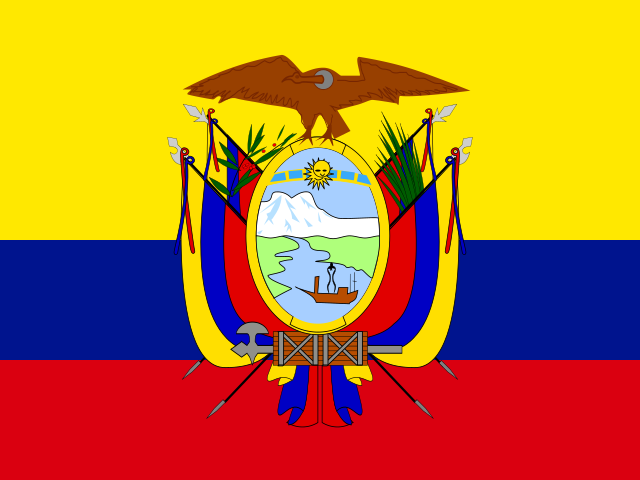 Ecuador
 Falkland Islands (Malvinas)
 French Guiana
 Guyana
 Paraguay
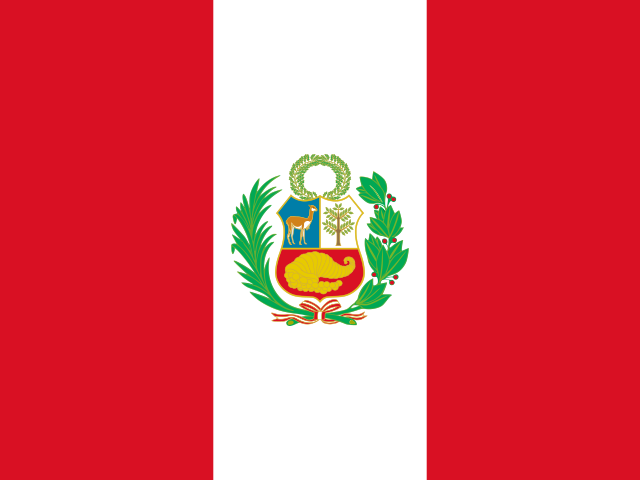 Peru
Peru Suriname
 Uruguay
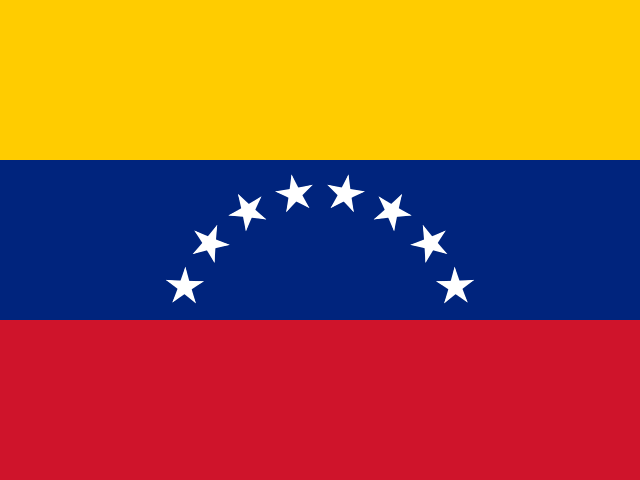 Venezuela
Earlier Report Observations
Between 2018 and 2020, the market volume for tapioca and starch substitutes gradually declined from 99 thousand tons to 96.3 thousand tons. This contraction occurred despite growing domestic popularity fueled by health-conscious and gluten-free dietary trends. Drought in Brazil's Northeast region limited cassava supply, while the COVID-19 pandemic in 2020 spurred a 42% surge in exports to the United States, Spain, and other countries, diverting production away from the domestic market.
After a slight further decrease to 95.2 thousand tons in 2021, the market stabilized and began to recover, reaching 96.4 thousand tons by 2023. This turnaround was supported by the diversification of products, including ready-to-eat formats, vegan-certified options, and innovative packaging that appealed to convenience-oriented consumers. Concurrently, investments in research for higher-starch cassava varieties aimed at improving industrial efficiency, and global plant-based food trends continued to bolster demand despite rising competition from other starches.
Table of content
- 1. Disclaimer
- 2. Terms of use of the report
- 3. Product codes in the statistical classifications used in the report
-
4. Key Market Indicators and Trends
-
4.1. Key Market Indicators
-
4.1.1. In kind
- 4.1.1.1. Production, 2018-2023
- 4.1.1.2. Imports, 2018-2024
- 4.1.1.3. Exports, 2018-2024
- 4.1.1.4. Market size, 2018-2023
-
4.1.2. In value
- 4.1.2.1. Production, 2018-2023
- 4.1.2.2. Imports, 2018-2024
- 4.1.2.3. Exports, 2018-2024
- 4.1.2.4. Market size, 2018-2023
-
4.1.1. In kind
- 4.2. Market Trends and Factors
-
4.1. Key Market Indicators
-
5. Production
-
5.1. Production in South America
- 5.1.1. Annual dynamics of production in South America in kind, 2018-2023, K t
-
5.2. Global production by Country, 2018-2023
- 5.2.1. Annual dynamics of production by macroregions in kind, 2018-2023, K t
- 5.2.2. Dynamics of production structure by macroregions in kind, 2018-2023
- 5.2.3. Annual dynamics of production by country in kind, 2018-2023, K t
- 5.2.4. Structure of production by countries in kind, 2018-2023
- 5.2.5. Dynamics of peoduction structure by countries in kind, 2018-2023
-
5.1. Production in South America
-
6. Imports
-
6.1. Imports (Direct Data*)
- 6.1.1. Imports - Total information
-
6.1.2. Imports in kind, t
- 6.1.2.1. Annual dynamics of product's imports to Argentina in kind, 2018-2024, t
- 6.1.2.2. Dynamics of product's imports in kind to Argentina by countries, 2018-2024, t
- 6.1.2.3. Structure of product's imports in kind by countries, 2018-2024
-
6.1.3. Imports in value, K $ US
- 6.1.3.1. Annual dynamics of product's imports to Argentina in value, 2018-2024, K $ US
- 6.1.3.2. Dynamics of product's imports in value to Argentina by countries, 2018-2024, K $ US
- 6.1.3.3. Structure of product's imports in value by countries, 2018-2024
-
6.1.4. Average price of product's imports, $ US/t
- 6.1.4.1. Annual dynamics of average price of product's imports to Argentina, 2018-2024, $ US/t
- 6.1.4.2. Dynamics of average price of product's imports to Argentina by countries, 2018-2024, $ US/t
-
6.2. Imports (Mirror Data)
- 6.2.1. Imports - Total information
-
6.2.2. Imports in kind, t
- 6.2.2.1. Annual dynamics of product's imports to Argentina in kind, 2018-2024, t
- 6.2.2.2. Dynamics of product's imports in kind to Argentina by countries, 2018-2024, t
- 6.2.2.3. Structure of product's imports in kind by countries, 2018-2024
-
6.2.3. Imports in value, K $ US
- 6.2.3.1. Annual dynamics of product's imports to Argentina in value, 2018-2024, K $ US
- 6.2.3.2. Dynamics of product's imports in value to Argentina by countries, 2018-2024, K $ US
- 6.2.3.3. Structure of product's imports in value by countries, 2018-2024
-
6.2.4. Average price of product's imports, $ US/t
- 6.2.4.1. Annual dynamics of average price of product's imports to Argentina, 2018-2024, $ US/t
- 6.2.4.2. Dynamics of average price of product's imports to Argentina by countries, 2018-2024, $ US/t
-
6.1. Imports (Direct Data*)
-
7. Exports
-
7.1. Exports (Direct Data*)
- 7.1.1. Exports - Total information
-
7.1.2. Exports in kind, t
- 7.1.2.1. Annual dynamics of product's exports from Argentina in kind, 2018-2024, t
- 7.1.2.2. Dynamics of product's exports in kind from Argentina by countries, 2018-2024, t
- 7.1.2.3. Structure of product's exports in kind by countries, 2018-2024
-
7.1.3. Exports in value, K $ US
- 7.1.3.1. Annual dynamics of product's exports from Argentina in value, 2018-2024, K $ US
- 7.1.3.2. Dynamics of product's exports in value from Argentina by countries, 2018-2024, K $ US
- 7.1.3.3. Structure of product's exports in value by countries, 2018-2024
-
7.1.4. Average price of product's exports, $ US/t
- 7.1.4.1. Annual dynamics of average price of product's exports from Argentina, 2018-2024, $ US/t
- 7.1.4.2. Dynamics of average price of product's exports from Argentina by countries, 2018-2024, $ US/t
-
7.2. Exports (Mirror Data)
- 7.2.1. Exports - Total information
-
7.2.2. Exports in kind, t
- 7.2.2.1. Annual dynamics of product's exports from Argentina in kind, 2018-2024, t
- 7.2.2.2. Dynamics of product's exports in kind from Argentina by countries, 2018-2024, t
- 7.2.2.3. Structure of product's exports in kind by countries, 2018-2024
-
7.2.3. Exports in value, K $ US
- 7.2.3.1. Annual dynamics of product's exports from Argentina in value, 2018-2024, K $ US
- 7.2.3.2. Dynamics of product's exports in value from Argentina by countries, 2018-2024, K $ US
- 7.2.3.3. Structure of product's exports in value by countries, 2018-2024
-
7.2.4. Average price of product's exports, $ US/t
- 7.2.4.1. Annual dynamics of average price of product's exports from Argentina, 2018-2024, $ US/t
- 7.2.4.2. Dynamics of average price of product's exports from Argentina by countries, 2018-2024, $ US/t
-
7.1. Exports (Direct Data*)
-
8. Trade balance
-
8.1. Trade balance (Direct Data)
- 8.1.1. In kind, t
- 8.1.2. In value, K $ US
-
8.2. Trade balance (Mirror Data)
- 8.2.1. In kind, t
- 8.2.2. In value, K $ US
-
8.1. Trade balance (Direct Data)
-
9. Top buying and selling countries, 2018-2024
-
9.1. Direct Data
- 9.1.1. Import in Value by Countries-buyers
- 9.1.2. Export in Value by Countries-suppliers
-
9.2. Mirror Data
- 9.2.1. Import in Value by Countries-buyers
- 9.2.2. Export in Value by Countries-suppliers
-
9.1. Direct Data
Production tapioca and starch substitutes in South America
In kind, 2017-2020, K t
Top producers of tapioca and starch substitutes, 2017-2020
World map of production of tapioca and starch substitutes, 2017-2020
In 2018, South America's production of tapioca and starch substitutes reached its peak at 101.2 K t, marking a 2.2% increase from the previous year. The following year, 2019, saw production drop to its lowest point of 98.7 K t, representing a 2.4% decline. By 2020, production stabilized at 99.0 K t, showing no significant change compared to 2019.
Annual dynamics of production in South America in kind, 2017-2020, K t
| Parameter | 2018 | 2019 | 2020 | CAGR | |
|---|---|---|---|---|---|
| 1 | Change from last year | 2.2% | (2.4%) | 0.3% | 0.0% |
In value, 2017-2020, M $ US
South America's production of tapioca and starch substitutes has been declining for two consecutive years. In 2018, output peaked at 168.8 M $ US, with a modest 1.3% increase. By 2020, production value fell to 153.4 M $ US, down 6.5% from 2019. Over the period from 2017 to 2020, production decreased by 8%, averaging an annual decline of 2.7%.
Annual dynamics of production in South America in value, 2017-2020, M $ US
| Parameter | 2018 | 2019 | 2020 | CAGR | |
|---|---|---|---|---|---|
| 1 | Change from last year | 1.3% | (2.8%) | (6.5%) | (2.7%) |
Exports tapioca and starch substitutes from South America
Exports in kind, t
In 2019, exports of tapioca and starch substitutes from South America declined by 7.8%. However, 2020 saw a strong recovery, with exports reaching 3 041 t—a 39.0% increase compared to the previous year. From 2017 to 2020, exports grew by 63.6%, averaging an annual growth rate of 17.8%.
Annual dynamics of product's exports from South America in kind, 2017-2020, t
| Parameter | 2018 | 2019 | 2020 | CAGR | |
|---|---|---|---|---|---|
| 1 | Change from last year | 27.6% | (7.8%) | 39.0% | 17.8% |
Between 2017 and 2020, the United States, Mexico, and Portugal were the main buyers of tapioca and starch substitutes from South America. The United States accounted for 33.8% of exports in kind, Mexico for 20.1%, and Portugal for 12.7%. Together, these three countries represented 66.6% of total exports in kind.
Structure of product's exports in kind by countries, 2017-2020
World map of product's exports from South America in kind, 2017-2020
Exports in value, K $ US
In 2019, exports of tapioca and starch substitutes from South America in value terms declined by 8.2%. The following year, 2020, exports rebounded to 4 710 K $ US, up 29.6% from 2019. Over the 2017-2020 period, exports increased by 50.5%, with a compound annual growth rate of 14.6%.
Annual dynamics of product's exports from South America in value, 2017-2020, K $ US
| Parameter | 2018 | 2019 | 2020 | CAGR | |
|---|---|---|---|---|---|
| 1 | Change from last year | 26.5% | (8.2%) | 29.6% | 14.6% |
From 2017 to 2020, the United States, Mexico, and Spain were the leading destinations for South America's tapioca and starch substitutes exports in value terms. The United States held a 35.5% share, Mexico 15.5%, and Spain 14.5%. Combined, these three countries accounted for 65.4% of total export value.
Structure of product's exports in value by countries, 2017-2020
World map of product's exports from South America in value, 2017-2020
Imports tapioca and starch substitutes to South America
Imports in kind, t
In 2018, South America's imports of tapioca and starch substitutes in kind fell to their lowest point at 228 t, a sharp 27.3% decline. The following year, 2019, imports surged to 322 t, a 41.2% increase, marking the peak for the period. By 2020, imports decreased to 295 t, down 8.3% from 2019. Overall, from 2017 to 2020, imports declined by 5.9%, with an average annual decrease of 2.0%.
Annual dynamics of product's imports to South America in kind, 2017-2020, t
| Parameter | 2018 | 2019 | 2020 | CAGR | |
|---|---|---|---|---|---|
| 1 | Change from last year | (27.3%) | 41.2% | (8.3%) | (2.0%) |
Between 2017 and 2020, Thailand, China, and Asia (not elsewhere specified) were notable but not dominant suppliers of tapioca and starch substitutes to South America. Thailand accounted for 13.5% of imports in kind, China for 10.9%, and Asia (not elsewhere specified) for 9.5%. Together, their combined share reached 33.9% of total imports in kind.
Structure of product's imports in kind by countries, 2017-2020
World map of product's imports to South America in kind, 2017-2020
Imports in value, K $ US
After rising for two years, South America's imports of tapioca and starch substitutes in value terms declined in 2020. In 2019, imports peaked at 667 K $ US, a 33.0% increase. However, by 2020, imports dropped to 519 K $ US, down 22.2% from the previous year. Over the 2017-2020 period, imports increased by 12.3%, with an average annual growth rate of 3.9%.
Annual dynamics of product's imports to South America in value, 2017-2020, K $ US
| Parameter | 2018 | 2019 | 2020 | CAGR | |
|---|---|---|---|---|---|
| 1 | Change from last year | 8.6% | 33.0% | (22.2%) | 3.9% |
From 2017 to 2020, imports of tapioca and starch substitutes to South America in value terms were distributed across many countries. Asia (not elsewhere specified) accounted for 13.8% of imports, China for 11.3%, and Thailand for 9.9%. Together, these three sources represented 35.0% of total import value.
Structure of product's imports in value by countries, 2017-2020
World map of product's imports to South America in value, 2017-2020
Related Reports


Pastry market in South America
2026-03-30



Why Choose Us?
Only Verified Data
No Hidden Costs or Separate Fees
Smarter Subscription Pricing
Contact Our Team
Submit your inquiry using the form below — our team will get back to you within 24 hours.