






Earlier Report Observations
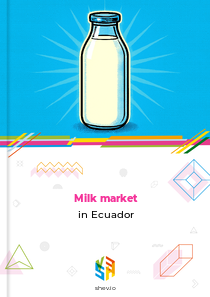
The Ecuadorian milk market experienced strong growth in 2019, with production rising to 2 507 thousand tons and market volume reaching 2 508 thousand tons. This surge was fueled by a rise in producer prices to $0.41 per liter, implemented through Ministerial Agreement No. 394, which boosted dairy farmers' income even as labor and feed costs increased.
Market volume dropped to 2 322 thousand tons in 2020 as the COVID‑19 pandemic cut demand, especially in the informal sector. The decline persisted through 2021 and 2022, driven by a 12% fall in consumption due to civil insecurity and the closure of neighborhood stores, alongside heightened competition from milk imports arriving from Uruguay, Colombia, and Peru.
To support producers, the Organic Law for Promoting Milk Production took effect in August 2022, setting a minimum price of $0.42 per liter. The law's regulations were published in 2023, and quality‑control operations removed non‑compliant products, helping the market stabilize with a slight recovery to 2 110 thousand tons in 2023.
Table of content
- 1. Disclaimer
- 2. Terms of use of the report
- 3. Product codes in the statistical classifications used in the report
-
4. Key Market Indicators and Trends
-
4.1. Key Market Indicators
-
4.1.1. In kind
- 4.1.1.1. Production, 2018-2023
- 4.1.1.2. Imports, 2018-2024
- 4.1.1.3. Exports, 2018-2024
- 4.1.1.4. Market size, 2018-2023
-
4.1.1. In kind
- 4.2. Market Trends and Factors
-
4.1. Key Market Indicators
-
5. Production
-
5.1. Production in Ecuador
- 5.1.1. Annual dynamics of production in Ecuador in kind, 2018-2023, K t
- 5.1.2. Annual dynamics of production in Ecuador in value, 2018-2023, $ US
-
5.2. Global production by Country, 2018-2023
- 5.2.1. Annual dynamics of production by macroregions in kind, 2018-2023, K t
- 5.2.2. Dynamics of production structure by macroregions in kind, 2018-2023
- 5.2.3. Annual dynamics of production by country in kind, 2018-2023, K t
- 5.2.4. Structure of production by countries in kind, 2018-2023
- 5.2.5. Dynamics of peoduction structure by countries in kind, 2018-2023
-
5.1. Production in Ecuador
-
6. Exports
-
6.1. Exports (Direct Data)
- 6.1.1. Exports - Total information
-
6.1.2. Exports in kind, t
- 6.1.2.1. Annual dynamics of product's exports from Ecuador in kind, 2018-2024, t
- 6.1.2.2. Dynamics of product's exports in kind from Ecuador by countries, 2018-2024, t
- 6.1.2.3. Structure of product's exports in kind by countries, 2018-2024
-
6.1.3. Exports in value, K $ US
- 6.1.3.1. Annual dynamics of product's exports from Ecuador in value, 2018-2024, K $ US
- 6.1.3.2. Dynamics of product's exports in value from Ecuador by countries, 2018-2024, K $ US
- 6.1.3.3. Structure of product's exports in value by countries, 2018-2024
-
6.1.4. Average price of product's exports, $ US/kg
- 6.1.4.1. Annual dynamics of average price of product's exports from Ecuador, 2018-2024, $ US/kg
- 6.1.4.2. Dynamics of average price of product's exports from Ecuador by countries, 2018-2024, $ US/kg
-
6.2. Exports (Mirror Data)
- 6.2.1. Exports - Total information
-
6.2.2. Exports in kind, t
- 6.2.2.1. Annual dynamics of product's exports from Ecuador in kind, 2018-2024, t
- 6.2.2.2. Dynamics of product's exports in kind from Ecuador by countries, 2018-2024, t
- 6.2.2.3. Structure of product's exports in kind by countries, 2018-2024
-
6.2.3. Exports in value, K $ US
- 6.2.3.1. Annual dynamics of product's exports from Ecuador in value, 2018-2024, K $ US
- 6.2.3.2. Dynamics of product's exports in value from Ecuador by countries, 2018-2024, K $ US
- 6.2.3.3. Structure of product's exports in value by countries, 2018-2024
-
6.2.4. Average price of product's exports, $ US/kg
- 6.2.4.1. Annual dynamics of average price of product's exports from Ecuador, 2018-2024, $ US/kg
- 6.2.4.2. Dynamics of average price of product's exports from Ecuador by countries, 2018-2024, $ US/kg
-
6.1. Exports (Direct Data)
-
7. Imports
-
7.1. Imports (Direct Data)
- 7.1.1. Imports - Total information
-
7.1.2. Imports in kind, t
- 7.1.2.1. Annual dynamics of product's imports to Ecuador in kind, 2018-2024, t
- 7.1.2.2. Dynamics of product's imports in kind to Ecuador by countries, 2018-2024, t
- 7.1.2.3. Structure of product's imports in kind by countries, 2018-2024
-
7.1.3. Imports in value, K $ US
- 7.1.3.1. Annual dynamics of product's imports to Ecuador in value, 2018-2024, K $ US
- 7.1.3.2. Dynamics of product's imports in value to Ecuador by countries, 2018-2024, K $ US
- 7.1.3.3. Structure of product's imports in value by countries, 2018-2024
-
7.1.4. Average price of product's imports, $ US/kg
- 7.1.4.1. Annual dynamics of average price of product's imports to Ecuador, 2018-2024, $ US/kg
- 7.1.4.2. Dynamics of average price of product's imports to Ecuador by countries, 2018-2024, $ US/kg
-
7.2. Imports (Mirror Data)
- 7.2.1. Imports - Total information
-
7.2.2. Imports in kind, t
- 7.2.2.1. Annual dynamics of product's imports to Ecuador in kind, 2018-2024, t
- 7.2.2.2. Dynamics of product's imports in kind to Ecuador by countries, 2018-2024, t
- 7.2.2.3. Structure of product's imports in kind by countries, 2018-2024
-
7.2.3. Imports in value, K $ US
- 7.2.3.1. Annual dynamics of product's imports to Ecuador in value, 2018-2024, K $ US
- 7.2.3.2. Dynamics of product's imports in value to Ecuador by countries, 2018-2024, K $ US
- 7.2.3.3. Structure of product's imports in value by countries, 2018-2024
-
7.2.4. Average price of product's imports, $ US/kg
- 7.2.4.1. Annual dynamics of average price of product's imports to Ecuador, 2018-2024, $ US/kg
- 7.2.4.2. Dynamics of average price of product's imports to Ecuador by countries, 2018-2024, $ US/kg
-
7.1. Imports (Direct Data)
-
8. Trade balance
-
8.1. Trade balance (Direct Data)
- 8.1.1. In kind, t
- 8.1.2. In value, K $ US
-
8.2. Trade balance (Mirror Data)
- 8.2.1. In kind, t
- 8.2.2. In value, K $ US
-
8.1. Trade balance (Direct Data)
-
9. Top buying and selling countries, 2018-2024
-
9.1. Direct Data
- 9.1.1. Import in Value by Countries-buyers
- 9.1.2. Export in Value by Countries-suppliers
-
9.2. Mirror Data
- 9.2.1. Import in Value by Countries-buyers
- 9.2.2. Export in Value by Countries-suppliers
-
9.1. Direct Data
Production milk in Ecuador
In kind, 2017-2020, K t
Top producers of milk, 2017-2020
World map of production of milk, 2017-2020
In 2019, Ecuador's milk production reached its highest level at 2,507 thousand tons. However, by 2020, output had declined to 2,320 thousand tons, marking a 7.4% decrease from the previous year. The lowest production during the 2017-2020 period was recorded in 2018 at 1,894 thousand tons. Overall, production grew by 19.7% from 2017 to 2020, which translates to an average annual growth rate of 6.2%. The most significant year-over-year increase occurred in 2019, when production surged by 32.3%.
Annual dynamics of production in Ecuador in kind, 2017-2020, K t
| Parameter | 2018 | 2019 | 2020 | CAGR | |
|---|---|---|---|---|---|
| 1 | Change from last year | (2.3%) | 32.3% | (7.4%) | 6.2% |
Exports milk from Ecuador
Exports in kind, t
Ecuador's milk exports showed considerable volatility between 2017 and 2020. In 2018, exports hit their lowest point at 0.0 tons, representing a 100.0% decline from the previous year. The following year, 2019, saw the largest increase with exports skyrocketing by 3,524,447.4%. By 2020, exports had recovered to 159 tons, which was 31.2% higher than in 2019. The extreme fluctuations are highlighted by a peak-to-trough amplitude of 205,113 times from 2017 to 2018, indicating a highly unstable market environment.
Annual dynamics of product's exports from Ecuador in kind, 2017-2020, t
| Parameter | 2018 | 2019 | 2020 | CAGR | |
|---|---|---|---|---|---|
| 1 | Change from last year | (100.0%) | 3 524 447.4% | 31.2% | (39.1%) |
From 2017 to 2020, Colombia was by far the dominant buyer of Ecuadorian milk, accounting for 96.7% of total exports in volume terms.
Structure of product's exports in kind by countries, 2017-2020
World map of product's exports from Ecuador in kind, 2017-2020
Exports in value, K $ US
The value of Ecuador's milk exports experienced significant volatility during the 2017-2020 period. In 2018, export value dropped to its minimum of 0.1 thousand US dollars, a 100.0% decrease from the previous year. The largest increase occurred in 2019, with a staggering rise of 309,518.0%. By 2020, export value had climbed to 500 thousand US dollars, up 65.7% from 2019. The market saw extreme swings, with a 22,755-fold difference between the peak in 2017 and the trough in 2018.
Annual dynamics of product's exports from Ecuador in value, 2017-2020, K $ US
| Parameter | 2018 | 2019 | 2020 | CAGR | |
|---|---|---|---|---|---|
| 1 | Change from last year | (100.0%) | 309 518.0% | 65.7% | (39.1%) |
Throughout 2017-2020, Colombia remained the nearly exclusive destination for Ecuador's milk exports, representing 98.0% of total export value.
Structure of product's exports in value by countries, 2017-2020
World map of product's exports from Ecuador in value, 2017-2020
Imports milk to Ecuador
Imports in kind, t
Ecuador's milk imports increased for the second consecutive year in 2020, reaching 2,206 tons, which was 13.6% higher than in 2019. The lowest import volume during the period was recorded in 2018 at 1,904 tons, marking a 21.1% decline from the previous year. Overall, imports decreased by 8.6% from 2017 to 2020, equivalent to an average annual decline of 3.0%.
Annual dynamics of product's imports to Ecuador in kind, 2017-2020, t
| Parameter | 2018 | 2019 | 2020 | CAGR | |
|---|---|---|---|---|---|
| 1 | Change from last year | (21.1%) | 2.0% | 13.6% | (3.0%) |
From 2017 to 2020, Chile was the primary source for Ecuador's milk imports, accounting for 72.7% of total import volume. The remaining share was distributed among various smaller markets.
Structure of product's imports in kind by countries, 2017-2020
World map of product's imports to Ecuador in kind, 2017-2020
Imports in value, K $ US
Ecuador's milk import value rose for the second year in a row in 2020, totaling 4,475 thousand US dollars, a 22.7% increase compared to 2019. The lowest value during the period was in 2018 at 3,427 thousand US dollars, which represented a 16.1% decline from the previous year. Over the entire 2017-2020 span, import value grew by 9.5%, with a compound annual growth rate of 3.1%.
Annual dynamics of product's imports to Ecuador in value, 2017-2020, K $ US
| Parameter | 2018 | 2019 | 2020 | CAGR | |
|---|---|---|---|---|---|
| 1 | Change from last year | (16.1%) | 6.4% | 22.7% | 3.1% |
Between 2017 and 2020, three key markets—Chile, France, and Peru—collectively accounted for 88.2% of the total value of milk imports into Ecuador.
Structure of product's imports in value by countries, 2017-2020
World map of product's imports to Ecuador in value, 2017-2020
Related Reports

2026-03-30
2026-03-30
2026-03-30
2026-03-30

Milk and cream market in Ecuador
2026-03-27

Cheese and curd market in Ecuador
2026-03-27

In-depth market research on this product
Global Sheep Milk Cheese Market 2021–2031: Size, Share, Trends and Forecast
Global market report: size, trends and forecast to 2031 · 186 pages
Global Skimmed Milk Powder Market 2021–2031: Size, Share, Trends and Forecast
Global market report: size, trends and forecast to 2031 · 192 pages
Global Whole Milk Powder Market 2021–2031: Size, Share, Trends and Forecast
Global market report: size, trends and forecast to 2031 · 214 pages
Global Condensed Milk Market 2021–2031: Size, Share, Trends and Forecast
Global market report: size, trends and forecast to 2031 · 224 pages
Why Choose Us?
Only Verified Data
No Hidden Costs or Separate Fees
Smarter Subscription Pricing
Contact Our Team
Submit your inquiry using the form below — our team will get back to you within 24 hours.