XPENG Opens Production Line for IRON Humanoid Robot
XPENG has commissioned production lines for its IRON humanoid robot, with more than 80% of core processes automated. Mass production is scheduled by the end of 2026, followed by launches and deliveries in China and overseas markets in 2027.
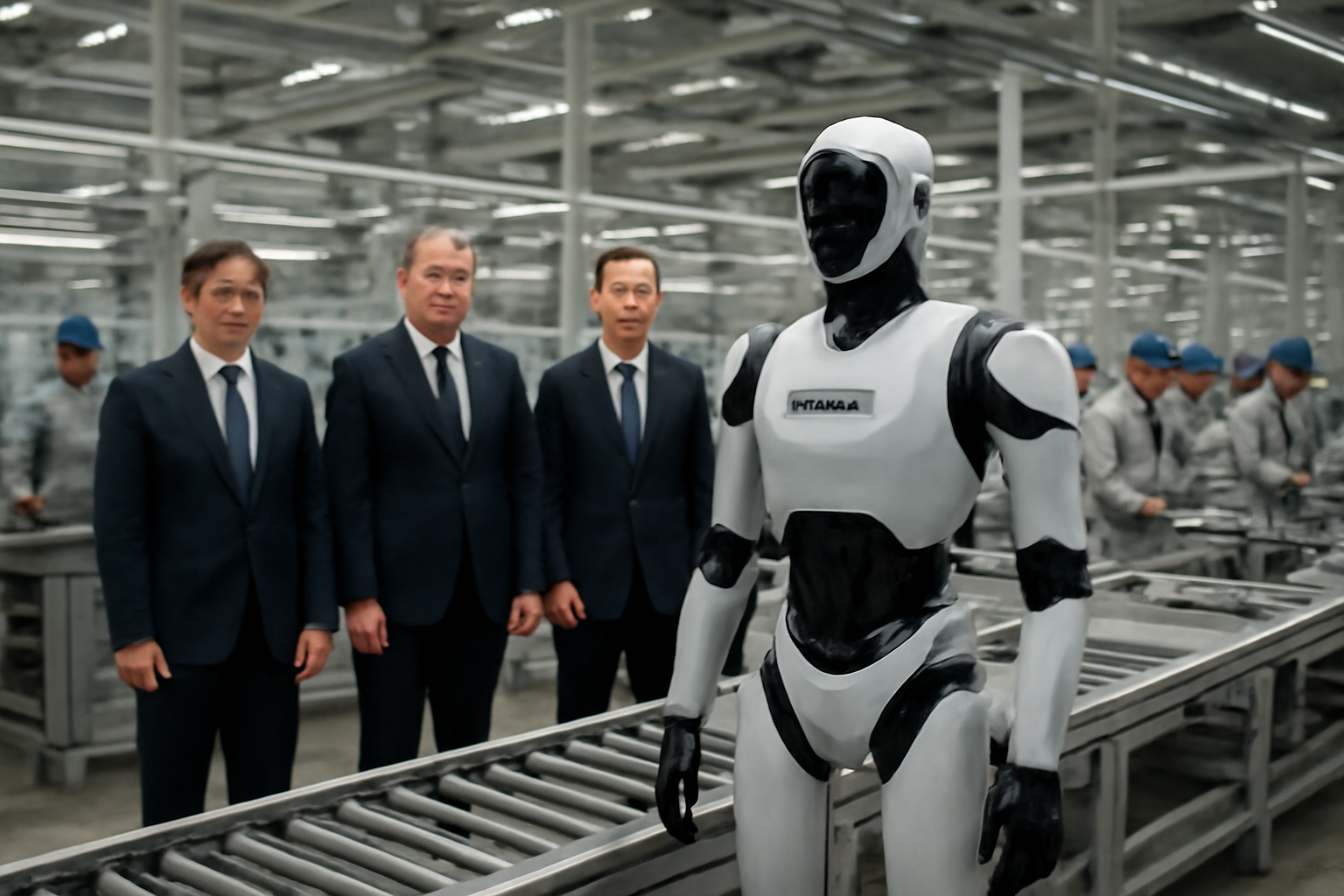
From prototype to production line
XPENG has commissioned new production lines for its IRON humanoid robot, moving the project from research and prototype development toward industrial manufacturing. The first completed robot autonomously walked off one of the lines, according to the Chinese technology company’s announcement published by PresseBox.
The facility combines manufacturing systems developed for intelligent electric vehicles with the precision processes required for advanced humanoid robots. XPENG said more than 80% of the core production processes are automated. The lines were designed for high-precision assembly, flexible production and consistent quality at critical stages.
The company has not disclosed the location’s annual capacity, expected production cost or planned selling price. It has also not specified how many robots will be manufactured during the initial ramp-up. These figures will determine whether the new facility represents limited commercial production or a pathway to much larger volumes.
Mass production targeted for 2026
XPENG plans to begin mass production by the end of 2026. Initial deployments are expected in the company’s own stores and campuses, providing controlled environments in which IRON can interact with employees and customers and perform practical tasks. Formal market launches and deliveries in China and overseas markets are planned for 2027.
IRON is being developed as a general-purpose platform rather than for one narrowly defined industrial task. XPENG describes the robot as combining a human-like form and movement with artificial intelligence. It has 76 degrees of freedom across its body and 21 in each hand, supporting mobility and dexterity for different applications.
Three proprietary Turing AI chips provide up to 2,250 trillion operations per second of effective computing power. According to XPENG, this allows its Physical AI foundation model to run directly on the robot, enabling IRON to perform complex tasks without remote operation while reducing latency and keeping more data on the device.
Automotive expertise supports robotics expansion
The production strategy draws on XPENG’s experience in electric-vehicle engineering, quality control and large-scale manufacturing. Applying automotive standards to humanoid robots could help the company manage component traceability, assembly accuracy and repeatable testing as output increases. However, operating reliability and customer demand will remain crucial tests once robots move beyond XPENG’s controlled locations.
The manufacturing launch follows a major financing round for the robotics business. XPENG said on August 24 that it had signed share-purchase agreements with several investors, raising more than US$900 million at a post-money valuation above US$6.3 billion. The company described it as the largest single private financing round in China’s embodied-AI industry.
XPENG expects gross profit per humanoid robot to be significantly higher than for new-energy vehicles, citing high technical barriers and limited supplies of advanced general-purpose machines. That forecast remains a company expectation rather than a demonstrated commercial result. The 2026 production ramp and the first deliveries in 2027 will show whether automotive manufacturing expertise can translate into scalable robot output and sustainable demand.