World barley output forecast to fall by 6 million tonnes in 2026/27
Global barley production is forecast at about 150 million tonnes in 2026/27, nearly 6 million tonnes below the previous season. Better crops in North Africa and Turkey should partly offset losses among major producers, while Europe and Argentina face reduced export availability.
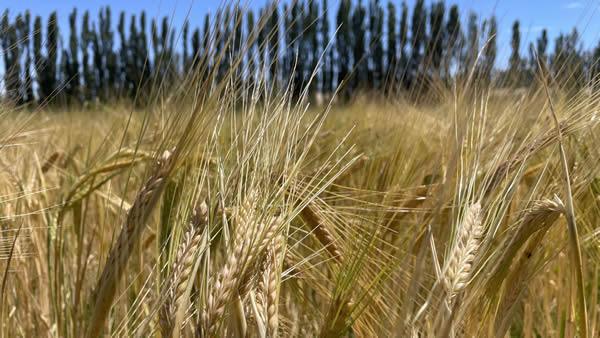
Major producing regions drive the decline
Global barley production is forecast at about 150 million tonnes in the 2026/27 season, nearly 6 million tonnes below the previous cycle, according to Noticias AgroPecuarias. The combined harvest in Europe, Canada, Argentina, Australia, Russia and Ukraine is expected to fall by 11 million tonnes from 2025/26. Improved production in North Africa and Turkey should offset part of that contraction and help keep overall availability broadly aligned with consumption.
Europe, including the United Kingdom, accounts for much of the reduction, with its barley harvest expected to decline by 7 million tonnes. Drought and high temperatures affected spring barley more severely than winter crops. Heatwaves across western, central and southern Europe in the second half of June and again in mid-July shortened crop cycles, accelerated harvesting and reduced yields. Noticias AgroPecuarias reports that the smaller crop should not compromise European domestic supply, but will sharply reduce the region’s exportable surplus.
Feed barley leads the price signal
The same adverse weather caused heavier damage to European wheat and maize, lifting grain prices and pulling barley higher. Feed barley is again setting the direction of the market. Malting barley faces a more complex balance: heat and drought have raised quality concerns, but weak beer consumption continues to limit demand. Better results in locations including Denmark should provide some stability to European malting supply, although the total export surplus has contracted.
France, the European Union’s largest grain producer, reported crops in good condition through May before June heat accelerated the barley and wheat harvests. Extreme temperatures also disrupted fieldwork and led to activity restrictions in some areas because of fire risks. Yield losses were greatest in central and western areas, while northern and eastern zones performed better. Continuing conflicts in the Middle East and Eastern Europe add uncertainty around energy costs, logistics and global grain trading.
Argentina expects a smaller crop and export pool
Argentina produced an estimated 5.7 million tonnes of barley in 2025/26, with more than 3 million tonnes already committed for export through officially reported declarations. As of August 14, 2026, declarations covered 582,611 tonnes of malting barley, 2,785,405 tonnes of feed barley and 429,716 tonnes of barley malt. Feed barley has gained a clear lead in the sales mix. Saudi Arabia remains the main destination for Argentine feed barley, while Brazil is the leading market for malting barley.
For 2026/27, Argentine planting is nearly complete, but excess moisture—particularly in the southeast of Buenos Aires province—has reduced the final area to an estimated 1.1 million hectares. Initial production is projected at 4.5 million to 5 million tonnes, indicating less grain available for export than in 2025/26. Elsewhere, harvest estimates remain at 9.3 million tonnes for Canada and 3.1 million tonnes for the United States. Australia’s forecast has been adjusted to 14.6 million tonnes after favorable rains supported early planting, although the outcome will depend on subsequent weather and the possible effects of El Niño.