Wood Foundation Africa takes co-majority stake in Rwanda's Mushubi Tea Factory
The Wood Foundation Africa has acquired a co-majority stake in Mushubi Tea Factory in Rwanda's Nyamagabe District. The investment is expected to fund the plant's development and lift its tea production, as Rwanda works to expand an industry that sells almost all of its output abroad. Financial terms of the transaction were not disclosed.
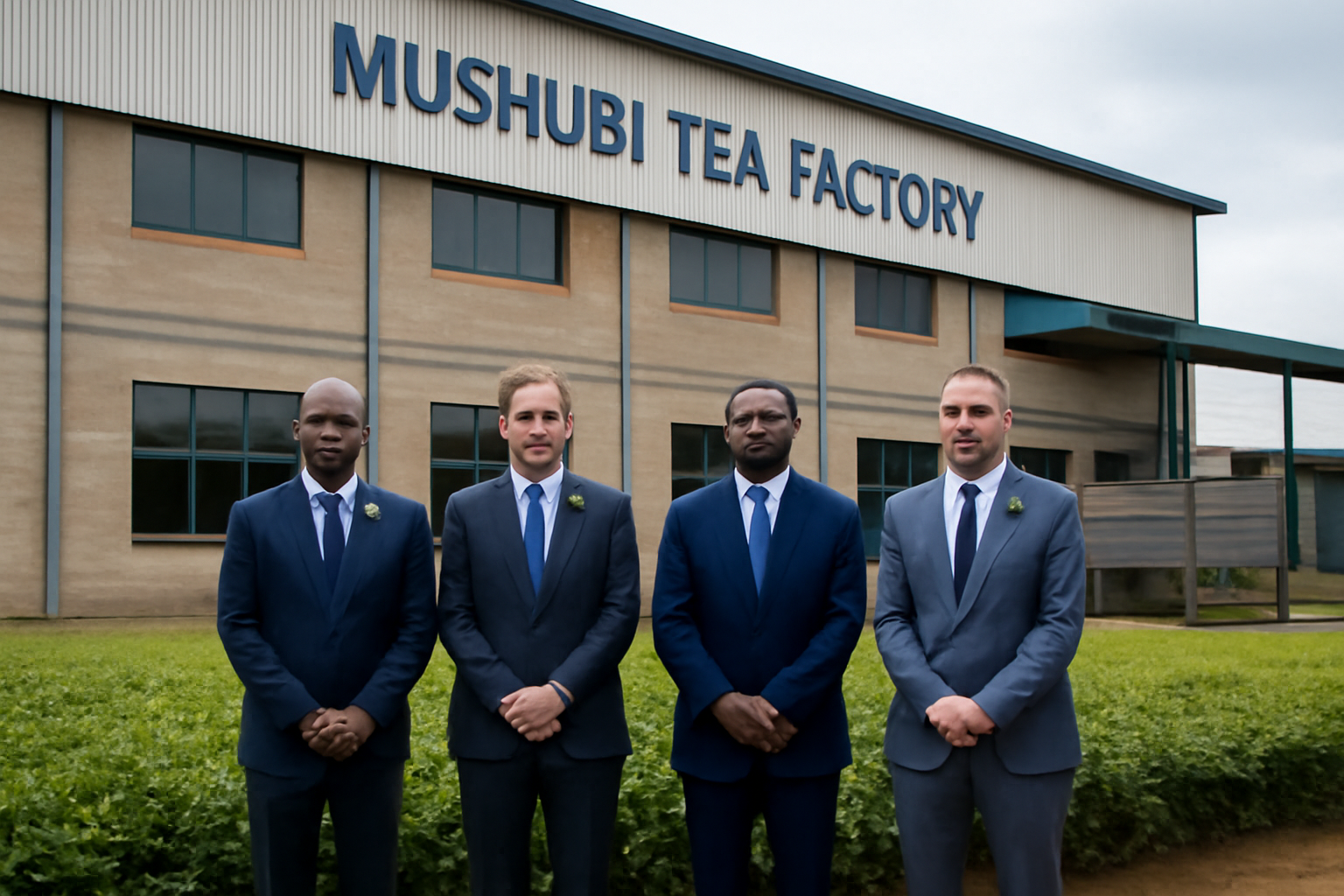
Co-majority stake in a Nyamagabe processor
The Wood Foundation Africa (TWFA) has acquired a co-majority stake in Mushubi Tea Factory, located in Nyamagabe District in southern Rwanda. The foundation now shares majority ownership of the plant, and the investment is expected to support the factory's development and raise its tea production. The move sits within Rwanda's broader effort to grow a tea sector that is built almost entirely around export demand. Several elements of the transaction have not been made public:
- the size of the stake and the price paid for it;
- the amount of capital earmarked for plant upgrades, and the timetable for that work;
- the identity of the partner holding the remaining share of the majority alongside TWFA.
Why factory capacity sets the ceiling
Rwandan tea runs on a factory-centred supply chain. Processing plants buy green leaf from the smallholder growers and cooperatives around them, then wither, cut, ferment and dry it into made tea for sale. The binding constraint is rarely the bush — it is the line. Plucked leaf degrades quickly and has to be processed within hours, so a factory that cannot absorb the leaf its catchment produces caps both grower income and exportable volume at the same time.
That makes capital spending at factory level one of the most direct levers on national output. More withering, rolling and drying capacity lets a plant take in more leaf per day, hold plucking rounds tighter through the peak, and cut the share of leaf rejected or left unharvested. It also feeds into quality. Shorter waiting times before processing and better-controlled fermentation and drying determine the grades a factory can produce, and grade determines the price it realises.
An export-oriented crop
Rwanda consumes very little of what it makes. Tea is grown primarily for sale abroad and ranks among the country's leading agricultural foreign-exchange earners, alongside coffee. Much of East Africa's made tea is sold through the weekly auction in Mombasa, with the balance moving by direct sale to blenders and packers. For a landlocked origin, the route to market runs overland to the Kenyan or Tanzanian coast, so inland freight sits on top of processing costs in every delivered price.
Geography is also the sector's main commercial argument. Rwanda's tea is grown at altitude on volcanic soils in the west and south of the country, and Nyamagabe, on the edge of the Nyungwe forest, lies inside that belt. High-grown leaf is valued by blenders for colour and briskness, and origins that can deliver it consistently tend to sit at the stronger end of the auction range rather than competing on bulk price.
What the ownership change signals
The buyer profile matters as much as the asset. TWFA is a foundation rather than a trading house or a multinational blender, which points to longer-horizon capital and reinvestment into the plant itself, rather than an acquisition made to secure leaf for a parent company's own book. Co-majority structures also leave an incumbent partner in place, so operational continuity at the factory is the likely base case.
For processors, buyers and analysts tracking East African supply, the practical questions now are measurable ones: how much additional daily leaf intake the upgraded plant will handle, when the work is scheduled, what it does to Mushubi's grade mix, and whether leaf collection in the catchment expands to match. None of those figures has been published. Until they are, the transaction is best read as a statement of intent on Rwandan processing capacity rather than as volume already on the market.