White House weighs limiting beef import relief ahead of US midterms
A group of White House officials is examining a retreat from already announced beef import measures ahead of the midterm elections, according to sbctv.gr. The signed proclamation covering 300,000 tonnes of lean beef entering without certain duties is expected to proceed, but a follow-up of comparable size is in doubt.
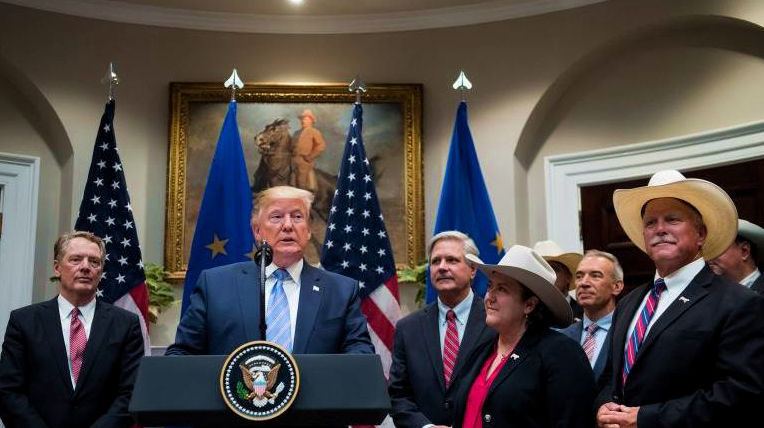
US beef imports have turned into an instrument of political calculation ahead of the midterm elections, with a group of White House officials examining a retreat from measures already announced, according to the Greek outlet sbctv.gr. The discussion sets the goal of supporting household purchasing power against the protection of domestic livestock producers at a moment of high political tension.
Donald Trump signed a presidential proclamation temporarily increasing duty-free imports of lean beef, with the stated aim of lowering retail prices during a period of persistent food inflation. The measure provided for 300,000 tonnes of beef to enter without certain duties and with reduced charges, signalling that the White House was intervening directly in the cost of living.
Producers push back
Part of the US cattle sector reacted against the decision, fearing compression of producer prices and a loss of market share to cheaper imported volumes. With the midterms approaching, farm states carry particular weight, and Trump's advisers are now weighing the political cost of a confrontation with meat producers.
The tension is straightforward: the same tonnage that lowers shelf prices for consumers arrives in a market where domestic producers set their own price expectations. sbctv.gr reports that the balance between those two constituencies is what the White House group is currently reassessing.
The tranche proceeds, the sequel is in doubt
On the indications available so far, the 300,000-tonne tranche already set in motion is expected to go ahead, but officials are examining the possibility of not following it with comparable quantities, or of tightening the conditions attached. Such a retreat would reduce the pressure on American cattle producers while narrowing the room for any further easing of consumer prices.
The source does not specify which supplying countries would fill the volume, over what period the 300,000 tonnes would enter, the level of the reduced charges, or when a decision on any second tranche would be taken.
Signal for global trade flows
For the global meat market, Washington's decisions function as a signal for trade flows and for future investment in production capacity. If the United States appears more reserved on beef imports, exporting countries will look for alternative outlets, moving supply toward Asia, the Middle East and Europe and influencing international prices.
Greece, as a net importer of meat, is following such moves closely because they affect the general price level in the European food market. If the United States limits its role as a destination for cheaper beef, increased quantities may be directed to Europe, exerting downward pressure on wholesale prices and potentially on costs for foodservice and retail.
For Greek meat producers, an environment of lower international prices means increased competition and a need to reinforce added value through quality, certification and traceability. At the same time, sbctv.gr notes that fiscal policy in Greece has to take into account that swings in food prices feed directly into inflation and purchasing power, with consequences for wage demands and the design of social measures.
What market participants are watching
- Whether the announced 300,000 tonnes enter in full and on the original terms.
- Whether a second tranche of comparable size is authorised, or the conditions are tightened.
- Where exporters redirect volumes if the US window closes after the first tranche.
- The pass-through of any redirected supply into European wholesale beef prices.