WFP: Afghan staple prices up 7-35% year-on-year as urea climbs 28%
The World Food Programme found Afghan markets largely stable in the first week of September, but staple prices remain far above year-earlier levels, with rice up 22-35%, wheat grain up 13% and cooking oil up 14%. Farm inputs are rising faster still: urea is 28% more expensive than a year ago and diammonium phosphate 13%. WFP projects 13.8 million people will face acute food insecurity in Afghanistan in 2026.
Weekly stability masks a year of price increases
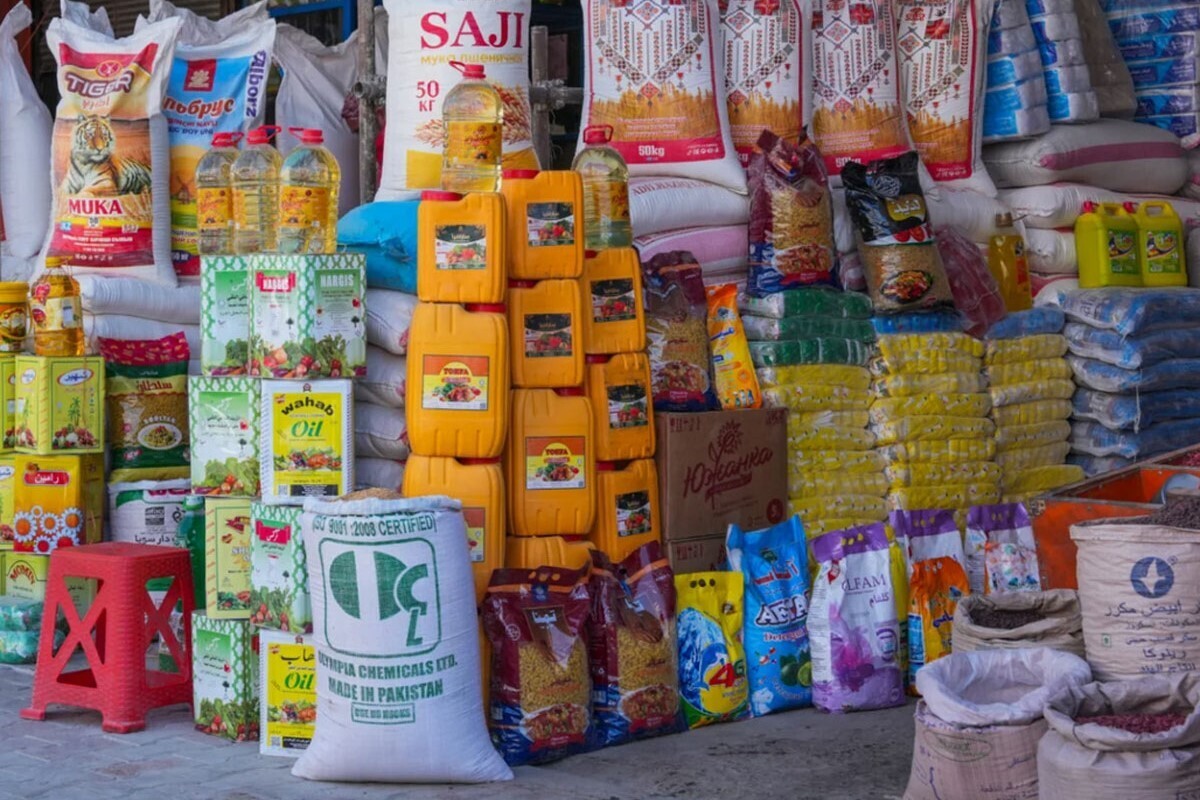
Afghan markets were largely stable during the first week of September, but the prices of many staple goods remain significantly higher than a year earlier, the World Food Programme (WFP) said in its latest report on the Afghan market. Shahrara News, which carried the findings, reported that wheat grain and wheat flour showed no meaningful change from the previous week. Memar Press said the bulletin was released on Monday, 23 Sunbula in the Afghan calendar.
On an annual basis, wheat grain was 13% more expensive and low-price wheat flour 12% higher, while high-quality wheat flour was up 7%, according to the WFP figures cited by Shahrara News and Memar Press. Wheat and flour account for the bulk of calorie intake in Afghan households, which makes even single-digit annual increases material for family budgets.
Rice recorded the widest annual gaps. Weekly movements were limited, but the two rice types tracked by WFP stood 22% and 35% above year-earlier levels. Shafaqna Afghanistan, citing the same report, identified palow rice as up 22% and sholay rice as up 35%. Rice was also trading around 22% above its three-year average.
Oil, sugar and vegetables add to the bill
Weekly changes across the rest of the basket were small but almost uniformly upward. WFP recorded the following moves:
- cooking oil up 1.3% on the week and 14% on the year;
- pulses up 0.9% on the week;
- sugar up 0.6% on the week and 11% on the year;
- onions up 4.7% on the week;
- potatoes down 1.4% on the week, but 43% above year-earlier prices and 35% above the three-year average;
- tomatoes down 0.7% on the week.
Shafaqna Afghanistan described the pattern as hidden inflation in the food segment, arguing that the apparent calm of the market coexists with a broad annual repricing of the basic basket and deepens the exposure of low-income groups to economic shocks.
Wages buy less flour
The WFP report also measures household purchasing power in terms of wheat flour. On that measure, casual daily labourers could buy 14% less flour than a year earlier, while livestock keepers could buy 7% less, Shahrara News reported.
The erosion of real incomes comes as Afghanistan faces a wide food and malnutrition crisis. Did Press reported that, on WFP projections, around 13.8 million people will face acute food insecurity in the country in 2026.
Fertiliser costs raise the bar for the next crop
Price pressure is not confined to the consumer basket. Urea was 28% more expensive than a year earlier and diammonium phosphate (DAP) 13% higher, Shahrara News reported, citing the WFP bulletin, which noted that rising input prices can push up the cost of producing agricultural goods for farmers.
Shafaqna Afghanistan, drawing on the same WFP data, put the annual increase across food and agricultural inputs including fertiliser in a range from more than 10% to around 30%, and tied the squeeze on household purchasing power to unemployment as well as to prices. It warned that if the situation persists without effective support policies and amid declining international assistance, income gaps will widen further.
In its summary, WFP concluded that although market conditions in Afghanistan were relatively stable in the first week of September, elevated prices for staple goods and agricultural inputs continue to weigh on household purchasing power and on production costs in the country.