Western Australia raises battery storage benchmark as coal closures approach
AEMO will grant full capacity credits to seven-hour batteries in Western Australia, with the benchmark potentially reaching 8.5 hours in the mid-2030s. The shift comes as the state prepares for coal closures and a possible 2,161 MW supply gap by 2035.
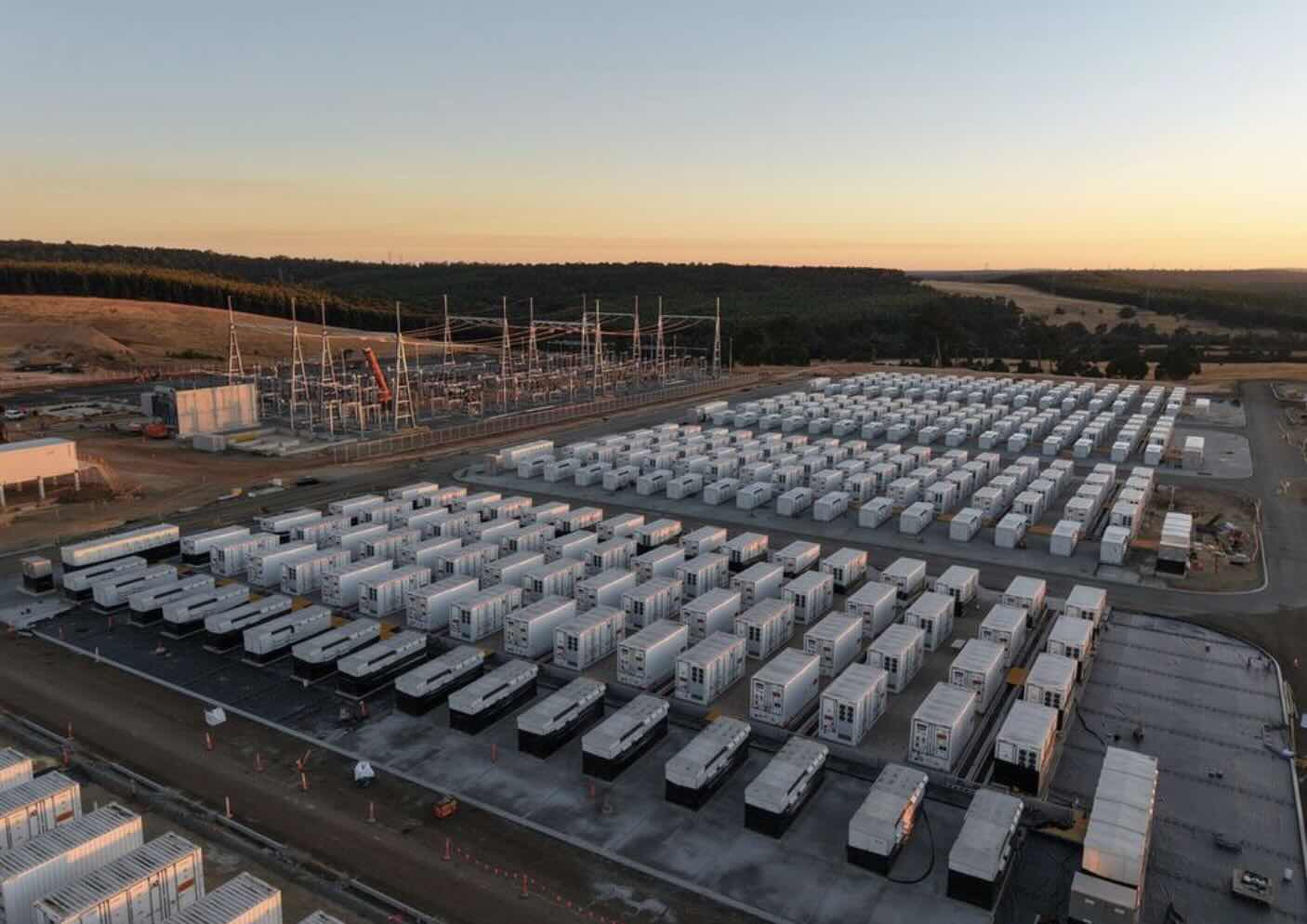
Seven hours becomes the new capacity benchmark
Western Australia is moving toward longer-duration battery storage as the state prepares to retire coal generation and manage a growing electricity supply gap. According to Renew Economy, the Australian Energy Market Operator (AEMO) will award full capacity credits to batteries capable of delivering for seven hours under the latest Wholesale Electricity Market Electricity Statement of Opportunities (WEM ESOO).
Developers may still construct shorter-duration systems, but their capacity payments will cover only the share of the seven-hour period during which they can supply electricity. The framework therefore gives investors a direct financial incentive to increase storage duration rather than optimize projects solely for short periods of high wholesale prices.
Western Australia operates a capacity market in which AEMO pays for each megawatt of firm capacity available to the system. This differs from arrangements centered primarily on wholesale electricity prices. The state’s isolated grid cannot draw emergency supply from neighboring states, while its limited pumped-hydro potential leaves batteries and dispatchable generation with a larger role in maintaining reliability.
Capacity payments rise as the supply gap widens
The value of battery capacity credits will increase by 35%. Renew Economy reports that the payment rate will rise from $360,700 per MW per year in 2026-27 to $488,500 in the following year. The Economic Regulation Authority based its determination on the estimated construction and connection cost of a 200 MW/1,200 MWh, six-hour battery along the Clean Energy Link North transmission corridor.
Capacity credits are voluntary, but Western Australia’s commercial conditions make them important to project economics. The spot wholesale price is capped at $1,500/MW, and Renew Economy describes the state as having a shallow pool of potential offtakers. These constraints can make it difficult for developers to finance large batteries without capacity revenue.
The 2026 WEM ESOO forecasts that Western Australia’s electricity supply gap could peak at 2,161 MW by 2035. State-owned coal stations are scheduled to close by 2030, followed from 2031 by the privately owned Bluewaters coal plant and Synergy’s Pinjar gas peaking plant. If about 600 MW of anticipated capacity is completed on schedule, the risk of shortages would be deferred until 2031. Even then, AEMO sees a potential 1.6 GW shortfall in 2035 that must be filled by projects not yet committed or under construction.
Investment pipeline does not yet match longer-duration needs
Western Australia has adopted lithium-ion storage rapidly. The Neoen and Synergy batteries at Collie, developed to help replace the region’s coal plant, are the largest operating lithium-ion batteries in Australia, according to Renew Economy. However, Renewmap identifies 78 lithium battery projects in the state at stages ranging from development to operation, and only 12 are rated for seven hours or more. That group includes one compressed-air concept, while another 25 projects have no stated storage duration.
AEMO expects the duration eligible for capacity credits could rise to eight or 8.5 hours around the middle of the 2030s. VSUN Energy business development manager Zamien Sumich considers that trajectory conservative and said market expectations could move beyond 10 hours by the end of the decade. VSUN is developing vanadium flow batteries and is bidding for a state-backed 10-hour project in Kalgoorlie.
Longer duration alone will not eliminate the reliability risk. AEMO warns that batteries can respond quickly only when sufficiently charged. Rising consumption and peak demand could leave grid-scale systems without enough stored energy when demand jumps. Western Australia will therefore need additional energy-producing capacity alongside storage, creating parallel investment requirements in generation, transmission and technologies capable of sustaining output for longer periods.