Industrial protectionism rises around West Africa's natural rubber trade
Agence Ecofin reports a wave of industrial protectionism building around natural rubber, one of West Africa's leading agricultural exports. The measures threaten established export flows that link regional producers, who ship rubber largely unprocessed, to industrial buyers abroad.
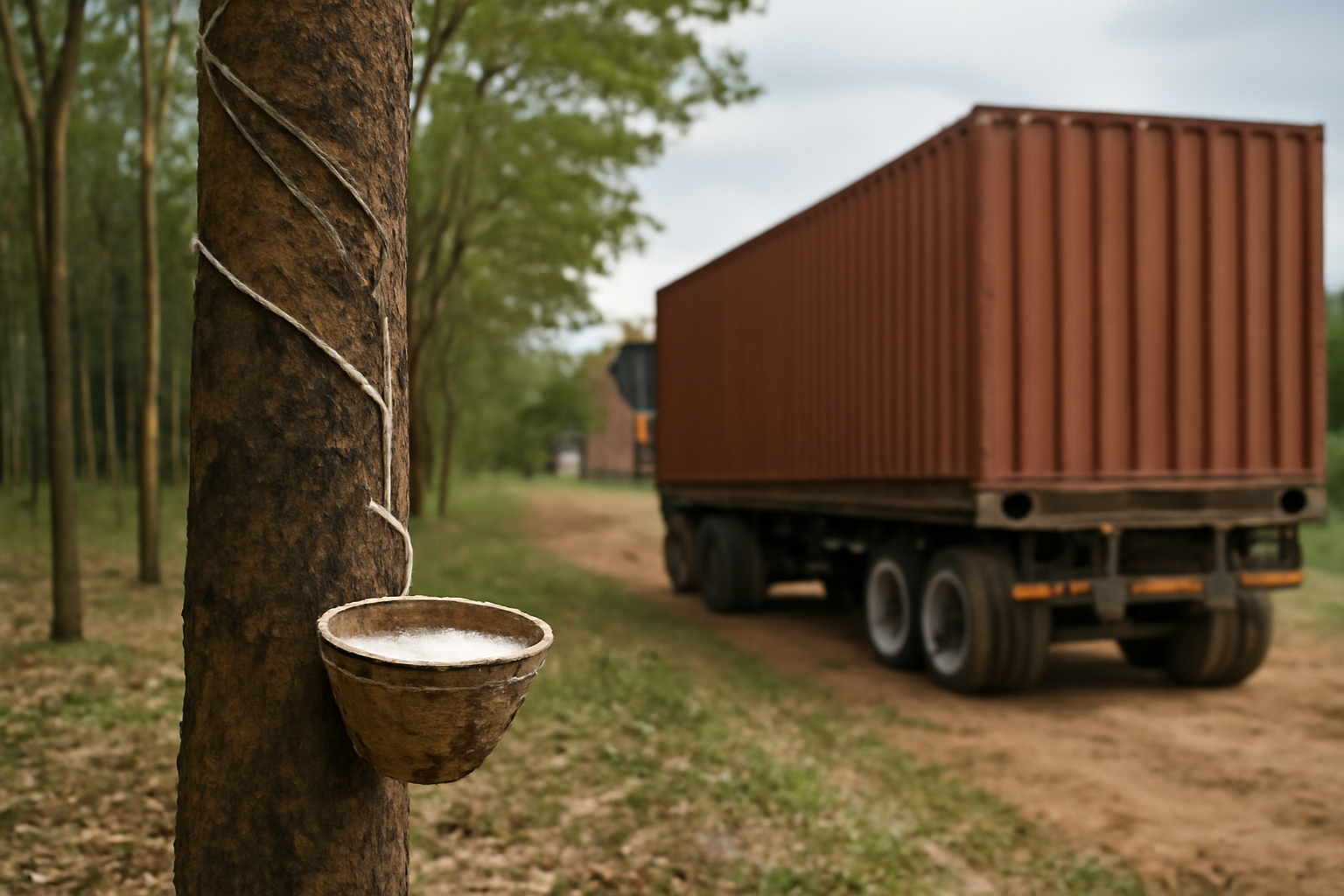
Protectionism builds around West African rubber
Natural rubber, tapped from the hevea tree, is one of the leading agricultural raw materials shipped from West Africa, according to Agence Ecofin. The publication reports that a wave of industrial protectionism is now forming around this trade, putting pressure on the export flows that link regional producers to industrial buyers abroad.
The concern for exporters is straightforward: natural rubber is a commodity destined almost entirely for processing outside the region. When importing markets tighten access — through tariffs, local-content requirements or other industrial measures — the countries that grow and tap rubber carry the adjustment.
Why the flow matters
West Africa has become a significant origin for natural rubber, a product with few substitutes in key industrial uses. Rubber leaves the region largely as an unprocessed or lightly processed input, which means value addition happens closer to the factories that consume it. That structure leaves producers exposed to any shift in the trade rules set by their customers.
For importers and manufacturers, the reverse is also true. Natural rubber cannot be sourced from just anywhere; it grows in a narrow tropical band, and West African supply has helped diversify buyers away from a heavy reliance on Southeast Asia. Measures that disrupt West African flows narrow that diversification.
What protectionism changes
Agence Ecofin frames the trend as "industrial" protectionism — policy aimed at capturing more of the processing and manufacturing chain rather than simply taxing trade. For a raw-material exporter, that distinction matters. Industrial protectionism tends to reward moving processing capacity to where the barriers are lowest, and to penalise the export of raw inputs.
The direction of travel points to more friction between where rubber is grown and where it is turned into finished goods such as tyres and industrial components. Established contracts and shipping routes built around raw exports become less certain, and pricing has to absorb the added policy risk.
Outlook for the trade
No single set of figures defines the shift yet, but the framing from Agence Ecofin is a signal to the market: West African rubber is moving from a straightforward export story into a contested one. Producers face pressure to add processing at home; buyers face pressure to secure supply before rules tighten further.
For now the practical question for the trade is where the value is captured. As long as protectionist measures reward local transformation over raw shipment, the balance of the West African rubber business will keep tilting toward whoever controls the processing step.
Exporters that can integrate processing — or lock in long-term offtake with industrial partners — are better placed to weather the change. Those that stay purely upstream, selling raw rubber into whatever market will take it, carry the most exposure if barriers keep rising.