Weather, Costs and Import Pressure Push Minas Gerais Garlic Growers Into Crisis
São Gotardo and Ibiá have declared a 180-day economic emergency after adverse weather, high costs and weak prices caused heavy losses for garlic growers. Farmgate garlic averages R$11.00 per kilogram, while production costs reach R$13.30 in São Gotardo and R$16.30 in Ibiá.
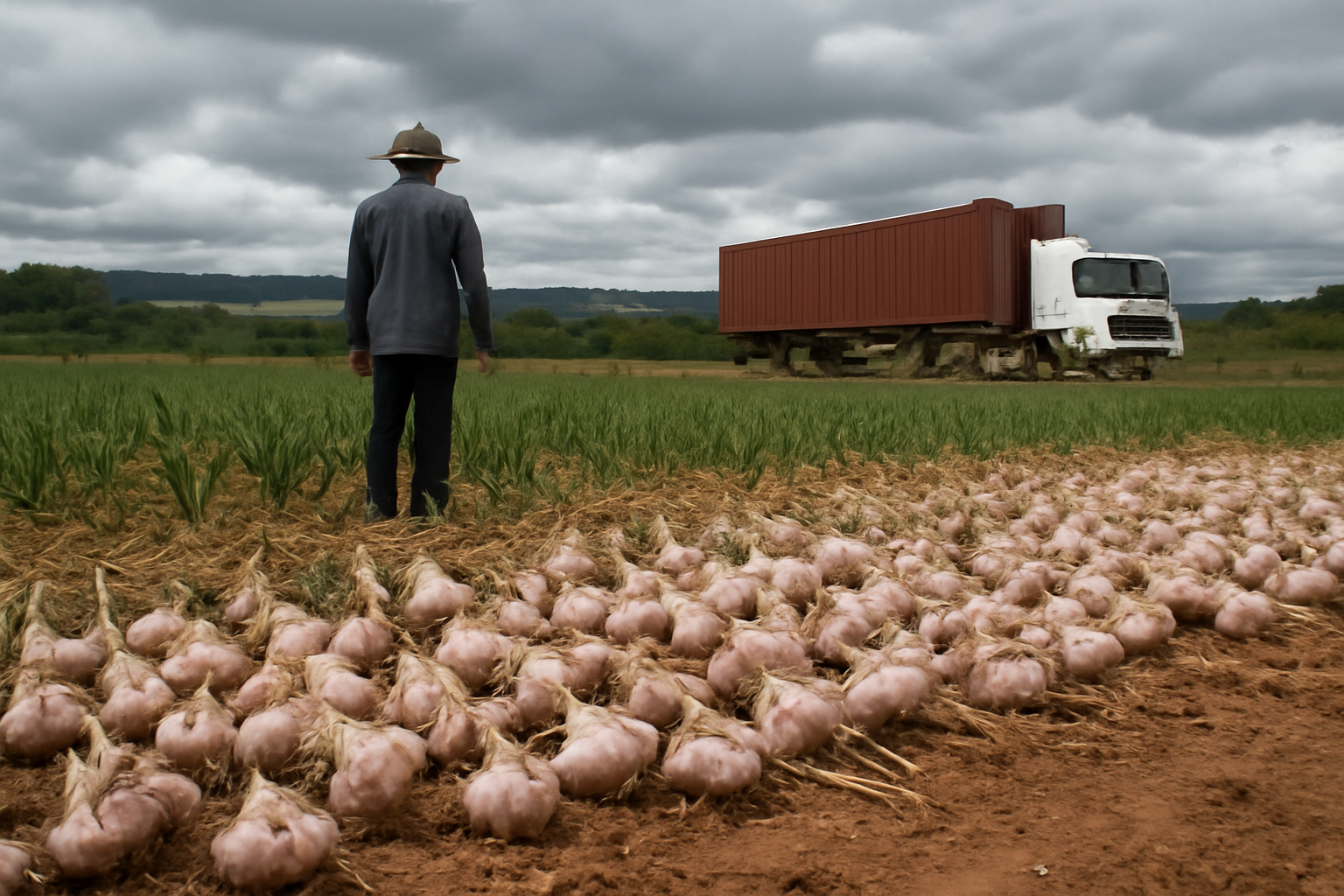
Two production centers declare an emergency
Two leading garlic-producing municipalities in Minas Gerais have declared an economic emergency as adverse weather, rising production costs and falling prices deepen financial pressure on farmers. São Gotardo and Ibiá, both in the Alto Paranaíba region, adopted emergency measures covering the agricultural sector for 180 days, with the possibility of an extension.
Estado de Minas reported that abrupt weather changes caused losses in garlic, carrots and potatoes, while higher costs, reduced margins, difficult trading conditions and growing rural debt affected several local agricultural activities. The declarations do not cancel producers’ debts. They provide official documentation that may support requests for loan extensions, debt renegotiation and changes to contracts for agricultural inputs.
Garlic is selling below production cost
The financial gap is particularly severe in garlic. According to Estado de Minas, farmers receive an average of R$11.00 per kilogram. Production costs are estimated at R$13.30 per kilogram in São Gotardo and R$16.30 in Ibiá. Estimated net losses consequently reach R$70,000 per hectare in São Gotardo and R$71,500 per hectare in Ibiá.
AgroPlanning, citing São Gotardo’s Decree No. 263 and a technical note from the National Association of Garlic Producers, or ANAPA, reported that the updated cost of the crop reached R$220,000 per hectare in the 2026 season. Climatic adversity reduced average productivity for the early crop to 13.5 tonnes per hectare. The combination of a lower harvested volume and a farmgate price below cost leaves growers with limited capacity to service loans or finance another planting cycle.
Imports add pressure to the domestic market
Growers and industry associations also point to competition from garlic imported from Argentina and China. AgroPlanning reported that the São Gotardo decree referred to large volumes of allegedly underpriced Argentine garlic and cited an 88.2% dumping margin. It also raised concerns about the price undertaking applied to Chinese garlic and court decisions that permit some foreign product to enter without payment of the relevant antidumping duty.
At a June hearing in São Gotardo, the Minas Gerais Legislative Assembly reported that ANAPA and the Minas Gerais Garlic Producers Association requested changes to Brazil’s import arrangements and stronger enforcement of antidumping measures. The assembly said Minas Gerais is Brazil’s largest garlic-producing state, with cultivation concentrated in municipalities including Arapuá, Rio Paranaíba, Patrocínio, Sacramento, Tiros and São Gotardo.
ANAPA says it has sent more than 70 official communications to the federal government concerning the competitive conditions facing Brazilian garlic. The association is seeking completion of government reviews and measures addressing imports from Argentina and China. A state bill introduced in 2026 would create a policy to protect garlic producers, require proof of fiscal, customs and sanitary compliance for imported product, and establish a register of imported-garlic traders. The proposal is awaiting a committee opinion.
Supply consequences will depend on the next planting cycle
The emergency declarations primarily create a basis for financial relief rather than an immediate market intervention. Their practical effect will depend on whether banks, suppliers and public authorities agree to restructure growers’ obligations. Without such relief, losses of R$70,000 or more per hectare could encourage farmers to reduce planted area or leave garlic production.
For processors, wholesalers and importers, any contraction in Minas Gerais would increase the importance of foreign supply. The immediate market, however, remains characterized by low domestic farmgate prices rather than a shortage. The central question is whether current prices can cover the capital required to maintain production after weather-related yield losses.