Weather, High Costs and Processed Imports Pressure Brazil’s Potato Growers
Potato prices in Porto Alegre rose sharply before retreating, while farmgate returns remained volatile and often insufficient to cover investment. Excess rain is delaying planting in Rio Grande do Sul, and imported processed potatoes are adding pressure on Brazilian growers and processors.
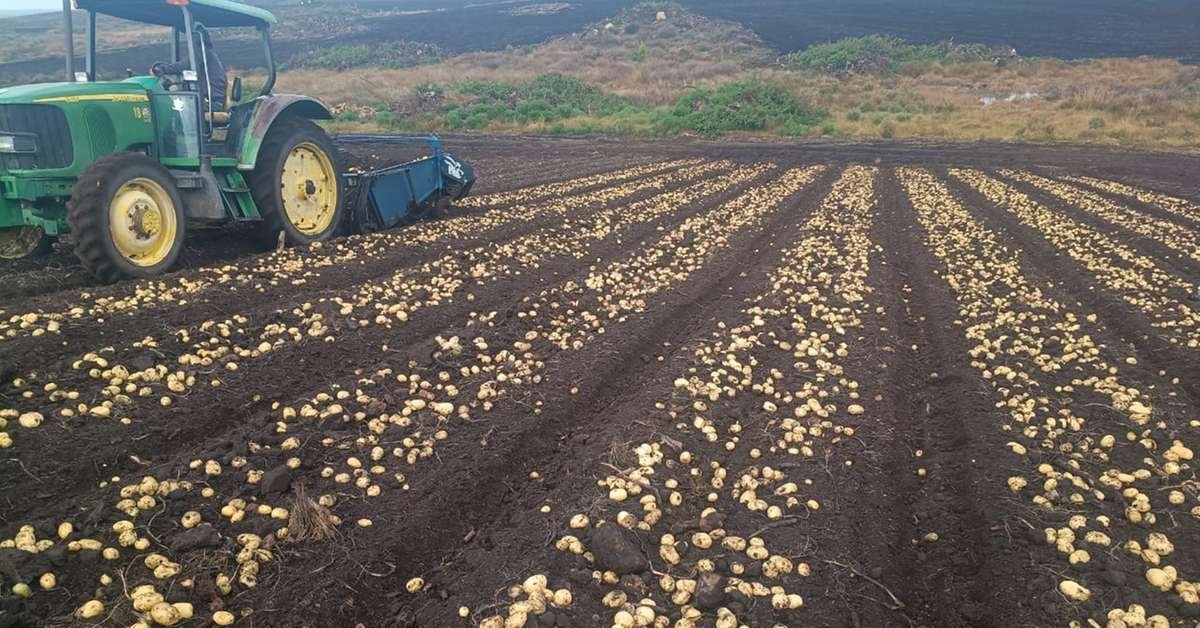
Retail and farmgate prices diverge
Potato growers in Brazil are contending with volatile weather, high production costs and competition from imported processed products, even as consumers face sharp price swings. Dieese data cited by Correio do Povo show that the average retail price of potatoes in Porto Alegre climbed from R$3.60 per kilogram in January 2026 to R$8.79 in June, an increase of 144.2%, before falling to R$5.43 in August. The product recorded the largest monthly decline in the city between July and August, dropping 22.98%, but remained 34.07% above December 2025 and 37.47% higher year on year.
The retail movement has not translated consistently into stronger returns for farmers. According to Cepea, the average price of a 25-kilogram bag of washed potatoes began 2026 at R$37.15 in January and R$41.54 in February. It reached R$124.88 in May and R$108.60 in June, then fell to R$61.37 in July and R$51.49 in August. In 2025, Cepea’s figures ranged from R$29.79 in January to a high of R$69.90 in May. Cepea researcher João Paulo Bernardes Deleo described 2026 as a challenging year for potato cultivation nationwide despite three isolated months of higher prices in the first half.
Rain delays planting in the South
Marcos Boschini, president of the Brazilian Fresh Potato Association, or Abbin, linked the 2026 crop’s performance to El Niño. High temperatures and above-average rainfall reduced productivity in Minas Gerais and São Paulo during the first half. The association expects further weather problems in Rio Grande do Sul and Paraná to restrict national supply and push prices higher from December. Consumer demand remains static because of household income constraints, while planting disruptions and rain are expected to reduce supply.
Rio Grande do Sul has begun planting, with work scheduled to continue until February, but excessive rain has left soils too wet. Emater/RS-Ascar extension officer Orlando Junior Kramer Velho said only about 5% of fields had been planted, compared with a considerably larger area at the same point in previous years. He said the delay did not necessarily imply a poor final harvest because reductions in other crops could release land for potatoes. The state has 872 production units and 18,159.96 hectares under cultivation. Its combined main and second crops are estimated at 608,300 tonnes, with expected productivity of 33.5 tonnes per hectare.
Costs and processed imports squeeze margins
Producing and processing one hectare of potatoes in Brazil costs between R$55,000 and R$70,000, according to Boschini. Labor, seed and land rent account for the largest shares, with irrigation adding expense in some regions. Growers in processing centers such as São Francisco de Paula also compete with imported pre-fried potatoes offered at prices close to or below the cost of domestic production. Brazil plants about 120,000 hectares of potatoes: roughly 65% serves the fresh market and 35% supplies industry.
Imports account for 37% of the processed potatoes consumed in Brazil. Argentina provides 55% of that imported volume, followed by Belgium with 17% and the Netherlands with 11%. Producers in the Triângulo Mineiro and Bahia are expanding planted area to offset potential losses in Rio Grande do Sul, but Abbin does not expect the increase to close the domestic supply gap if southern losses materialize. Demand patterns are also changing: annual fresh-potato consumption has fallen from 16 kilograms per person 20 years ago to no more than 12 kilograms today. For growers, processors and traders, the combination of weaker fresh consumption, weather-related supply risk and competitively priced processed imports is keeping margins and prices unstable.