Rallis India CEO says weak monsoon is cutting farmer spending on pesticides, fertilizer and seed
Indian farmers are reducing outlay on crop protection chemicals, fertilizer and seed after a weaker monsoon, the chief executive of Rallis India said. The Tata Chemicals unit's comments point to softer input demand across India's agrochemical chain this season.
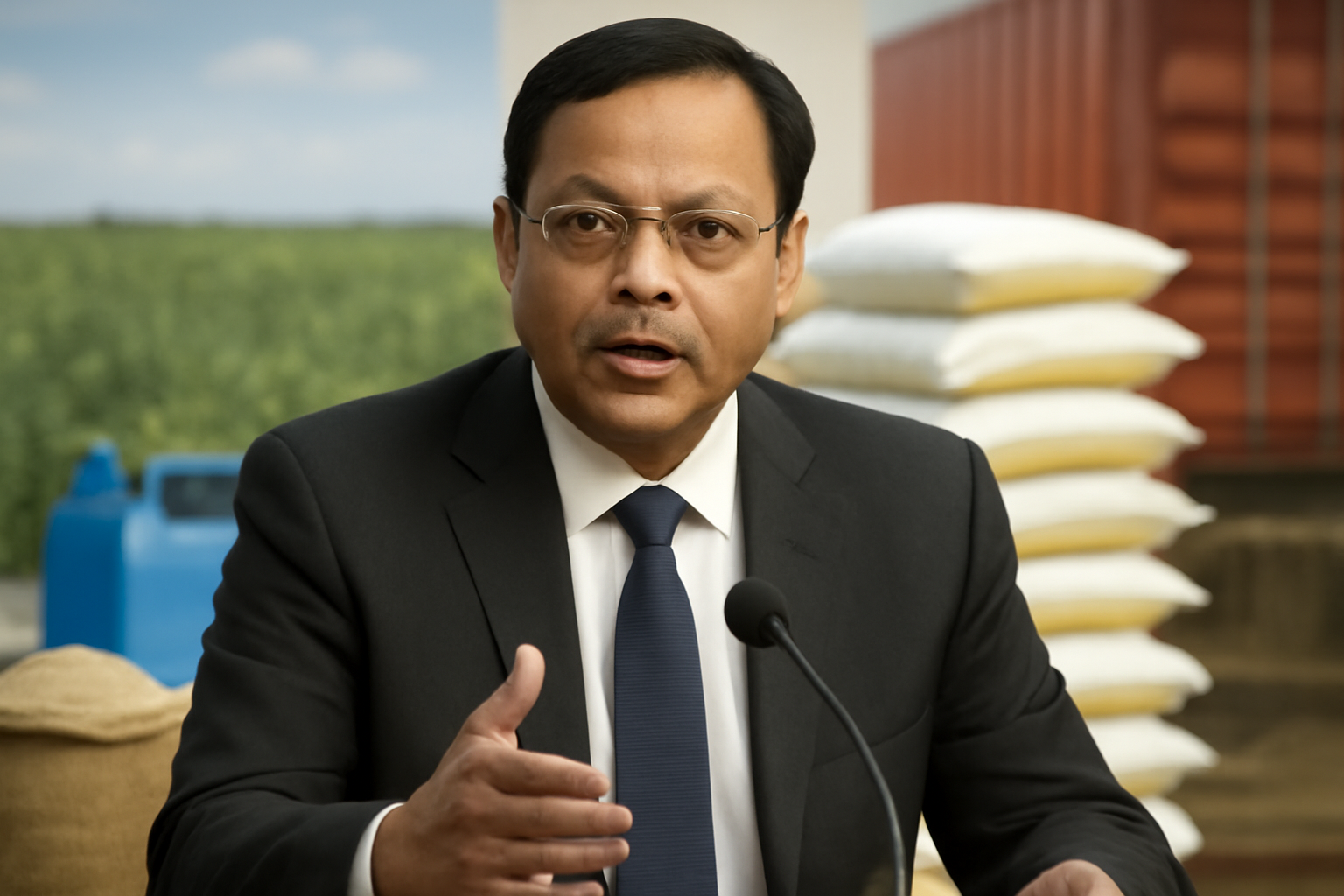
Indian farmers are cutting back on purchases of pesticides, fertilizer and seed this season because of a weak monsoon, the chief executive of Rallis India said. Rallis India is the crop-inputs business controlled by Tata Chemicals, and the remarks were carried by Indian media.
The statement is one of the first public reads from a listed input supplier on how this year's rainfall has translated into farm-gate buying behaviour. It matters for the whole chain behind the farm: technical manufacturers, formulators, fertilizer marketers, seed companies and the rural distribution network that finances much of the season's purchases.
What the company said
According to the reported comments, farmers have reduced spending across all three core input categories at once — crop protection chemicals, fertilizer and seed — and the company attributes the pullback to below-normal rainfall. The published summary of the remarks did not attach figures to the size of the decline, nor did it break the effect down by region or by crop.
Rallis India serves the Indian farm-input market and its management commentary is followed as a near-real-time indicator of demand conditions in the field, because company disclosures on channel movement typically arrive weeks or months after the buying decisions themselves are made.
Why input demand tracks the rain
India's crop calendar is built around the southwest monsoon. The kharif crop is sown as the rains arrive and depends heavily on them; the rabi crop that follows draws on residual soil moisture, reservoir levels and groundwater recharged during the same season. Input spending is therefore not a single decision but a sequence of decisions, each of which can be scaled back if conditions deteriorate.
- Seed is purchased at sowing, before the season's outcome is known, and is the hardest spend to postpone once planting has started.
- Fertilizer is applied in the weeks after sowing and can be reduced in dose or split differently if the crop looks weak.
- Crop protection is the most discretionary of the three: farmers spray to defend an expected yield, and when that expected yield falls, the economics of spraying fall with it.
That sequencing is why a shortfall in rainfall usually shows up in agrochemical sales earlier and more sharply than it shows up in final harvest statistics.
Read-across for the agrochemical sector
Weaker farm-level buying works its way back through the distribution channel. Dealers and distributors typically stock ahead of the season, often on credit extended by manufacturers, so a slow sell-through leaves inventory sitting in the channel rather than moving to the field. The usual consequences are discounting to clear stock, extended receivables, higher product returns and a delay before manufacturers restock, which in turn feeds back into plant utilisation at formulation units.
The pressure is not distributed evenly across product portfolios. Off-patent generic molecules, where several suppliers compete on price for the same registration, have the least protection when volumes fall. Patented or differentiated products, specialty formulations and proprietary seed traits tend to defend their pricing better, because the farmer's alternative is not simply a cheaper equivalent. Companies that sell a mix of crop protection, seed and plant nutrition also have some ability to offset weakness in one category with another.
India is both a large consumer of agrochemicals and a significant base for the manufacture and formulation of active ingredients, so a domestic demand slowdown affects more than local sales. Producers of technical-grade material, including suppliers exporting intermediates and actives into Indian formulation plants, are exposed to order timing in the Indian market even when their end demand sits elsewhere.
The immediate question for the sector is whether the rabi season compensates. If soil moisture and irrigation availability hold up, part of the spending deferred during the monsoon crop can return in the winter crop, and the effect on the full year narrows to a shift between quarters. If it does not, input suppliers face consecutive weak selling seasons, with the channel carrying inventory into the next cycle.