Watermelon and melon imports reach 9,100 tonnes in Kuban and 2,300 tonnes in Altai
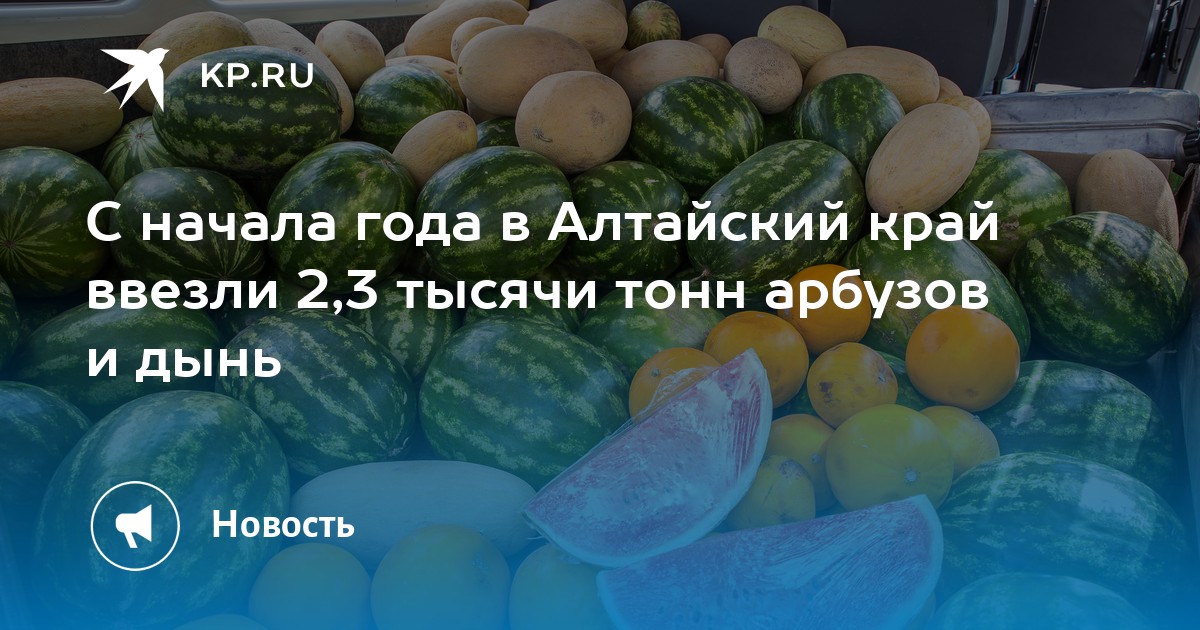
Krasnodar Territory imported 9,100 tonnes of watermelons and melons from the start of 2026, led by supplies from Turkey. Altai Territory received more than 2,300 tonnes in January-June, broadly matching the previous year's level.
Two regional supply routes
Russian border regions are receiving substantial seasonal shipments of watermelons and melons through two distinct supply corridors. Krasnodar Territory has imported 9,100 tonnes since the start of 2026, while businesses in Altai Territory brought in more than 2,300 tonnes during January-June.
Kommersant reported that Turkey was the main supplier to Krasnodar Territory. Shipments also arrived from Iran, Kazakhstan and Uzbekistan. The region's Black Sea position and proximity to Turkey give its importers access to a different supplier mix from that used by companies in southern Siberia.
Altai volumes remain stable
In Altai Territory, the principal origins were Uzbekistan, Kazakhstan and China, according to the Altai edition of Komsomolskaya Pravda, citing Altai Customs. Amic.ru, which cited the Siberian Customs Administration, also said imports exceeded 2,300 tonnes in the first six months of 2026. Both publications reported that the volume was comparable with the same period of the previous year.
The stable year-on-year result is important because it shows that the headline volume does not represent an acceleration in Altai. Instead, it reflects the continuation of an established seasonal flow from neighboring Asian markets. Uzbekistan and Kazakhstan provide established overland routes, while China adds another source for traders serving Altai and nearby consumer markets.
More than 25 produce trucks a day
More than 25 trucks carrying fruit and vegetables pass through the region's checkpoints on an average day. This figure covers the broader produce trade rather than only watermelons and melons, but it indicates the scale of the road logistics network supporting seasonal imports.
There is no customs control at checkpoints on the Russian-Kazakh border, Altai Customs First Deputy Head Roman Palchak said. Since June 1, 2026, mobile customs teams have operated under the national system for confirming expected goods deliveries. According to Palchak, the inspections are selective, take only a few minutes and do not affect the intensity of freight traffic.
Roadworks create a logistics risk
Carriers nevertheless face a potential bottleneck in Kazakhstan. Amic.ru reported that the international road checkpoint at Auyl is being reconstructed. The work may cause disruption on the A-322 route between Barnaul, Rubtsovsk and the Kazakh border, particularly near the Veseloyarsk checkpoint.
For importers and produce distributors, the regional data point to contrasting operating conditions. Kuban has recorded the larger volume and relies primarily on Turkey, with additional supply from Iran and Central Asia. Altai handles a smaller but stable flow based on Uzbekistan, Kazakhstan and China. Selective controls limit border delays, but road reconstruction could still affect delivery schedules for highly perishable cargo. The available reports do not provide prices, supplier-level volumes or separate figures for watermelons and melons, so they do not establish whether the product mix or import costs changed during the period.