Record Water Shortage Leaves Wakayama Mandarin Crop Exceptionally Small
Severe rainfall shortages in Japan’s Wakayama Prefecture have left some mandarins at the very small 3S grade, comparable in size to sudachi citrus. August rainfall in Wakayama reached only 10.5 millimeters, about one-tenth of the normal level, raising concerns over yields, marketable packout and regional supply.
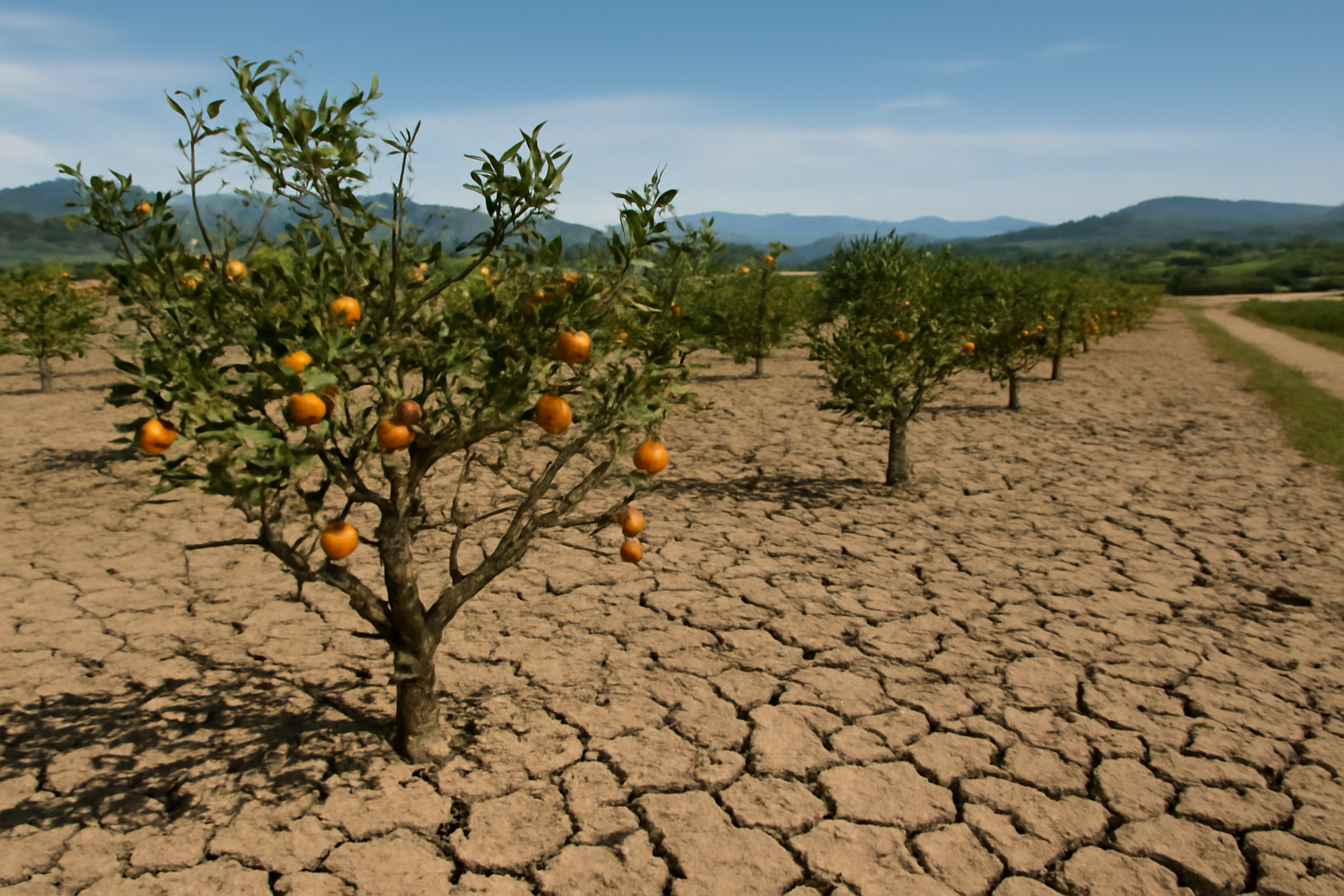
August rainfall falls to one-tenth of normal
A historic shortage of rain in Japan’s Wakayama Prefecture is restricting the development of the region’s mandarin crop, leaving some fruit at the exceptionally small 3S grade. A local report described the affected mandarins as roughly the size of sudachi, a much smaller citrus fruit, while growers said they had not experienced comparable conditions before.
Rainfall measured in Wakayama during August totaled 10.5 millimeters, equivalent to only about one-tenth of the normal amount, according to figures cited in the report. Kawabe and Nanki-Shirahama registered their lowest rainfall totals on record. The prolonged dry conditions led the prefecture to establish a drought response headquarters for the first time in 21 years.
Prefectural officials have warned that the risk of disruption to residents’ daily lives is increasing and have called on the public to conserve water. That appeal underlines the competition for limited supplies between households, agriculture and other users. For mandarin farms, the immediate issue is whether remaining water resources are sufficient to support fruit growth during a critical stage of crop development.
Small fruit threatens marketable output
The appearance of 3S mandarins does not by itself establish the final size of the prefecture’s harvest, and the available report provides no estimate for total production losses. It nevertheless points to a clear commercial risk. If a larger-than-usual proportion of the crop remains at very small grades, the volume suitable for standard fresh-market channels could fall even if orchards retain much of their fruit.
This distinction between biological yield and marketable packout will be important for growers and buyers. Orchards may produce a measurable crop, but its value will depend on how much fruit meets the size and appearance requirements of retail programs. A shift toward smaller grades can therefore reduce returns, complicate packing operations and change the mix of fruit available to wholesalers.
Packers may have to separate unusually high volumes of small fruit or seek outlets with more flexible specifications. The report does not provide pricing information or indicate how buyers are responding, so any effect on wholesale or retail prices remains uncertain. The outcome will depend on the breadth of the size problem across Wakayama, subsequent weather and the share of fruit that can still reach commercially preferred grades.
Water availability remains the central variable
Wakayama is an important Japanese citrus-producing region, making the drought relevant beyond individual farms. Reduced packout could tighten supplies from the prefecture and require distributors to adjust procurement among producing areas. However, the available information does not quantify inventories elsewhere in Japan or indicate whether alternative domestic supply could offset a shortfall.
For producers, the drought also creates uneven exposure. Farms with better access to irrigation may be able to protect fruit development more effectively, while orchards dependent on rainfall or constrained water sources face greater risk. Persistent shortages could also force growers to balance immediate crop needs against official conservation requests as pressure on regional water systems increases.
The next indication of market impact will come from fruit sizing, grading and packing results rather than rainfall data alone. Industry participants will need to monitor whether later precipitation improves orchard conditions, whether the share of 3S fruit continues to rise and how much of the crop remains suitable for established sales channels. Until those figures become available, the clearest conclusion is that record dryness has increased the risk of lower marketable mandarin output from Wakayama, even though the final harvest loss has not yet been calculated.