Volvo prices ES90 below German rivals to gain ground in South Korea’s EV market
Volvo has launched the ES90 in South Korea at prices starting from 72.94 million won, placing its flagship electric sedan below major German competitors. The company targets at least 1,000 ES90 sales this year and 3,000 next year as competition intensifies across South Korea’s expanding imported EV market.
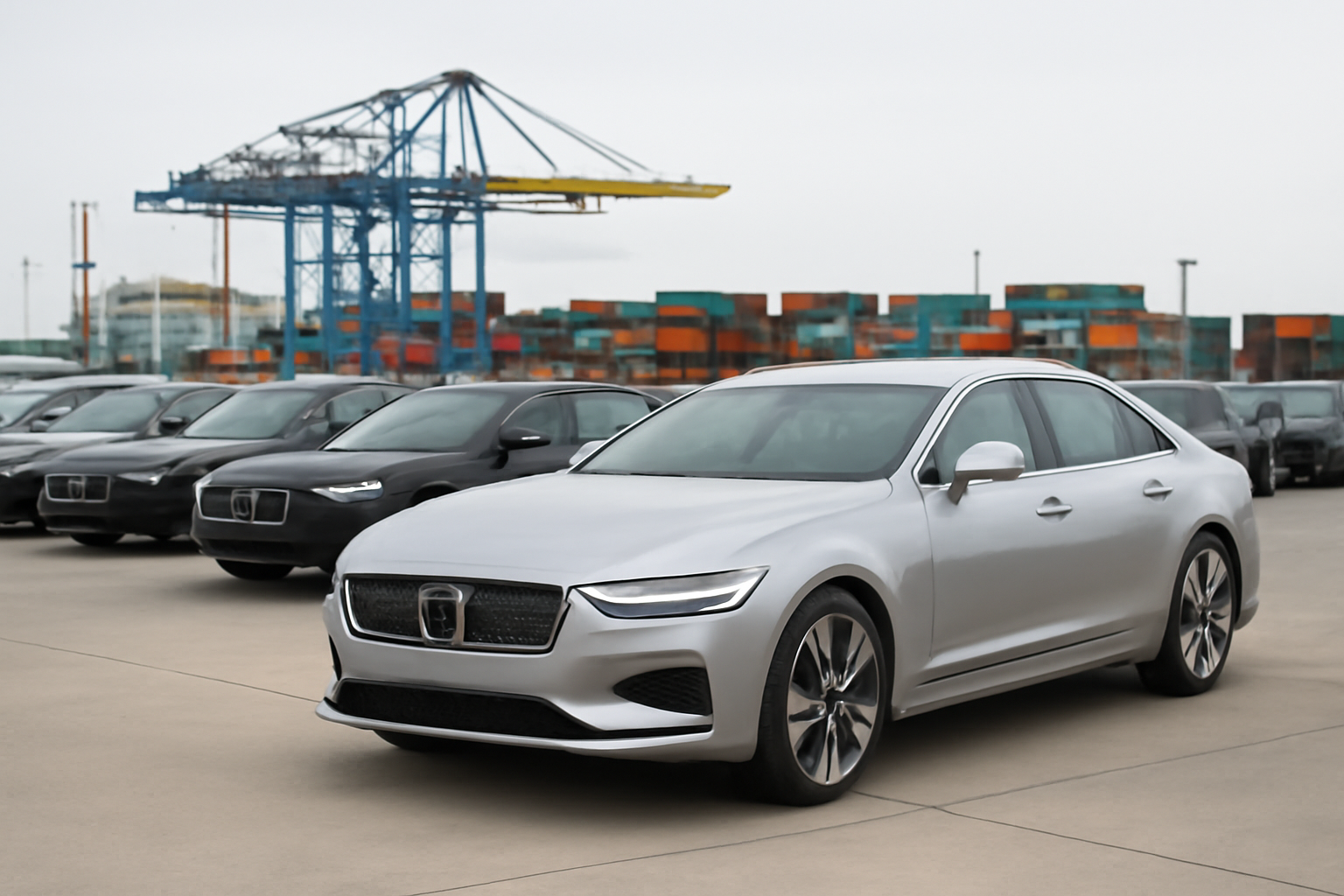
Flagship EV starts at 72.94 million won
Volvo Cars Korea has launched the ES90 electric flagship sedan with a starting price of 72.94 million won, making South Korea one of the model’s most aggressively priced markets. CEO Score Daily reported that the entry price is as much as 18 million won below Volvo’s S90 T8 plug-in hybrid and substantially below competing German electric sedans commonly priced around 100 million won.
The rear-wheel-drive Single Motor Extended Range Plus costs 72.94 million won, while the all-wheel-drive Twin Motor Plus is priced at 79.60 million won. The Single Motor Ultra costs 80.55 million won, and the Twin Motor Ultra 87.41 million won. Adding dual-chamber air suspension raises those prices to 83.41 million won and 90.41 million won respectively. The top Twin Motor Performance Ultra costs 95.41 million won. All figures anticipate the application of environmentally friendly vehicle tax benefits.
Volvo Cars Korea CEO Lee Yun-mo said the ES90’s local price was more than 50 million won below its level in European markets. He said South Korea may be the only country where the model is priced below 100 million won, attributing the decision to the market’s importance, growth potential and possible influence on the ES90’s global performance.
Price challenges BMW, Mercedes-Benz and Genesis
The 79.60 million won Twin Motor Plus combines all-wheel drive, 456 horsepower and a WLTP range of 706 km. By comparison, CEO Score Daily listed the rear-wheel-drive BMW i5 eDrive40 at 93.90 million won and the high-performance i5 M60 xDrive at around 140 million won. Mercedes-Benz’s EQE and other German electric sedans generally start near 100 million won, while the Genesis Electrified G80 is priced around 80 million won.
The ES90 is built on Volvo’s SPA2 architecture. It measures 5,000 mm long with a 3,102 mm wheelbase and combines a sedan profile with a fastback rear and SUV-like cabin space. The range includes a 333-horsepower single-motor version with a 92 kWh battery, a 456-horsepower twin-motor model with a 106 kWh battery, and a 680-horsepower Twin Motor Performance version.
An 800 V electrical system supports charging at up to 350 kW. Volvo says charging from 10% to 80% takes about 22 minutes under suitable conditions, while 10 minutes can add 300 km of range. Access to that performance will initially be constrained because South Korea’s 350 kW charging network remains concentrated around major cities and motorway hubs.
Volvo targets volume in a fast-growing market
South Korea’s imported passenger-car registrations rose 33.2% year on year to 184,032 units during the first six months of the year, according to Korea Automobile Importers & Distributors Association data cited by CEO Score Daily. Electric vehicles accounted for more than half for the first time. Tesla led with 56,139 vehicles, while BYD reached fourth place with 11,675. Volvo ranked seventh with 7,470 vehicles, up 10.4%.
Volvo plans to sell at least 1,000 ES90s in the fourth quarter and 3,000 next year. Across the EX30, EX90, ES90 and other electric models, it is targeting more than 10,000 EV sales next year. Advance orders began on the 11th of last month, and more than 1,000 firm contracts were recorded before specifications and prices were disclosed.
Execution risks remain. South Korea’s certified combined efficiency and driving range have not been finalized and may fall below the European WLTP figure. The ES90 also exceeds the threshold for a full EV subsidy, limiting the subsidy’s contribution to the final purchase price. Certification results, vehicle availability and Volvo’s ability to fulfill early orders will therefore determine whether the headline price converts into sustained market share.