Vĩnh Long targets higher-value coconut industry across 122,870 hectares
Vĩnh Long plans to connect its 122,870 hectares of coconut plantations more closely with organic certification, processing and export markets. Despite exports of about $500 million in 2025, fragmented production and continued sales of raw coconuts constrain the industry’s value.
Province seeks an integrated coconut chain
Vĩnh Long is seeking to turn Vietnam’s largest coconut-growing base into a more integrated industry focused on organic production, deeper processing and stronger market links. The province has 122,870 hectares planted with about 22.66 million coconut trees, representing more than 61% of Vietnam’s coconut area. Of the total, 114,163 hectares, or more than 92%, are bearing fruit.
The provincial agricultural restructuring plan for 2025-2030, with an outlook to 2045, calls for commodity-scale production, circular use of coconut materials and less dependence on raw-product exports. For growers, the crop can offer a substantial advantage over rice. Nguyễn Minh Thống, who converted 0.4 hectares of rice land to coconut, said his profit was about three times higher and his farm produced an average of roughly 500 coconuts a month.
Organic supply links expand but certification is costly
Vĩnh Long has 30,708.3 hectares of certified organic coconut plantations, producing an average of about 337.8 million coconuts. Growing areas apply standards including the US Department of Agriculture’s USDA certification, Japan’s JAS and EU requirements, as well as standards serving China and South Korea.
Tâm Phát Agricultural Cooperative illustrates the effort to organize smallholders. Established in 2024 with 12 members, it now has 30 members and works with 860 households farming about 730 hectares of organic coconut. Its growing area received US-standard organic certification in July 2025. The cooperative supplies around 1,300 tonnes of peeled coconuts each month, including about 1,200 tonnes to Á Châu Company and 100 tonnes to Thuận Phong Company. Purchase prices are 10,000-15,000 Vietnamese dong per dozen above the market level.
Certification remains a financial constraint. Initial organic certification costs about 600 million dong and subsequent certifications about 300 million dong. Partner companies currently cover around 70% of registration expenses, but the balance remains significant for cooperatives that must renew certification to preserve export eligibility.
Processing and exports grow
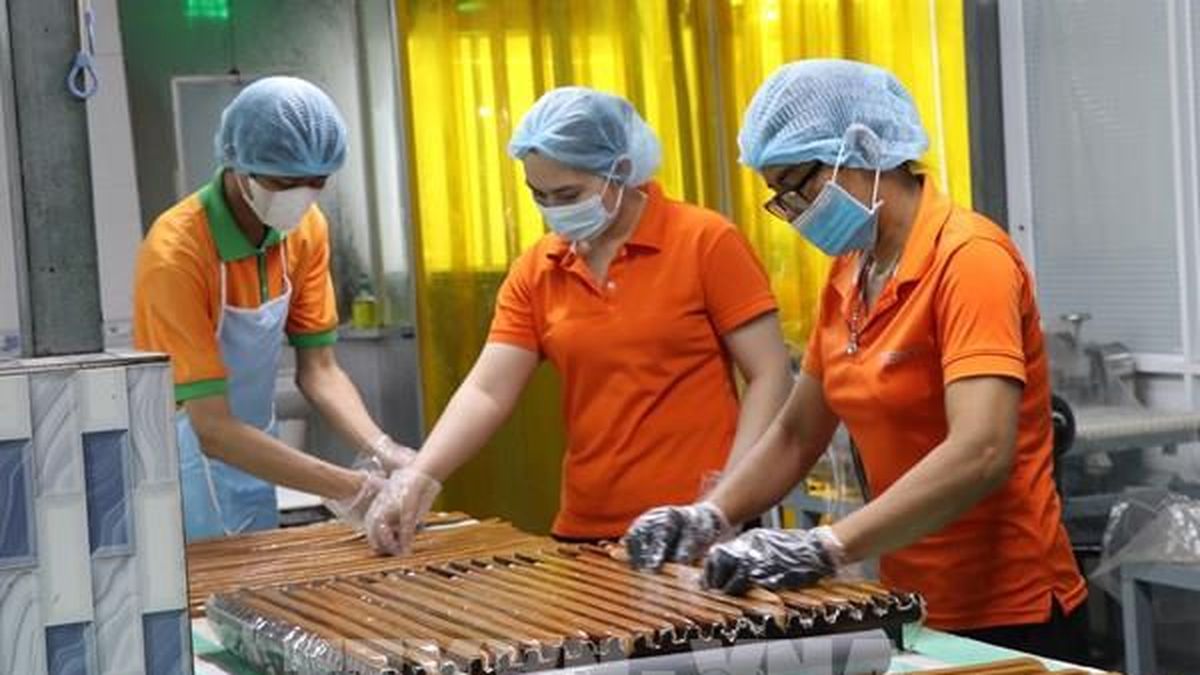
According to provincial agriculture and environment official Lê Văn Dũng, Vĩnh Long has 151 companies producing or processing coconut goods for food, beverages, industry and handicrafts. The sector’s processing output was estimated at about 8.15 trillion dong in 2025, up 5.84% year on year and equivalent to approximately 5.96% of provincial industrial production. Coconut exports reached about $500 million, an increase of 2.9%, with the United States, Canada, the EU, the Middle East and China among the main markets.
Output growth included 15.45% for desiccated coconut, 12.54% for coconut milk, 13.75% for coconut water and 12.66% for activated carbon. Manufacturers are moving into products such as coconut cream powder, refined coconut oil and UHT packaged coconut water, while husks, fibre and shells can supply coir products, activated carbon, sintered charcoal and handicrafts.
Raw-material shortages expose fragmented supply
Processing potential remains underused. More than 60% of the province’s industrial coconut output passes through local processors, but only 10-15% of drinking coconuts are prepared for export. Around 80% of wax coconuts are still sold as raw material, while coconut husks currently have almost no outlet.
Farms average only 0.3-0.4 hectares, and about 30% of the planted area participates in production partnerships. At points during 2025, local industrial coconuts became scarce and processors imported about 30 million coconuts from abroad. Vĩnh Long therefore aims to support at least 30-50 companies in forming links with cooperatives and wants about 70% of coconut output in concentrated production zones to be sold under contract by 2030. Success will depend on converting plantation scale into reliable, traceable supply for processors and export markets.