Vietnam's $17.2 billion wood industry pushes beyond OEM manufacturing
Vietnam's wood and wood-product exports have grown more than 57-fold in two decades to $17.2 billion, with a trade surplus of nearly $12 billion and about 1 million jobs. Industry association VIFOREST says the sector remains primarily a manufacturing hub, with design, branding and customer data still controlled by foreign buyers. The United States accounted for 49.9% of export value in the first eight months of 2026.
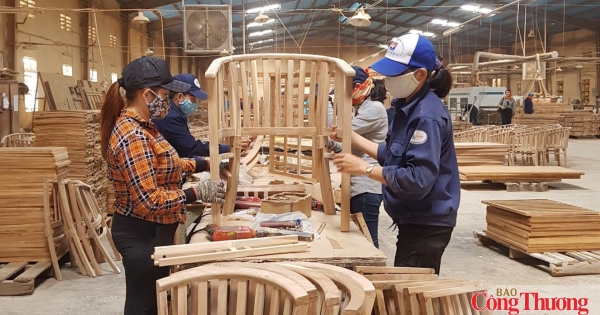
Vietnam's wood and wood-product exports have risen more than 57-fold over two decades, from about $300 million to $17.2 billion, yet the industry still sits mainly at the manufacturing end of the global furniture value chain, according to a report by Công Thương.
A 57-fold rise in two decades
The sector employs about 1 million workers and has generated a trade surplus of nearly $12 billion, Công Thương reported. Vietnam is the largest wood and furniture exporter in Southeast Asia and the second largest in Asia, and has built a relatively complete ecosystem spanning raw materials, processing, manufacturing, logistics and export.
Nguyễn Quốc Khanh, chairman of the Vietnam Timber and Forest Product Association (VIFOREST), said the country remains primarily a production base. "We are still only a manufacturing hub," he said. Companies have large capacity and increasingly well-organised supply chains, but many remain at the final link of the chain — a notable paradox for an industry exporting tens of billions of dollars a year.
The limits of OEM
Most Vietnamese producers work on an OEM basis, manufacturing to the design and specifications of the buyer. According to VIFOREST, higher-value models have not developed at a comparable pace:
- OEM — production to a customer's design, the dominant model today;
- ODM — production combined with in-house design;
- OBM — production combined with the manufacturer's own brand.
The difference lies in decision-making power, Khanh said. A company may own a large plant, employ thousands of workers, run good technology and deliver reliably, but if product design, branding, customer data and market decisions remain with the partner, the share of value it retains is limited. Plants, labour and production costs can be replicated by other countries; design capability, brands, market data, demand forecasting and direct relationships with buyers are harder to copy.
One market, half the revenue
The United States is the largest destination for Vietnamese wood and wood products. Data from the Ministry of Agriculture and Environment cited by Công Thương show the US accounted for 49.9% of total export value in the first eight months of 2026, ahead of China at 15% and Japan at 12.4%. August 2026 exports were estimated at $1.48 billion, lifting the eight-month total to $11.69 billion, up 5% on the same period of 2025. Within that total, shipments to the United States declined year on year while exports to China and Japan increased.
Khanh said the industry still lacks a sufficiently strong presence in the United States to track the market continuously, update information and feed it back to producers. He recounted that during a meeting with the United States International Trade Commission (USITC) he asked officials whether they had ever visited Vietnam, and was told they had not. Competition, he argued, takes place not only on the production line but in meeting rooms, negotiations and policy dialogue.
Regional chains and raw-material transparency
Market diversification should be paired with a regional approach to supply chains rather than each country building a complete chain of its own, Khanh said. Southeast Asian countries could complement one another: Indonesia supplying raw materials, the Philippines handling some component stages, and Vietnam applying its strengths in manufacturing and assembly, with products then moving into other markets and supply chains in the region of roughly 750–800 million people and a growing middle class.
Associate Professor Nguyễn Thường Lạng, senior lecturer at the Institute of Trade and International Economics at the National Economics University, told Công Thương that the industry's question has changed. Two decades ago it had to prove Vietnam could produce wood goods at scale, with stable quality and on-time delivery; that capability is now confirmed by the numbers. He added that OEM remains a necessary business model for many firms, but that if the industry as a whole stops at contract manufacturing, room to raise its position will stay limited. Timber traceability, sustainable plantation forestry and compliance with environmental requirements are, in his view, conditions for keeping export markets and for long-term competitiveness.