Vietnam's Tuna Exports to Russia Rise 72% to $33.4 Million in Seven Months
Vietnamese tuna shipments to Russia reached about $33.4 million in January–July 2026, up 72% year on year and the fastest growth among the sector's major markets, according to VASEP data reported by Thương Gia. Russia remains a small buyer by value but offers a diversification route for an industry where the US, EU, Middle East and CPTPP take 82–86% of exports. Total Vietnamese tuna exports fell 7% to $924 million in 2025.
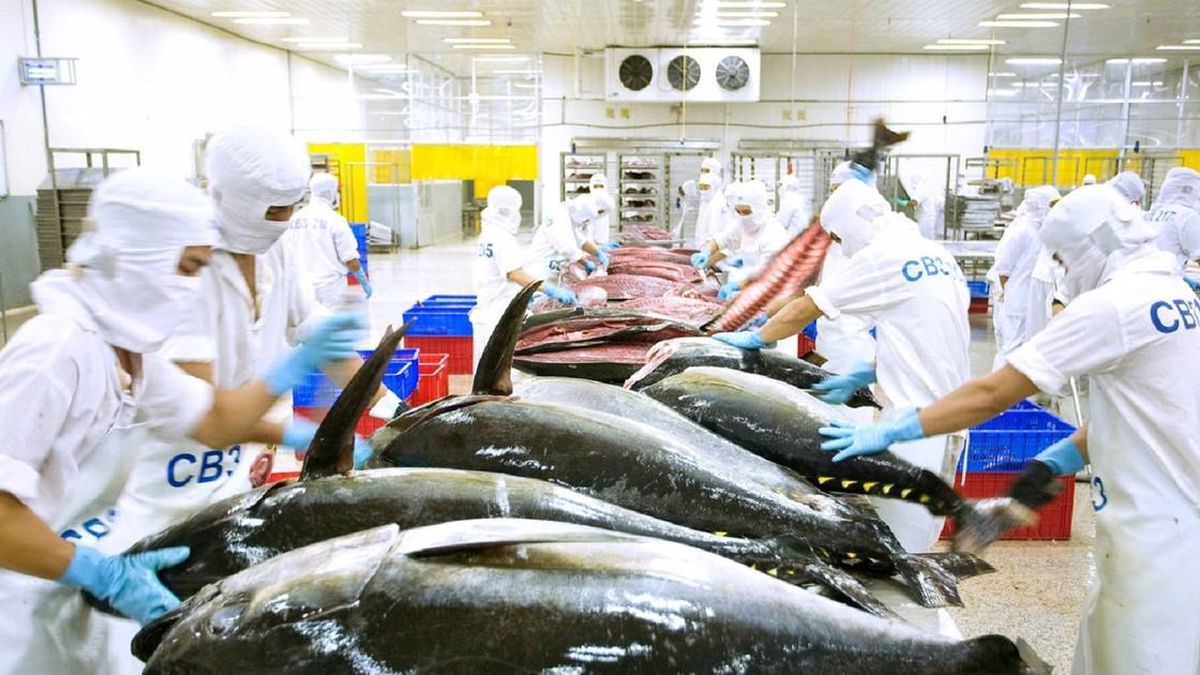
Vietnam's tuna exports to Russia reached about $33.4 million in the first seven months of 2026, a 72% increase on the same period of 2025, according to data from the Vietnam Association of Seafood Exporters and Producers (VASEP) reported by Thương Gia. That was the strongest growth rate among the major destinations for Vietnamese tuna.
The increase was spread across successive months rather than concentrated in a handful of large orders, a pattern VASEP reads as improving underlying import demand in Russia rather than a one-off restocking cycle. It also reflects the ability of Vietnamese exporters to work the market directly. Sustaining the pace, the association said, will require companies to track consumption trends, market requirements and supply chain organisation closely.
Product mix and trade framework
VASEP identifies canned tuna, frozen tuna and convenience processed products as the segments where Russian consumer demand is concentrated. Those categories give Vietnamese processors room to diversify their product range rather than compete on bulk commodity supply alone. According to the association, Russia is a market with genuine potential for Vietnam's seafood industry that has not been exploited in proportion to that potential.
The Vietnam–Eurasian Economic Union free trade agreement (VN–EAEU FTA) is the framework that allows Vietnamese goods, including seafood, to enter the Russian market on more favourable terms. Both governments have continued to emphasise closer economic and trade cooperation in the current period, which for the seafood sector could mean steadier supply chains and longer-term commercial arrangements.
Tuna after a weaker 2025
Tuna is Vietnam's third-largest seafood export category by value, after shrimp and pangasius. Between 2019 and 2023, tuna export turnover rose from $719 million to $845 million, a 17% gain equivalent to average annual growth of about 3%. Exports then climbed to $989 million in 2024, up 17% year on year, before falling 7% to $924 million in 2025.
- 2019: $719 million
- 2023: $845 million (up 17% on 2019)
- 2024: $989 million (up 17%)
- 2025: $924 million (down 7%)
- January–July 2026, Russia: $33.4 million (up 72%)
Vietnamese tuna products now reach more than 100 markets. The United States, the European Union, the Middle East and CPTPP member countries account for roughly 82–86% of total tuna export value. That concentration leaves the sector exposed to demand or policy shifts in a small number of destinations, and it is the explicit reason VASEP gives for pushing harder into markets such as Russia.
Resource base and seasonality
Exports draw mainly on yellowfin, bigeye and skipjack. VASEP puts Vietnam's tuna resources, concentrated in the waters off central Vietnam and the central South China Sea, at more than 600,000 tonnes, with skipjack accounting for more than half of total pelagic resources. Annual tuna catch exceeds 200,000 tonnes.
Yellowfin and bigeye are the tighter constraint. Average stocks are estimated at more than 45,000 tonnes, with annual catch of roughly 17,000 to 21,000 tonnes, landed mainly between December and June. Skipjack is fished year-round, which makes it the more predictable feedstock for canning lines and for the ready-to-eat products Russian buyers favour.
What determines whether the gain holds
Turning the seven-month growth figure into durable market share will depend on processors matching specifications to Russian demand, developing the product range and keeping trade economics workable, VASEP said. For an industry that lost 7% of export value last year and remains heavily weighted towards four destination blocs, Russia is one of the few large markets currently expanding at double-digit rates for Vietnamese tuna.