Vietnam’s tilapia exports rise 43% as Brazil becomes largest market
Vietnam’s tilapia exports reached $90 million in the first eight months of 2026, up 43% year on year. Brazil accounted for $44 million, offsetting a sharp decline in shipments to the United States.
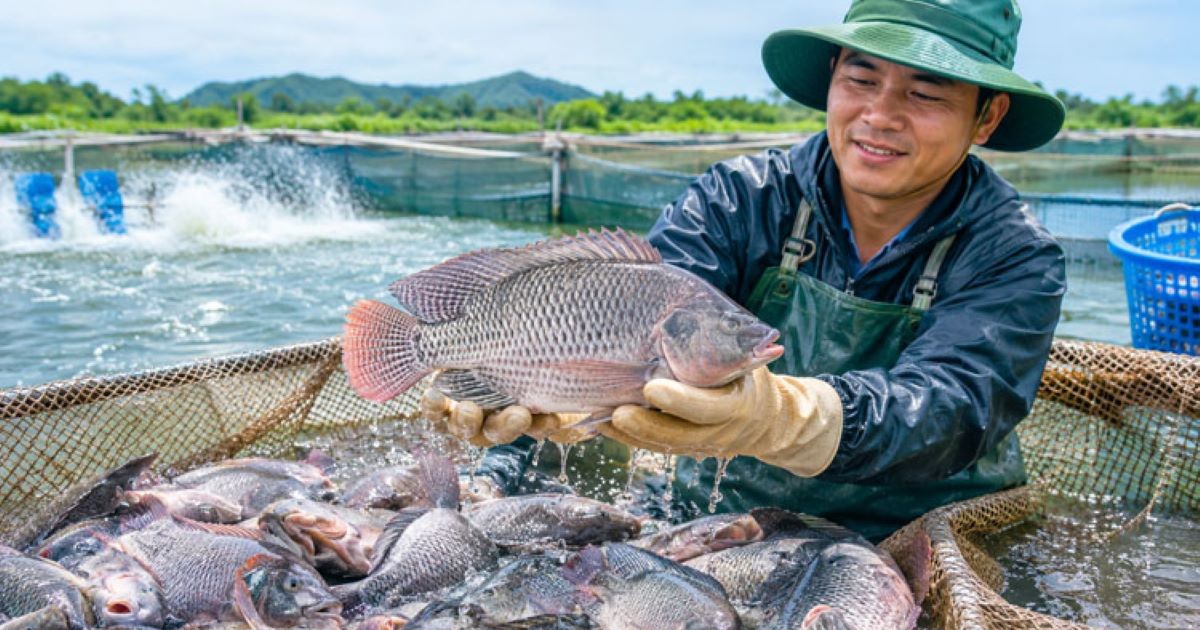
Eight-month exports reach $90 million
Vietnam’s tilapia exports rose sharply in the first eight months of 2026, supported by demand from Brazil and smaller but expanding markets in Asia, the Middle East and Europe. According to the Vietnam Association of Seafood Exporters and Producers (VASEP), export revenue reached $90 million during the period, an increase of 43% from a year earlier.
The cumulative growth came despite weaker monthly results in August. Tilapia exports were valued at $11 million that month, down 8% year on year. The contrast indicates that strong gains earlier in the year were sufficient to keep the eight-month total well above its 2025 level.
Brazil offsets steep US contraction
Brazil was Vietnam’s largest tilapia market, purchasing $4 million in August and $44 million over the first eight months. The cumulative value increased 22.14% year on year and represented nearly half of Vietnam’s total tilapia export revenue. VnEconomy noted that the expansion was also amplified by a comparatively low base in the previous year.
Performance in the United States moved in the opposite direction. August shipments were worth approximately $2 million, a decline of 72%, while eight-month exports fell 48% to $21 million. VASEP attributed the weakness to purchasing demand that had not clearly recovered and relatively high inventories, which made US importers more cautious about signing new orders.
Saudi Arabia and Japan provide new growth
Saudi Arabia generated $2 million of export revenue in August, up 20%, and $7 million during the eight-month period, up 23%. It is now the principal contributor to Vietnam’s tilapia sales in the Middle East. Japan remained smaller but grew faster: August exports increased 192% to about $400,000, while cumulative sales rose 77% to $2 million.
Vietnamese brackish-water tilapia has begun entering Japan’s sushi and sashimi segment. VASEP said access to this demanding market showed progress in product quality, farming-environment controls, traceability and processing. These requirements also offer producers a route into higher-value categories rather than relying only on mainstream, price-driven sales.
Diversification depends on quality and certification
Exports to members of the Comprehensive and Progressive Agreement for Trans-Pacific Partnership reached $6 million, up 50%, with Japan and Mexico making notable contributions. Sales to the European Union increased 7% to $4 million, led by growth in Belgium. VASEP said restricted supplies and high prices for wild-caught whitefish in the EU could create openings for farmed tilapia capable of providing stable volumes.
The export mix nevertheless remains concentrated. Brazil and the United States together accounted for $65 million of the $90 million total, leaving the industry exposed to demand changes in a small number of markets. VASEP said further expansion will require consistent quality from farms through processing, international certification, traceability and products tailored to individual markets. The Vietnam Fisheries Society has also established the Vietnam Tilapia Association to connect farmers, processors, exporters and research organizations, strengthen the value chain and support overseas market development.