Vietnam targets $500 million in tilapia exports by 2030 as brackish-water farming opens sashimi segment
Vietnam's tilapia exports reached $69 million in the first half of 2026, up 67% year-on-year, according to VASEP. The association sees export turnover of $250–350 million by 2030, or $500 million if a large-scale integrated production chain is built. Brackish-water farming is positioned as the differentiator for sushi- and sashimi-grade output.
Vietnam's tilapia exports reached $69 million in the first half of 2026, up 67% from the same period of 2025, according to the Vietnam Association of Seafood Exporters and Producers (VASEP). The association is now framing a path toward $500 million in annual export turnover by 2030, built on brackish-water farming and value-added products rather than on volume.
The assessment was reported by CafeBiz, which noted that a fish sold widely across domestic Vietnamese markets is already being bought by Japanese customers as sashimi material. VASEP's core argument is that farming tilapia in brackish water could open a distinct advantage for Vietnam compared with other countries in the value-added market segment.
Brackish water as the point of difference
Instead of competing mainly on output volume and production cost with countries that have more developed tilapia industries, VASEP positions brackish-water fish for higher-specification products. The association describes the farming method less as a technical choice than as a way for Vietnam to build a differentiated product line.
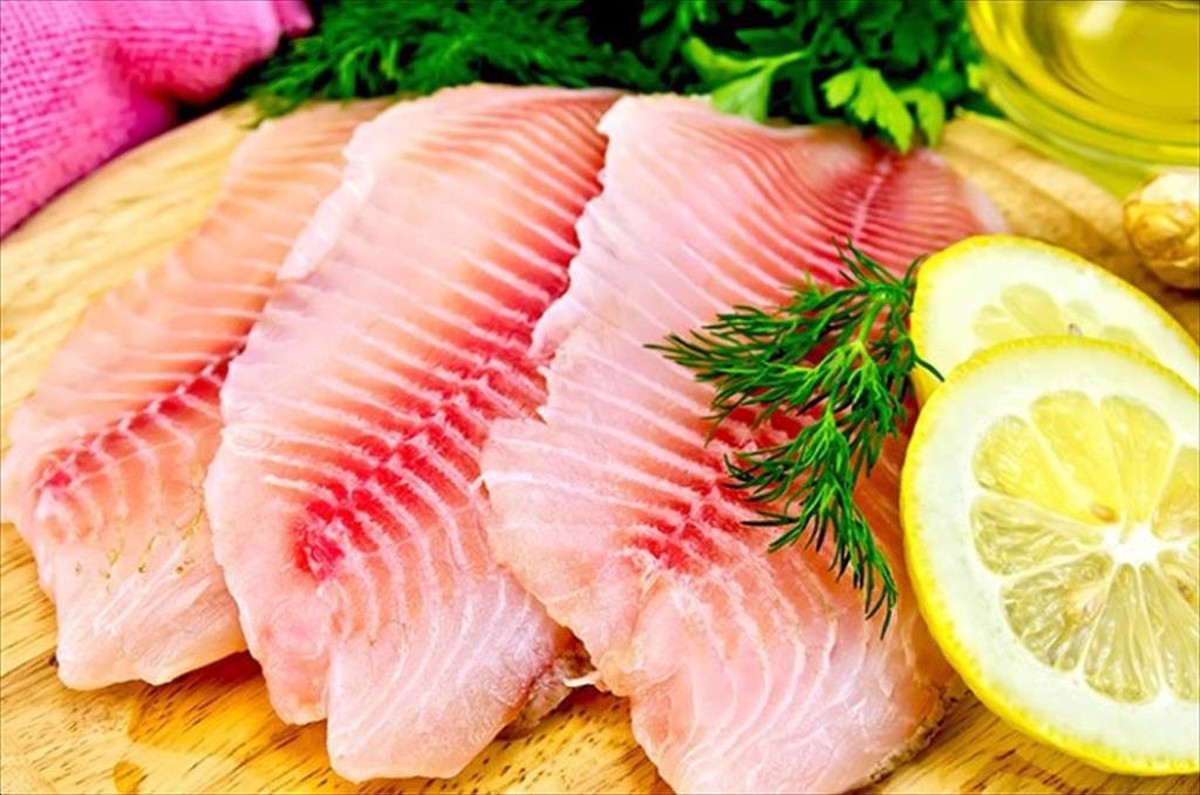
On product characteristics, the report describes brackish-water tilapia as having firm flesh, a clean and sweet taste, few intermuscular bones and no pronounced muddy odour. Those traits suit a wider range of processing methods and allow the fish to move beyond whole-frozen and frozen-fillet formats — in particular into raw material for sushi and sashimi.
Experts cited in the report say the approach has to be paired with a secure supply of suitable fingerlings, better feed conversion efficiency, applied technology and large-scale commercial farming zones. Without those, the quality premium cannot be reproduced at commercial scale.
Sashimi-grade requirements
Access to that segment is conditional. According to VASEP, tilapia intended for sushi and sashimi must meet strict requirements across the entire chain:
- farming zones and water quality
- raw material quality
- processing standards
- freezing
- parasite control
- food safety and traceability
The fact that Vietnamese tilapia has reached this segment shows that domestic control over the production chain is being raised step by step, VASEP said. Well-managed farming environments and raw material quality can turn tilapia from a commodity fish into an input for food lines with higher demands on quality, appearance and eating experience, the association added.
Export scenarios to 2030
The $69 million recorded in the first six months of 2026 is the starting point for the association's projections. “From now to 2030, Vietnam's tilapia industry can aim for an export scenario of around $250–350 million. In a breakthrough scenario, when a large-scale production chain is formed, synchronised from fingerlings and farming zones through to processing and markets, turnover can head toward $500 million,” VASEP said.
To reach that, the association says the industry must shift from fragmented development to scale production with certification and traceability, while expanding deep processing and diversifying markets. VASEP also warns against bandwagon expansion of farming area. Experts quoted in the report call for a synchronised strategy covering seed, feed, farming technology, raw material zones, processing and markets, with production oriented to actual demand rather than to acreage growth.
Market diversification
Alongside the United States, VASEP sees room to expand in the European Union, the Middle East, Canada and Australia. The association also argues that Vietnam's geographic position and processing capacity could gradually make the country an important tilapia supply source within Asia itself, instead of depending on a few traditional markets.
Looking to 2030, VASEP expects the global tilapia market to continue opening opportunities for Vietnam. The stated objective is not only higher export turnover but establishing tilapia as an export category with its own value and standing for Vietnam by the end of the decade.