Vietnam Tightens Scrutiny of Dairy Labels and Advertising Claims
Vietnam’s competition authority has fined dairy distributor H.T.T VND 200 million over a false organic-ingredient claim. Recent administrative and criminal cases show that compliant products do not shield companies from liability for misleading labels, unsupported advertising or substandard contents.
Competition authority penalizes organic claim
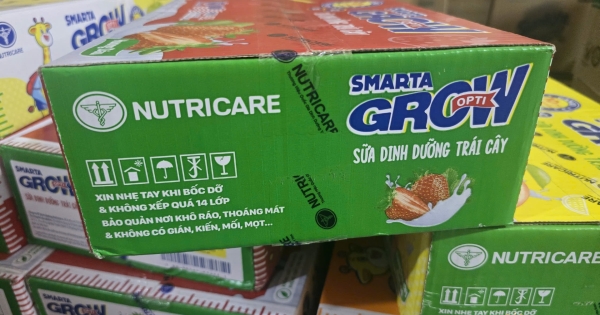
Vietnam’s National Competition Commission fined H.T.T Import Export Investment Company VND 200 million on August 3, 2026, after the distributor promoted L.K.A milk with a claim that it used “100% organic ingredients,” although that statement was untrue, Công Thương reported. The company must publish a correction on its website and remove all misleading advertising materials from every platform.
The legal basis is significant for dairy manufacturers, distributors and marketing partners. The authority relied on the 2018 Competition Law provisions against false or misleading information to customers, rather than rules governing product quality. A product may therefore satisfy technical requirements while its seller still incurs liability for how its characteristics are presented.
Earlier cases define the boundary
A similar distinction emerged in the case of Nestlé Vietnam. Đồng Nai provincial police fined the company VND 80 million in June 2025 following an inquiry into Milo malted milk packaging that used the name of the National Institute of Nutrition and referred to clinical testing. Testing by Quality Assurance and Testing Center 3 found that the product met safety and quality indicators and conformed to its self-declaration dossier. Investigators decided on June 13, 2025, not to open a criminal case.
Authorities nevertheless identified incomplete or inaccurate product information and the use of absolute wording without lawful supporting documents. Nestlé Vietnam was ordered to remove the offending advertisements within ten days. The case showed that conformity with declared safety and quality standards does not validate every claim made on packaging or in advertising.
Other conduct has crossed into criminal enforcement. In April 2025, the Ministry of Public Security’s investigation agency prosecuted eight suspects at Rance Pharma and Hacofood Group in a case involving 573 powdered-milk labels. The Supreme People’s Procuracy later indicted 29 suspects in connection with more than 187,000 cans. Products were classified as counterfeit where quality indicators were below 70% of declared levels, while testing failed to detect several premium ingredients listed on labels.
Scientific terminology creates compliance risks
Công Thương identified the presentation of postbiotics as one area of concern. Postbiotics are preparations made from inactivated microorganisms, unlike probiotics, which contain live beneficial microorganisms. The two are measured differently: live bacteria use colony-forming units, or CFU, while postbiotics may be expressed through cell counts. Packaging can nevertheless describe both broadly as beneficial bacteria and emphasize a figure in the billions, with the term “postbiotic” placed in small print.
This distinction matters because consumers may infer that two biologically different ingredients provide an equivalent quantity or function. Companies need to ensure that prominent numbers state the applicable serving quantity, whether the amount covers one serving, several packages or 100 grams, and which measurement unit is being used. Asterisks and qualifying notes must also be sufficiently clear to prevent the headline claim from creating a different impression.
Liability extends across the sales chain
Lawyer Lê Đức Thắng told Công Thương that Vietnam’s Consumer Rights Protection Law No. 19/2023/QH15 imposes joint responsibility on third parties that provide product information unless they can prove that they performed all required checks. The rule can cover e-commerce platforms, distributors, media organizations and influencers. Amended Advertising Law No. 75/2025/QH15 also prohibits influencers from recommending products they have not used or do not properly understand.
Decree 43/2017/NĐ-CP requires product names and additional label content to reflect the goods’ true nature, uses and ingredients. Decree 87/2026/NĐ-CP, effective May 15, 2026, sets fines of VND 80 million to VND 100 million for individuals who publish misleading advertising about quality, uses, packaging or origin. Penalties are doubled for organizations, which may also be required to surrender unlawful gains. For dairy companies and their commercial partners, compliance now requires coordinated review of formulations, labels, advertisements and third-party promotions—not only laboratory testing of the product itself.