Vietnam Tightens Antibiotic Controls to Protect Seafood Export Access
Vietnam is strengthening oversight of veterinary drugs and seafood residues as counterfeit products and antibiotic misuse threaten compliance with foreign food-safety rules. The measures extend from drug production and imports to farms, processors and traceability systems.
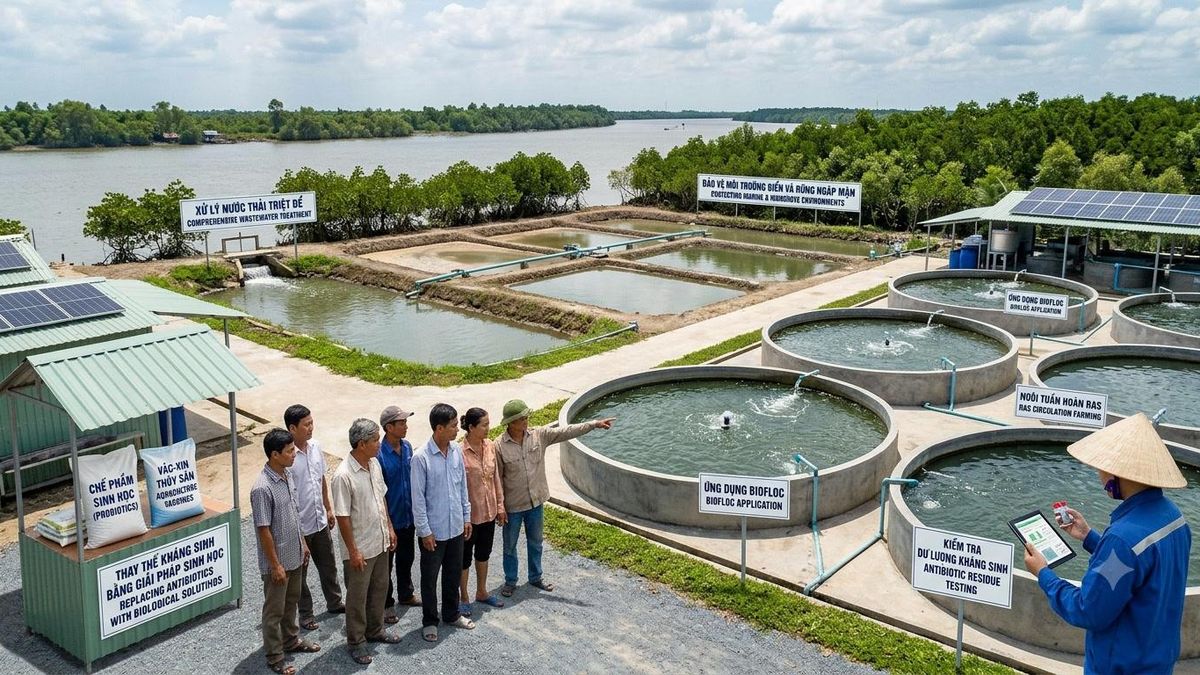
Vietnam expands controls across the supply chain
Vietnam is tightening controls on veterinary medicines and antibiotic residues as it seeks to protect one of the world’s major seafood export industries from food-safety violations. The Ministry of Agriculture and Environment issued Official Letter No. 6908/BNNMT-CCPT on 29 June 2026 and Official Letter No. 8300/BNNMT-CNTY on 24 July 2026, according to Thoi Bao Ngan Hang. The directives require local authorities to strengthen oversight of the production, import, sale and use of veterinary medicines while closely monitoring chemical and antibiotic residues in seafood.
The policy addresses counterfeit, substandard and untraceable veterinary medicines as well as antibiotics used outside regulatory requirements. Its central feature is an emphasis on the entire production chain rather than inspection of finished seafood alone. Drug quality, dosage, disease-management practices and observance of withdrawal periods before harvest all influence whether residues remain in fish or shrimp supplied to processors.
Hoang Tung, a researcher at Australia’s CSIRO, said antibiotic residues remain a major barrier that damages the reputation of Vietnam’s seafood sector. If farmers use unsuitable or poor-quality medicines, apply incorrect doses or harvest before the withdrawal period ends, modern processing technology cannot fully correct problems originating at the farm.
Residue failures put buyers and exporters at risk
Vietnamese seafood producers have been seeking new markets, diversifying products and raising export value. Market access, however, increasingly depends on food safety, raw-material origin, farming methods, veterinary drug use and traceability. Importing markets with demanding standards impose strict limits on antibiotic and chemical residues, leaving the wider chain exposed when a single supplier fails to comply.
A non-compliant product can affect more than one shipment. It may result in returned goods and harm the standing of the processor or exporter, while repeated problems can weaken confidence in Vietnamese seafood more broadly. Exporters therefore cannot manage the risk solely by buying raw material and testing it at the factory gate. Thoi Bao Ngan Hang said closer participation in farming—including technical guidance, drug controls and records of treatments—could reduce testing costs and the risk of rejected consignments.
Antibiotic misuse also creates a production risk through antimicrobial resistance. Farmers facing disease outbreaks may turn to medicines for an immediate response, but using the wrong product or dose can raise both residue and resistance risks across the supply chain. The proposed approach gives greater weight to prevention through better water and pond management, quality seed stock, appropriate stocking density, standardized husbandry and stronger biosecurity.
Local enforcement will determine the outcome
Implementation by provincial and local authorities will be decisive. The directives call for stronger inspections of companies producing, importing and trading veterinary medicines, with enforcement against counterfeit, unidentified and substandard products before they reach farming areas. Residue sampling is expected to focus on farms, facilities and product groups considered at higher risk.
Linking residue monitoring with traceability would allow authorities and buyers to identify the cause of a violation and assign responsibility more quickly. Processors and exporters are also being encouraged to develop controlled supply areas instead of depending on spot purchases from farms over which they have limited visibility. This would extend quality management to seed, the farming environment, feed and veterinary inputs.
Nguyen Huu Dung, secretary-general of the Vietnam Fisheries Society, said artificial intelligence, automation, biotechnology and digital transformation are becoming important tools for improving production efficiency, reducing environmental effects and strengthening competitiveness. Digital farm records and traceability could also make medicine use easier to verify. Vietnam has substantial production capacity and an increasingly modern processing system, but access to demanding overseas markets will depend on whether controls at farm level can consistently support those downstream strengths.